By Marilyn Odendahl
The Indiana Citizen
August 11, 2026
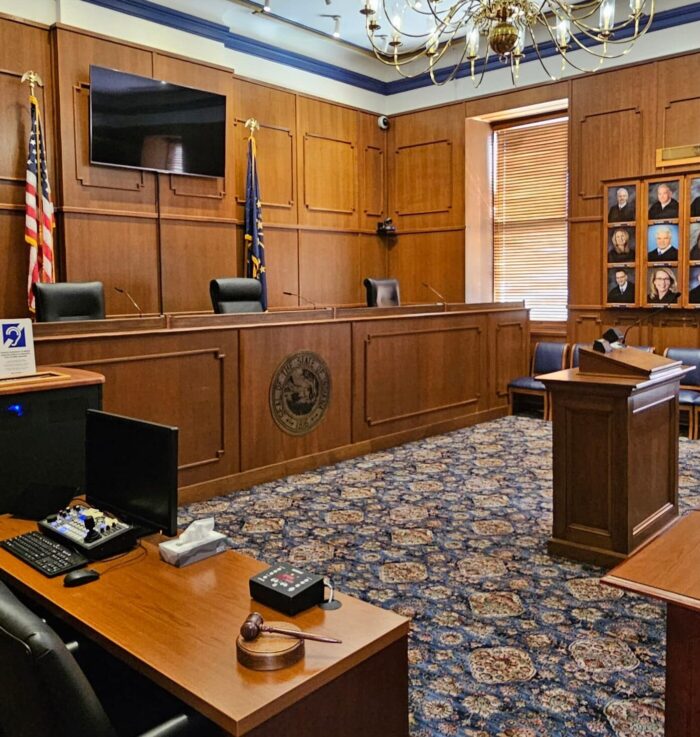
Little more than an hour into the Indiana Recount Commission’s four-hour hearing on Monday, the narrow three-vote lead that state Sen. Spencer Deery had held since the May Republican primary for Senate District 23 had evaporated for good.
Deery, R-Lafayette, had been declared the winner of the May primary with 6,337 votes to 6,334 for his challenger, Paula Copenhaver, but soon after the results were certified, Copenhaver petitioned for a recount.
When Monday’s hearing concluded, the Recount Commission overturned the election results, finding Copenhaver had won the primary race. The final vote tally gave Copenhaver 6,332 votes to Deery’s 6,329.
Copenhaver, a member of Lt. Gov. Micah Beckwith’s staff, declared victory in the legislative primary, following the adjournment of the Recount Commission. She indicated she was focusing on the general election in November.
“It’s about the better candidate, and so far, the better candidate prevailed,” Copenhaver said after the hearing. “(I have) no hard feelings towards anybody who has supported Sen. Deery, and at one point in time, I also supported him. But here we are on to a new race, and I am asking for the Republicans, and even those who aren’t Republicans, to rally around behind me and get me across the finish line in the election.”

Only about 15 ballots were disputed in a race where 12,671 votes were cast. Copenhaver, contesting most of those disputed ballots, argued the votes should be tossed because as mail-in absentee ballots, they did not have the required reliability markers: the signature and seal of the county clerk and the initials of the election officials.
Largely in split votes, the three-member Recount Commission agreed with Copenhaver and rejected the ballots that she disputed. The two Republicans on the commission, Indiana Secretary of State Diego Morales, who serves as its chairman, and Paul Mullin, sided with Copenhaver while the Democratic member, Michael Claytor, dissented.
Deery’s attorney, Samantha DeWester, said the Recount Commission should never have overturned the results and described the outcome of the hearing as “sad for elections in Indiana.” She said she would be appealing the commission’s decision to the Indiana appellate court.
“This is unprecedented,” DeWester said. “Ballots don’t get tossed for a signature missing from a clerk. It’s now going to set the tone going forward for people that are losers of elections that want to overturn them on technicality stuff. They have disenfranchised a bunch of voters, unfortunately.”
Copenhaver, who served as Fountain County Circuit Court clerk, initially ran for the Senate District 23 seat in 2022. She finished third among four candidates in the Republican primary, while Deery captured the nomination and went on to win the general election.
This year, as Copenhaver ran again for the Indiana Senate, she benefited not only from an endorsement by President Donald Trump but also from the millions of dollars infused into Indiana legislative races by Trump-aligned political action committees.
Deery and seven other Republican incumbent state senators were targeted for defeat by Trump after they joined other GOP and Democratic lawmakers in blocking the president’s push for redistricting halfway through the decade. Trump’s goal was to turn all nine of Indiana’s congressional seats red in the November midterm election and help Republicans retain control of Congress.
After the Aug. 10 recount hearing, Copenhaver said she believed the May GOP primaries across the state were a mandate on redistricting. Republican voters supported Trump’s redistricting plan, she said, but hesitated to publicly back the effort for fear of retribution.
“I’m not afraid,” Copenhaver said. “I’m afraid of one and that is my God. He’s the only one I fear. So, I’m not fearful of man. I will stand my ground, and I will continue to give Him praise and thanksgiving for all things, regardless of what the outcome was today.”
However, Copenhaver sought to separate herself from the tone of the Senate District 23 primary, saying her campaign was not part of the push for retribution from some in the Republican camp. She said she had no control over the actions of the PAC that supported her 2026 run, and while Trump worked to punish the Hoosier legislators who defied his redistricting effort, she did not harbor any hard feelings.
“That is President Trump, but my campaign, personally, did not make it personal,” Copenhaver said. “(I) didn’t take it personal. That’s not who I am as a person and I never will be.”
Posting on X shortly after the election results had been overturned, Deery criticized the Recount Commission. He asserted the commission was attempting to further Trump’s political goals and he took a swing at Morales.
“This was not a meeting intended to find fairness; it was designed to find votes,” Deery wrote. “Indiana law makes clear that valid votes should not be silenced simply because of minor errors made by clerks – clerks who were supposed to be trained by the chairman of this very commission.”
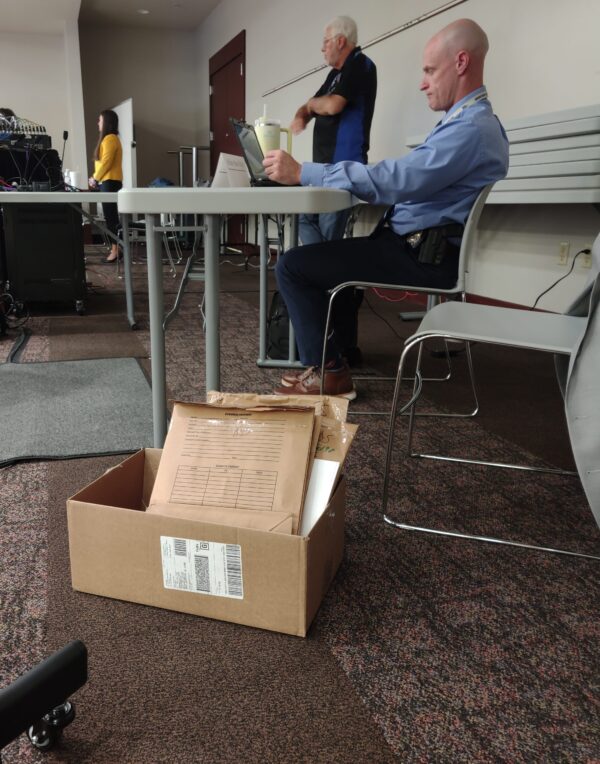
Senate District 23 is stitched together from portions of Tippecanoe County and five surrounding counties. In the May primary, Copenhaver carried the rural counties, but lost Tippecanoe County by more than a thousand votes.
She won at the Recount Commission by chipping away at Deery’s vote totals in the counties he lost. The commission rejected three ballots for Deery in Montgomery County, two ballots each in Warren and Vermillion counties, and one ballot in Fountain County. Also, the commission invalidated two votes for Copenhaver in Montgomery County.
All of these votes were discarded because they were either missing a clerk’s signature or seal or did not have the initials of the election workers.
DeWester did not object to tossing the ballots that were not initialed. However, she fought hard against invalidating ballots because of a missing clerk’s signature, arguing the Indiana General Assembly did not include any provision in state statute that requires absentee ballots to be rejected because the clerk did not sign it.
“That’s an absurdity,” DeWester said. “We don’t put the burden on voters. The burden’s on (Copenhaver and her legal counsel) to show why a vote shouldn’t count. This is a valid ballot. … Nothing in code says it’s invalid. Nothing in code says that it cannot be counted.”
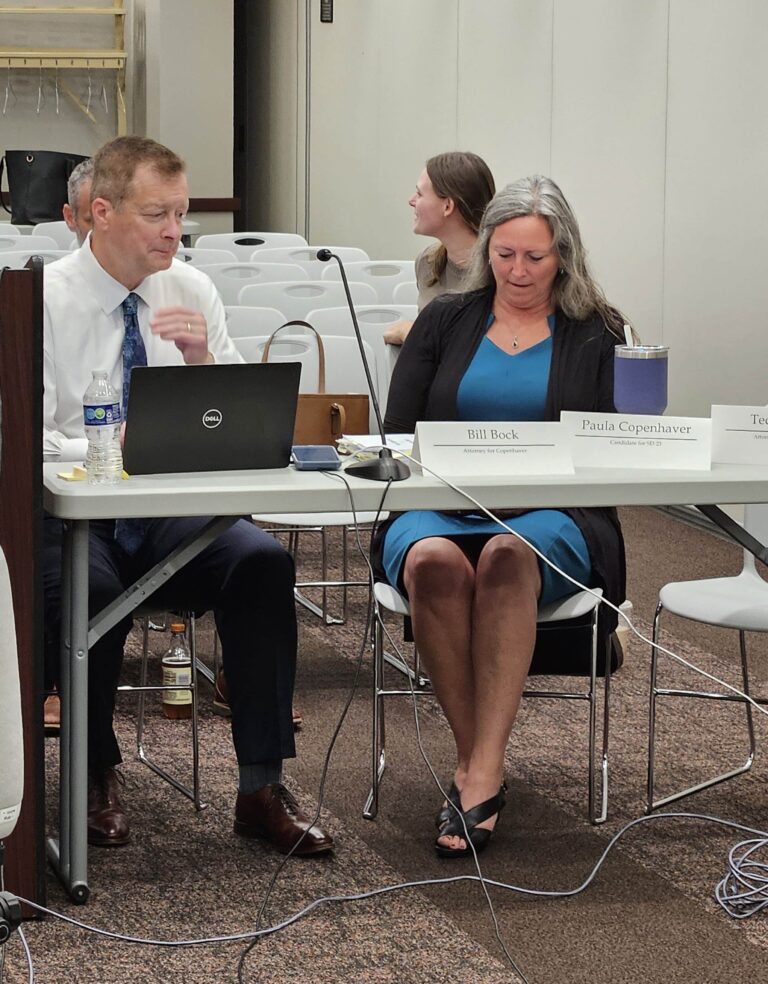
Attorney William Bock III, representing Copenhaver, told the Recount Commission the reliability indicators were part of the heightened security on mail-in ballots. Absentee voters make their selections outside the protected election space, he said, so they are at greater risk of being manipulated or pressured or even having their ballots filled out by someone else.
After the hearing, Bock was confident a state appellate court would uphold the commission’s decision to reject the eight votes for Deery on the technical grounds.
“This recount was really about the integrity of the election on multiple levels and that was our theme today – that some of the absentee ballots had issues, they didn’t comply with Indiana law,” Bock said. “It’s important that voters feel secure about how absentee ballots are handled and so I think in every case, the Recount Commission made the right choice.”
Since filing the recount petition a few weeks after the May primary, Copenhaver had repeatedly objected to 11 voters in Senate District 23 who allegedly crossed over and pulled a Republican ballot for the express purpose of voting for Deery. Identifying the apparently Democratic voters by their posts on social media and comments to a local reporter, she asserted they violated state law by crossing over to vote in the GOP primary.
Copenhaver had asked the Recount Commission for permission to subpoena and despose those 11 voters to gather more information. The commission at its hearing in July denied her request in a 2-to-1 decision with Morales casting the deciding vote.
At Monday’s hearing, Bock attempted to get one of the 11 crossover votes rejected. He traced how his legal team had identified that one ballot from Warren County could be linked to a constituent who in previous elections had encouraged others to vote for the non-MAGA and non-Republican candidates, but on primary election day was posting about crossing over solely to vote for the incumbent. They had tracked the voter online to a local business and compared his employee photo to his picture on social media.
“We think we have identified the ballot by this individual who said that he decided not to vote in the Democratic primary and voted in the Republican primary for the first time for the sole purpose of defeating the MAGA candidate and voting for Mr. Deery,” Bock said. “We believe that is inconsistent with the eligibility requirements in the Indiana Code.”
DeWester reiterated the arguments opposing the depositions that she made during the July hearing. She asserted postings on social media cannot be taken as fact and under state statute, Copenhaver could only challenge a crossover voters at the polls on Election Day and not after the results had been certified.
“I don’t know how they dug up whatever they did and tied it to social media and stuff,” DeWester said of work Bock’s team did to try to find one of the cross-over voters. “Apparently, they have stronger powers than anybody else with elections. But there’s no way we should disenfranchise someone because of what their comments are on social media.”
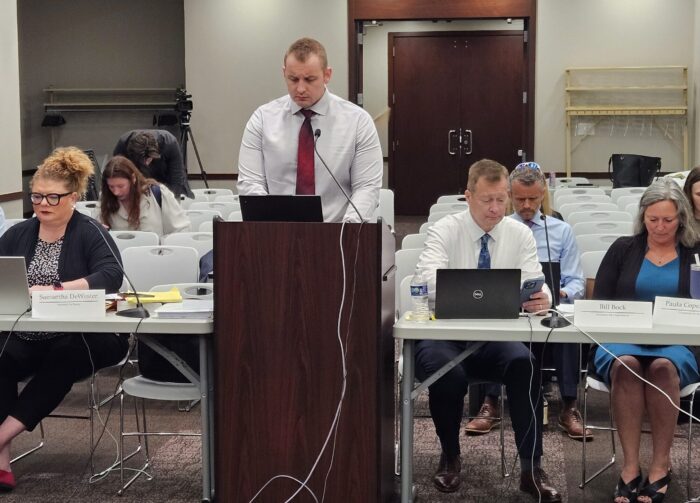
In disputing three absentee votes from Tippecanoe County, Bock revisited allegations about election misconduct that were first raised by Copenhaver in filings with the Recount Commission and then presented at the July hearing.
The questions surround an absentee ballot that was counted and added to Deery’s total in that county the day after the primary. During the July hearing, Bock alleged the ballot had been delivered to a vote center on Election Day and then later transported to the county courthouse, where he said it had been left unsecured that night.
Although Bock’s request to depose Tippecanoe County Circuit Court Clerk Julie Roush was denied by the Recount Commission at the July hearing, Roush responded the following day. She read a lengthy statement during the Tippecanoe County Board of Elections, rebutting the allegations that the ballot was left unattended overnight and accusing Copenhaver of undermining public confidence in elections.
Bock pulled Roush’s statement and compared it to the election board minutes from May 5 to refute what she had said about how the absentee ballot had been handled. He clarified that Copenhaver’s campaign was not insinuating widespread voter fraud or tampering with ballots.
“We are alleging that the explanation given is not accurate and this is on a high-profile issue where there are recounts going on,” Bock told the commission. “We didn’t get an accurate explanation on the record from the Tippecanoe County clerk. She needs to answer to that and she can provide an explanation. Perhaps there’s an explanation that doesn’t have anything to do with anything other than she wasn’t being truthful.”
DeWester countered that Copenhaver was trying to get that absentee ballot and another one removed based on supposition alone.
“These are actual valid ballots that we would be taking away from a voter base on what (Copenhaver and her attorney) want you to believe occurred,” DeWester said. “None of that is requiring this commission to take away votes.”
The Recount Commission unanimously voted to keep that absentee ballot and two others that Bock had tried to get tossed.
Bock said if the commission’s decision is appealed, Copenhaver would have the opportunity to raise the concerns about Tippecanoe County as part of a cross appeal.
“I wish we had been able to take a deposition and get to the bottom of what happened there, because there’s just real inconsistencies between what was said publicly by elected officials and what the documents showed,” Bock said.
DeWester dismissed the allegations about the Tippecanoe County clerk and accused Copenhaver and Bock of trying to scare voters.
“Their definition of misconduct and mine are completely different,” DeWester said. “It’s a fear-mongering thing for individuals so they can win. That’s it. It’s that simple.”
Dwight Adams, an editor and writer based in Indianapolis, edited this article. He is a former content editor, copy editor and digital producer at The Indianapolis Star and IndyStar.com, and worked as a planner for other newspapers, including the Louisville Courier Journal.
The Indiana Citizen is a nonpartisan, nonprofit platform dedicated to increasing the number of informed and engaged Hoosier citizens. We are operated by the Indiana Citizen Education Foundation, Inc., a 501(c)(3) public charity. For questions about the story, contact Marilyn Odendahl at marilyn.odendahl@indianacitizen.org.