This column was originally published for the Ball State University Center for Business and Economic Research Weekly Commentary blog.
By Michael J. Hicks
August 9, 2026
In March 2025, my wife and I hiked most of Indiana’s famous Knobstone Trail, the state’s longest footpath. It was a delightful walk. The trail offers insight into the wonder of our state recreational areas, what they are and what they could be.
The Knobstone Trail is known among hikers as the “Little Appalachian Trail.” It stretches from Clark to Washington counties, featuring 58 miles of trails with more than 20,000 feet of elevation change. That is a lot of ups and downs, with unexpectedly difficult elevation changes for this Central Indiana dweller.
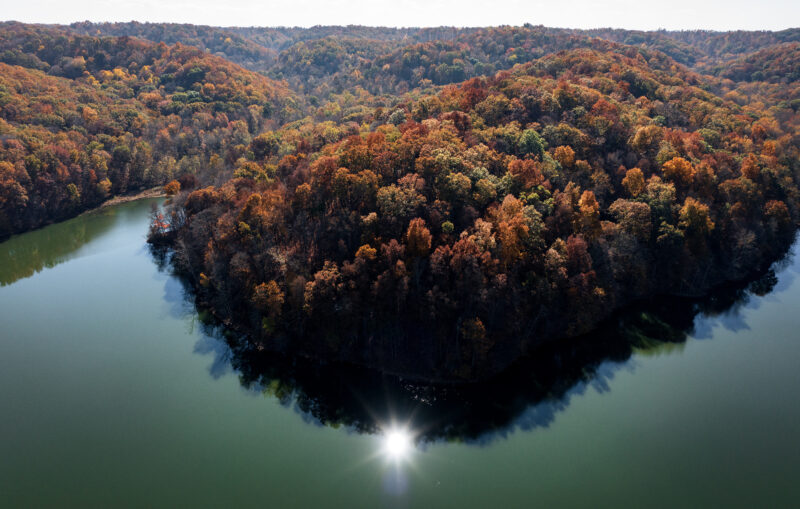
We initially planned a 44-mile leg, but tornado warnings forced us to quit at just under 36 miles. After all, it was March in southern Indiana. Along the trail we met folks who had driven from Iowa to train for the Appalachian trail and a local family out for a day hike. We all agreed this trail was an Indiana gem.
The Knobstone Trail has many good spots to pitch a tent and, at least in springtime, plenty of natural water sources to filter. We had to refill our water supply three times in one day. Summertime campers frequently cache water on trailheads to account for lower creeks.
There are some tough climbs, as tough over the same distance as anything I’ve seen in the Appalachians. There are also a few stretches that appeared designed for mountain goats. That just adds to the excitement.
The hike took us through parts of Indiana where my wife’s family settled two centuries ago. I can see the attraction. The views are great, especially before the leaves fully return. There are long vistas, pleasant valleys and a diversity of trees and wildlife. The trail is maintained by countless volunteer hours, as well as the Indiana Department of Natural Resources and the Divisions of Fish and Wildlife, Forestry and Outdoor Recreation.
Starting the second day’s hike before sunrise, we donned headlamps and walked to the sounds of turkeys gobbling in the distant valley. It was hard, harmonious and stunningly beautiful all at the same time.
Indiana is home to 24 state parks, eight reservoirs, 23 fish and wildlife areas, 15 state forests and other properties. These are stunning in their historic value and beauty. Hoosiers are rightfully proud of their park systems, which began in 1916 when Richard Lieber, acting as a private citizen, succeeded in opening the first park.
One interesting feature is that Indiana State Parks are effectively self-sustaining through admissions fees and donations. This was the vision of Lieber. It works because Hoosiers use their parks, which count more than 15 million visits per year.
Viewed through a purely economic lens, a largely self-sustaining park system is helpful because it is so easy to link the benefits of visiting parks to the prices families are willing to pay to access them. Responsive staff will offer programs and venues that attract paying visitors.
But there’s more than use value to natural lands. The mere existence of park, wilderness and wildlife refuge lands also provides value. Some of these values are harder to measure and explain to taxpayers. Large park areas allow wildlife to flourish and re-establish themselves in habitats long destroyed.
For example, deer became locally extinct in Indiana in the late 19th century and were re-established in parks in the 1930s. It is hard to imagine Indiana without deer, but there were none for about a half-century.
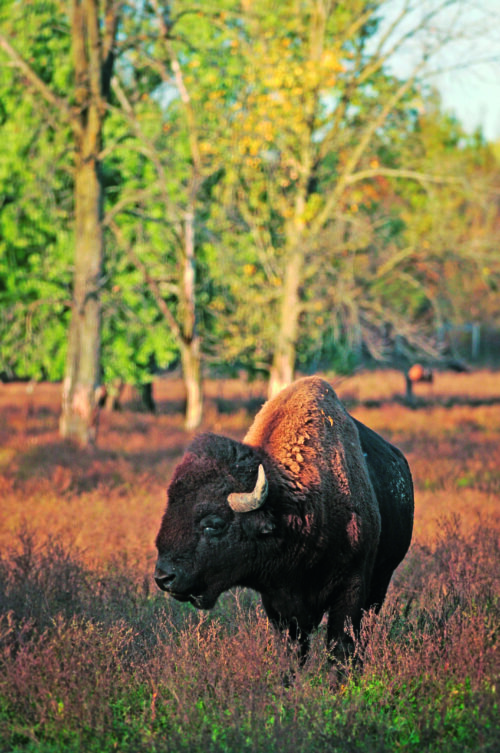
The Nature Conservancy, which donated much of the lands to Knobstone, is reintroducing bison into the Kankakee Sands nature preserve. They’ve been gone from Indiana since 1830. Larger tracts of wilderness allow migratory birds more options and provide more habitat for hundreds of species that have much-diminished range in our state.
A broader purchase of land for wildlife is also important to future Hoosiers, because keeping land natural extends the range of options future Hoosiers have for all other types of land use. Over time, failure to consider wilderness areas, such as Knobstone, risks making Indiana a less desirable place in decades to come.
The reason is simple. As we become more affluent, we spend an increasing share of our earnings on accessing, enjoying and preserving nature. We do it through our leisure activities, we do it in our purchase of homes with yards and access to parks and we do it by supporting the construction, extension and improvement of public lands.
Now, this means that I don’t have a defensible estimate of how much bigger Indiana’s park, wildlife and recreation system should be. What I can say confidently is that it should be larger and have more wilderness places.
Americans in general are becoming more affluent and moving to more dense locations. We are closing farms across the country because agricultural productivity is so strong. Almost one-third of farm income in the U.S. is from federal subsidies. As this disappears, we will need ways to absorb those farms thoughtfully and respectfully.
This offers a chance for many new park extensions. The Knobstone is a good choice, and there are plans to extend the trail north toward Martinsville, linking it to other trails and forests. There are many other places in which access to the outdoors could be extended with relatively small state investments.
Another opportunity is the Big Oaks National Wildlife Refuge, which is at risk of closing. If it does close, it would be among the largest reductions of wildlife habitat anywhere in the U.S. for a century. But, Indiana could buy it and sustain its magnificent contribution to restoring wildlife in the state.
Returning to Lieber’s idea, state parks can be bought with state funds but must be sustained by visitors.
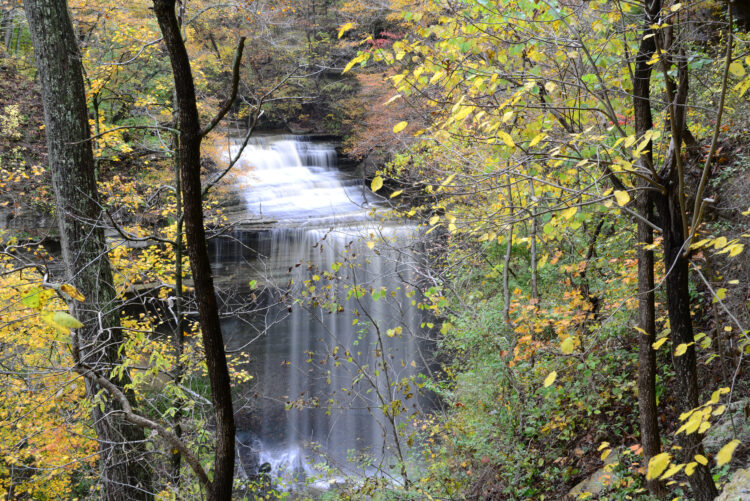
I must admit that I’m not an unbiased commentator on this. My parents’ wedding reception was held at Turkey Run State Park and my wife was a lifeguard at Clifty Falls State Park. Many years ago, I volunteered and later worked for the National Park Service. Many of my happiest times have happened in parks, and I expect to hike until I am unable. I have to finish the Knobstone.
Indiana’s natural environment is a stunning gift from our Creator. As inheritors of this gift, we have a superb opportunity over the coming decades to expand Indiana’s wilderness footprint. That could be our gift to future Hoosiers.
Michael J. Hicks is professor of economics and the director of the Center for Business and Economic Research at Ball State University. He previously served on the faculty of the Air Force Institute of Technology’s Graduate School of Engineering and Management and at research centers at Marshall University and the University of Tennessee. His research interest is in state and local public finance and the effect of public policy on the location, composition, and size of economic activity.
The views expressed here are solely those of the author, and do not represent those of funders, associations, any entity of Ball State University, or its governing body. Also, the views and opinions expressed do not necessarily reflect the views of The Indiana Citizen or any other affiliated organization.