By Marilyn Odendahl
The Indiana Citizen
July 30, 2026
Tippecanoe County Circuit Court Clerk Julie Roush rebuked state Senate District 23 candidate Paula Copenhaver for her allegations of a mishandled absentee ballot from the Republican primary in May, saying “the public deserves facts, not misinformation.”
Copenhaver filed for a recount after she lost the May GOP contest by three votes to state Sen. Spencer Deery, R-Lafayette. She is alleging election irregularities surrounding a single absentee ballot that was added to Deery’s vote total the day after the primary.
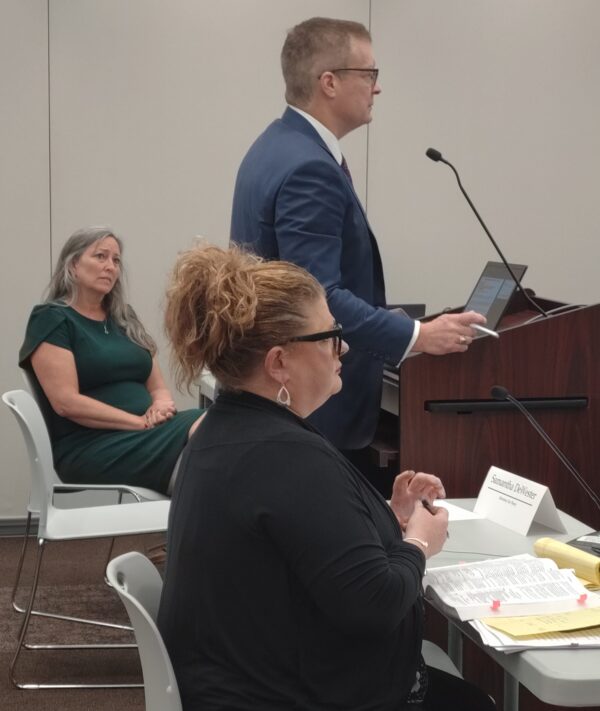
At the Indiana Recount Commission hearing on the Senate District 23 dispute, William Bock III, Copenhaver’s legal counsel, argued for two motions to issue subpoenas for documents from the Tippecanoe County Clerk’s Office and the Tippecanoe County Board of Elections and Voter Registration along with another motion to depose Roush.
The commission unanimously denied all three motions with none of the members explaining the reason for their individual votes.
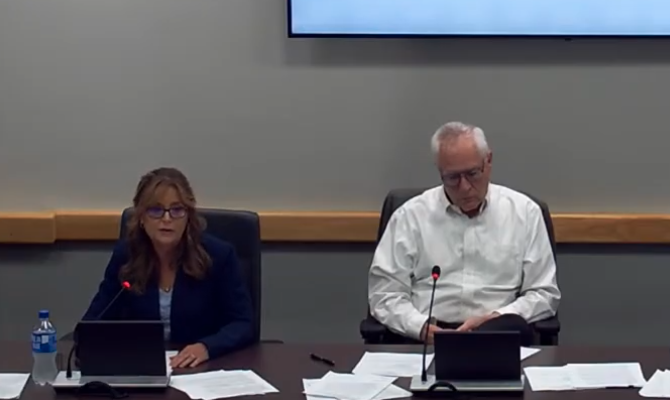
The next day at the July 29 meeting of the county’s election board, Roush rebutted Copenhaver’s statements made in the motions and before the Recount Commission. Reading from a prepared statement, the county clerk detailed how the absentee ballot in question was handled and defended the integrity of her staff and the election process.
“It is deeply disappointing that a candidate for public office would make allegations that misrepresent our election process and undermine public confidence in the integrity of our elections,” Roush said. “Election officials and poll workers from both political parties dedicate countless hours to administering elections that are secure, transparent, and conducted according to the law. They deserve the public’s trust and respect.”
William Bock III, Copenhaver’s legal representative in the recount process, did not respond to a request for comment. Samantha DeWester, attorney for Deery, declined to comment.
However at the July 28 recount hearing, DeWester pointed out to the Recount Commission that the retallying of votes ended with the same results: Deery with 6,337 and Copenhaver with 6,334.
“A recount is a recount of the votes,” DeWester said. “You just heard that it didn’t change … the certified vote total. So, now we’re going to go in search of other things that could overturn that.”
In the motions filed with the Recount Commission and in oral arguments at the recount hearing, Bock said several questions remained unanswered regarding the single absentee ballot from Tippecanoe County. Getting the documents and deposing Roush could provide several pieces of missing information, including how was the ballot delivered to the vote center, was the person delivering the ballot authorized to do so, did someone assist the voter in filling out the ballot, how was the ballot transported to the location where the votes were being counted, who had access to the ballot between primary election day and the following morning, and whether the absentee voter’s signature was validated.
The questions arise from conversations Bock said his team had with Tippecanoe County personnel and an employee of the county’s election machine vendor.
Relying on their accounts, Bock told the Recount Commission that the absentee ballot was delivered to a voter center on the day of the May primary and then transported in a bag with other ballots to the Tippecanoe County courthouse. The ballot then allegedly remained in the unsecured bag in a corner of the courthouse and was found the next morning.
Bock said Roush took over the process in the morning. After allegedly opening the bag, she found the absentee ballot cast from a precinct within Senate District 23. Then, Bock said, without oversight from any other election official, Roush had the ballot’s vote added to the final tabulation, which bumped Deery’s winning margin from two votes to three.
“Copenhaver is entitled to know how that ballot got (counted) and the public is entitled to know and understand and see that this commission considered whether that vote should be counted,” Bock said. “Without a deposition and that opportunity to ask those questions of the county clerk, this commission will never know.”
Reading from her prepared statement, Roush rebutted Copenhaver’s version of events.
First, Roush asserted she did not personally open or count any ballots, because she was a candidate in the 2026 GOP primary for Tippecanoe County commissioner and wanted to avoid even the appearance of a conflict of interest.
Regarding the ballot itself, Roush said it was one of four delivered to a vote center on primary election day. The ballot, she said, “was never unsecured and was never outside the custody of authorized election officials. At all times, it remained under the supervision of a bipartisan team,” in accordance with state law and procedures adopted by the Tippecanoe County Election Board.
After the polls closed, the bipartisan co-coordinators, accompanied by a Tippecanoe County sheriff’s deputy, transported the four absentee ballots to the election board’s office, where the voters’ signatures were verified, Roush said. The ballots were then locked in a cage and placed under continuous video surveillance. The next morning, the ballots were opened and tabulated, which was also recorded on video, she said.
“Our bipartisan co-coordinators take their responsibilities seriously,” Roush said. “They faithfully follow Indiana law, adhere to established procedures, and carry out their duties with professionalism, impartiality, and integrity. The integrity of our elections depends on these safeguards, and the citizens of Tippecanoe County can remain confident that those safeguards are consistently followed. The public deserves facts, not misinformation.”
Dwight Adams, an editor and writer based in Indianapolis, edited this article. He is a former content editor, copy editor and digital producer at The Indianapolis Star and IndyStar.com, and worked as a planner for other newspapers, including the Louisville Courier Journal.
The Indiana Citizen is a nonpartisan, nonprofit platform dedicated to increasing the number of informed and engaged Hoosier citizens. We are operated by the Indiana Citizen Education Foundation, Inc., a 501(c)(3) public charity. For questions about the story, contact Marilyn Odendahl at marilyn.odendahl@indianacitizen.org.