This column was originally published for the Ball State University Center for Business and Economic Research Weekly Commentary blog.
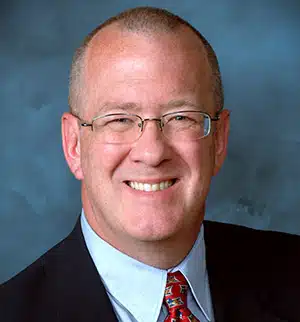
By Michael J. Hicks
July 5, 2026
Our nation is 250 years old, making this weekend a moment of emotional consequence for all patriots to pause and give thanks. I’ve been reflecting on the demands of citizenship and considering a simple question: What is the most difficult thing our nation asks of us?
Many of us who call ourselves Americans have been here a long time. My direct ancestors trickled in from the 1630s through the 1740s. Most were indentured servants, convicts and refugees. Many other Americans were here long before that.
Still, among the first truths of our republic is that real Americans don’t judge themselves by who their parents are, but by who their children might become.
Running away from the hellscape of 17th century Europe didn’t make my ancestors American. Running toward freedom did. There is no difference between my family fleeing Yorkshire or Ulster and those who came in any other way, in any other time. That includes the Guatemalan teenager who walked to America last year and a Haitian who came through asylum in 2022.
That simple truth is the moral and legal essence of who we are.
From the earliest European settlement, it took roughly 150 years of hard work, along with Enlightenment ideals, to give us the words to found a republic. They were, and remain, the most clearly liberal words in politics: “We hold these truths to be self-evident, that all men are created equal, that they are endowed by their Creator with certain unalienable Rights, that among these are Life, Liberty and the pursuit of Happiness.”
That idea, and the steel of the people who willed it into being, made us a nation. It was not the soil, the purity of our ethnicity, our dominant religion or the culture that made us. It was always the ideas. We are the oldest creedal nation on the globe.
We didn’t always live up to those words, and we’ve paid bitter prices for our failures. A Civil War that killed 1 in 40 Americans should have been lesson enough. But, we are a hardheaded people, for both good and ill.
Today, the blessings of liberty remain unevenly bestowed in this fair land. We have much work to do. Still, the ideas of our Declaration of Independence provide a map and a compass of moral clarity in the dark world around us.
We are at our best when we interrogate the past, ask tough questions and reform our opinions from new evidence. That is what the founders demanded of us when they gave us a purpose to found “a more perfect union.”
Still, the abiding lesson of American history is simple. When we hold close to our founding principles, we produce a just and noble enterprise. When we fall from those guideposts, we are often no better than the worst mankind has to offer.
So, what, then, is the central task of citizenship? What is it we are asked to do to live in this blessed land of abundance and freedom?
Many would be inclined to say the highest ask of citizenship lies in military service. I disagree. Yes, military service can be a tough ask. I won’t make light of it — especially with a child in harm’s way. We are the greatest of nations, so we must ask more than fighting of our citizens.
Indeed, we ask the hardest of things: To live the words of this republic.
The ideas are clear: God gave us all rights, including the right to speak and worship freely, to assemble with whom we wish. Government exists to protect these rights, which are for all of us. The individual, the God-created man or woman, is at the center of our ideals.
Accepting this should be the easiest of tasks, given the marvel of our current world, but far too few of us find the courage to do so. I find this odd.
In combat, I saw men freeze and fail to do their jobs. But there, the risk was real, close and loud, with the sights and smell of death around us. None of that accompanies the simple task of living our ideals.
No matter your thoughts or dispositions on the matter, freedom for others doesn’t limit your freedom. Liberty is boundless, even in the most culturally polarizing issues.
Same-sex marriage doesn’t weaken your marriage, or the institution of marriage. The worship of another religion doesn’t weaken your relationship with the Almighty. Listening to a different point of view cannot hurt you or those you love.
There’s nothing to fear in these freedoms. Washington, Jefferson, Lincoln, Roosevelt and Reagan all knew this. Far too many today lack the courage to see that.
The hardest thing we face over the next 250 years is precisely the hardest thing we faced over the last 250 years. Yet, too few of our citizens possess the simple moral courage to live the Constitution, to hold it in regard and spread upon our neighbors the blessings of liberty.
It is necessary to name this cowardice by its acts. If you attack a man for speaking on campus, you are a coward. If you lie to incite a mob against Muslims or Jews, capitalists or socialists, you are a coward. If you think you are a better American or “Heritage American” because of who your ancestors were, you are a coward.
These cowards miss the central idea of our nation. They fail the central ask of citizenship in this greatest of republics. They fail the republic.
It’s not hard to understand why so many Americans reject our creed or run scared from the ideals of our founding. Part of it might be that we are tribal animals, attached to kin, afraid of outsiders and suspicious of change. It is frightening to confront someone with a different skin tone, accent or religion. It takes some small bit of courage to move beyond these fears. That is more than many can summon.
Others probably reject our creed because they have not been successful in life. Perhaps some ambition passed them by, or they failed at jobs or relationships. Rather than rebuilding a life, which takes courage, these folks decide that it is easier to find a scapegoat — immigrants or billionaires or DEI.
Still, it’s the fresh start, the new birth of freedom, the self-evident truth that all of us are created equal that makes us an enduring nation, founded not on blood or culture or religion, but on the simple creed of our Declaration of Independence.
Michael J. Hicks is professor of economics and the director of the Center for Business and Economic Research at Ball State University. He previously served on the faculty of the Air Force Institute of Technology’s Graduate School of Engineering and Management and at research centers at Marshall University and the University of Tennessee. His research interest is in state and local public finance and the effect of public policy on the location, composition, and size of economic activity.
The views expressed here are solely those of the author, and do not represent those of funders, associations, any entity of Ball State University, or its governing body. Also, the views and opinions expressed do not necessarily reflect the views of The Indiana Citizen or any other affiliated organization.