By Sydney Byerly
The Indiana Citizen
August 13, 2026
Indiana Lt. Gov. Micah Beckwith says he has been talking with state lawmakers about legislation that could place new limits on how law enforcement agencies use Flock cameras and other automated license plate readers, adding a new dimension to a growing debate over law enforcement’s use of surveillance technology in Indiana.
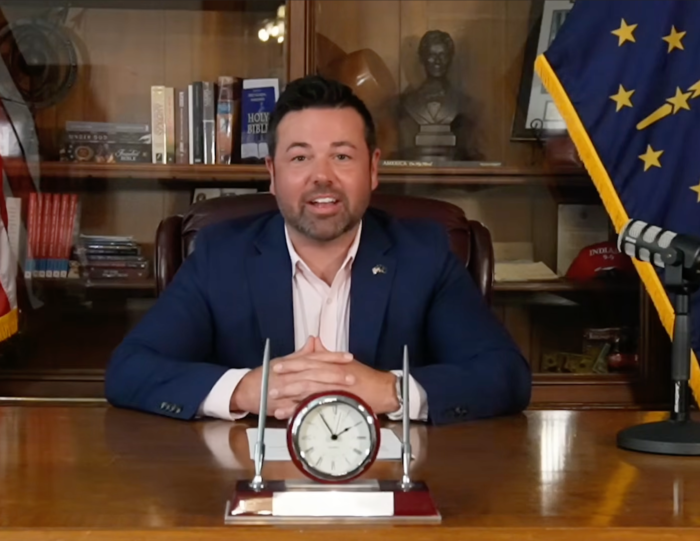
“I don’t want to see government get into the business of mass surveillance,” Beckwith said, citing the Fourth Amendment’s protection against unreasonable searches.
Beckwith made the comments Monday during his “Ask Micah Anything” video series after a viewer asked what he was doing to remove Flock cameras and similar surveillance systems from Indiana.
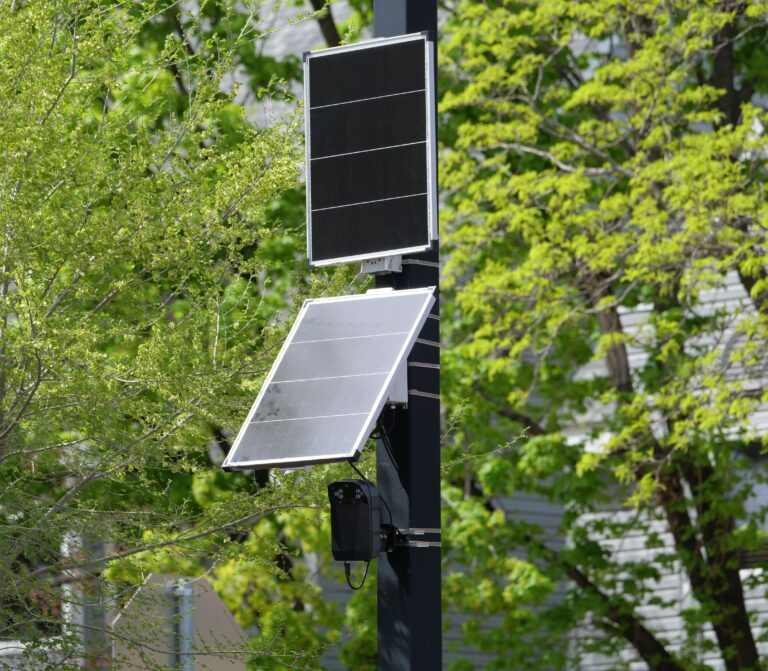
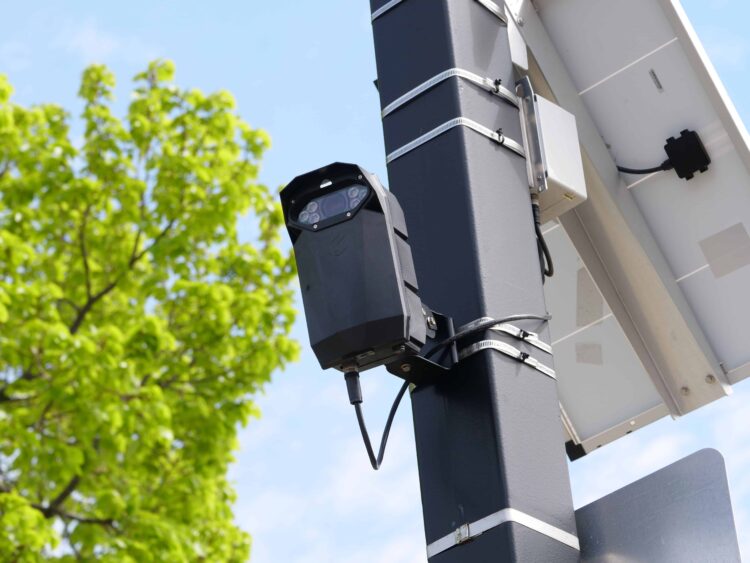
Municipalities and local law enforcement agencies typically contract with Atlanta-based Flock Safety to install the cameras. Marion County officials signed a $6 million contract to do so in 2025. The nonprofit group Eyes Off Indiana says it has documented about 3,500 automated license plate readers across 84 of the state’s 92 counties. The cameras can capture data about vehicles’ license plates, color, make, and characteristics such as whether they have roof racks or have sustained bumper damage, and put that data – as well as when, where and how often vehicles have been spotted – at the fingertips of law enforcement.
Beckwith said he supports police having tools to investigate crimes, but opposes what he described as mass surveillance of people who have not been accused of wrongdoing. Asked what could be done to limit the cameras, Beckwith said legislation would be necessary.
“We’ve been talking to legislators in Indiana and we are saying, ‘Hey, what can we do to put strong boundaries and regulations around how law enforcement uses these tools,’” he said.
Beckwith did not identify the lawmakers involved or say whether legislation is currently being drafted for the 2027 legislative session.
He also did not specify what restrictions he would support. Opponents of the cameras have called for limits on how long police can retain license plate data, restrictions on sharing information with other agencies or federal authorities, requirements for warrants or additional public reporting and more restrictions.
Instead, Beckwith said Indiana should “get out ahead” of the issue before the use of automated surveillance technology expands further.
His comments came days after U.S. Rep. Marlin Stutzman, R-Ind., told Just the News he and other members of Congress were considering federal legislation to put limits on Flock cameras after the technology played a role in a traffic stop involving Stutzman.
The ACLU of Indiana has also called for greater restrictions on the technology. Its “Get the Flock Out of Indiana” campaign argues that Flock and other automated license plate reader companies are turning communities into “surveillance networks” and tracking where people drive “without a warrant and with little transparency or oversight.”
Stutzman’s comments came after he experienced the technology firsthand in his Indiana district.
According to an Aug. 8 report by Just the News, Stutzman said he arrived at his driveway and was followed by a police officer who told him his vehicle’s registration had expired. The vehicle was registered in his wife’s name, Stutzman said, and the registration was subsequently renewed.
Stutzman said the officer was able to identify the vehicle after Flock cameras detected it in an area covered by the system.
“I just don’t like where we’re going with Flock cameras,” Stutzman told Just the News. “I think that it’s invasive.”
Stutzman said law enforcement can argue that the cameras provide a useful investigative tool, particularly in places where it would be difficult to have an officer physically monitoring vehicles.
But he said the technology needs limits.
“This is a step too far. There has to be boundaries. There have to be controls in place,” Stutzman said.
He said several members of Congress would begin looking at legislation to “rein them in” and prevent the technology from invading people’s privacy.
Beckwith did not say Monday whether he has spoken with Stutzman about the issue.
Indiana lawmakers already approved a narrower restriction on automated license plate readers this year, targeting their use by homeowners associations. The law bars HOAs from installing or operating the cameras, but allows police to install them on HOA property if the agency retains sole access to the data. Gov. Mike Braun signed the measure in February.
The law does not establish comprehensive statewide rules for law enforcement use of automated license plate readers.
The discussion is already playing out in Indiana communities.
In Fort Wayne, city officials have debated whether to continue using Flock cameras and what oversight should accompany the technology. Fort Wayne police have defended the cameras as an investigative tool, pointing to cases in which Flock data helped investigators identify vehicles connected to crimes.
State Rep. Bob Morris, R-Fort Wayne, told Fort Wayne’s Morning News he is comfortable with Fort Wayne’s use of Flock cameras and believes they can help law enforcement solve crimes.
That puts Morris at odds with the broader concerns Beckwith raised Monday about government surveillance, although Beckwith has not called for eliminating the technology altogether.
Other Republicans have taken a more mixed position.
State Sen. Blake Doriot, R-Goshen, told The Statehouse Reporting Project automated license plate readers can be useful to law enforcement while also raising questions about privacy and the possibility of misuse.
“Is it our right to drive down a public road and be anonymous? I think it is, so I’m not 100% a fan of it because it can be abused, and has been abused, and there are no real repercussions on the people who use it wrong,” Doriot told The Statehouse Reporting Project.
Sydney Byerly is a political reporter who grew up in New Albany, Indiana. Before joining The Citizen, Sydney reported news for TheStatehouseFile.com and most recently managed and edited The Corydon Democrat & Clarion News in southern Indiana. She earned her bachelor’s in journalism at Franklin College’s Pulliam School of Journalism (‘Sco Griz!).
The Indiana Citizen is a nonpartisan, nonprofit platform dedicated to increasing the number of informed and engaged Hoosier citizens. We are operated by the Indiana Citizen Education Foundation, Inc., a 501(c)(3) public charity. For questions about the story, contact Marilyn Odendahl at marilyn.odendahl@indianacitizen.org.