By Sydney Byerly
The Indiana Citizen
August 13, 2026
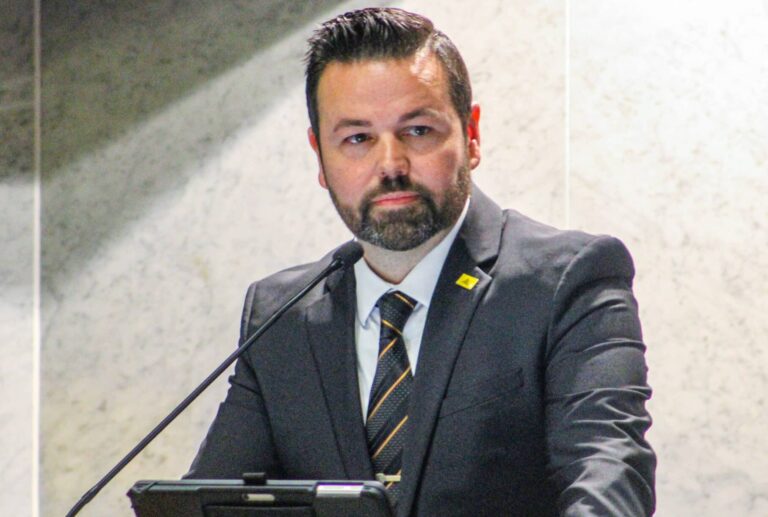
Indiana Lt. Gov. Micah Beckwith said Monday that Islamic calls to prayer should not be broadcast publicly in Indiana, arguing that unlike church bells, the practice is not part of American culture or history.
“Church bells are a part of American culture and history. Islamic calls to prayer are not,” Beckwith said during the latest installment of his “Ask Micah Anything” video series, which he posted on YouTube.
The Islamic call to prayer, known as the adhan, is a religious proclamation announcing the time for one of Islam’s five daily prayers. Traditionally recited in Arabic, it declares that Allah is greatest, that there is no deity but Allah and that Muhammad is God’s messenger, and calls Muslims to prayer. The adhan is an announcement for prayer, rather than the prayer itself.
Beckwith did not identify a specific Indiana mosque or local dispute that prompted his comments. He also did not discuss a specific proposal to prohibit mosques from broadcasting the call to prayer. Publicly broadcast religious sounds generally are subject to local noise regulations governing factors such as volume and time, although those rules cannot discriminate based on the religious content of the sound, courts have found.
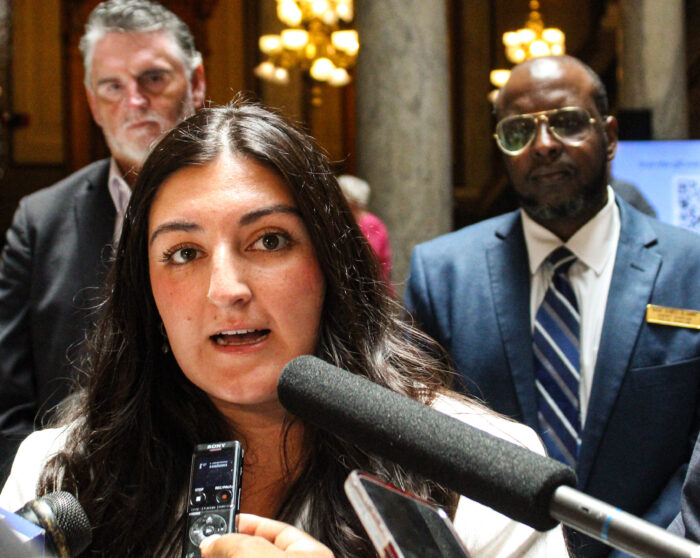
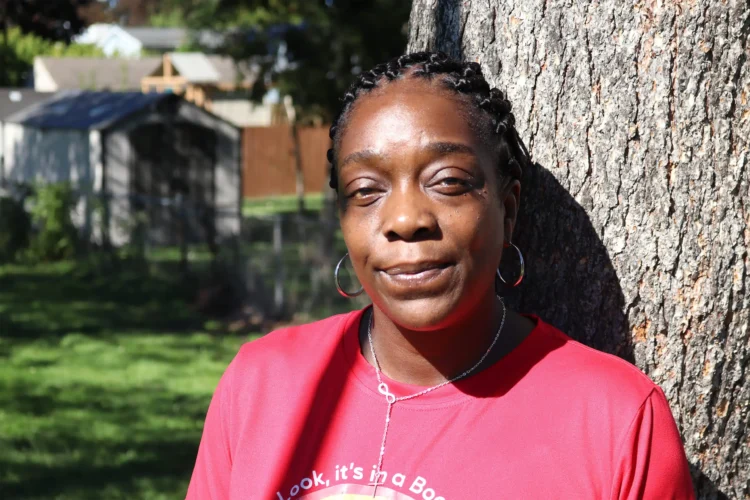
Maliha Zafar, executive director of the Indiana Muslim Advocacy Network, said that to her knowledge, no Indiana mosques broadcast the adhan outside over loudspeakers.
Zafar said Muslim communities across the state are nonetheless concerned about safety. She said mosques have increased security and active-shooter training, and that vandalism and other incidents involving people bringing signs to mosques have occurred at different locations around the state. She said she is not in contact with every mosque and could not provide a statewide accounting of such incidents.
At the statehouse for “Faith Over Fear” event in June, Zafar said Muslim families across Indiana have expressed concern about increasingly hostile public rhetoric.
“When prejudice and misinformation go unchallenged, they create an environment where people feel unwelcome, isolated and afraid,” Zafar said.
Beckwith argued Monday that Islamic calls to prayer are foreign to American culture.
He was responding to a viewer who asked why Islamic calls to prayer should be silenced while churches are allowed to ring bells.
Beckwith suggested that people who want to hear Islamic calls to prayer should go to countries where the practice is part of the local heritage and history. He also suggested mosques could send text messages to members when it is time to pray instead of broadcasting the call publicly.
“We do not need to blare out Islamic calls to prayer across the communities of Israel and the rest of Indiana,” Beckwith said.
Beckwith made the comments while continuing his broader criticism of Islam that has intensified since May.
In a video interview on the Christian political program FlashPoint, Beckwith criticized Islam and said Americans should have “permission to hate again.” In the same remarks, he also described Islam as a “demonic death cult.” Later, he claimed that the religion is “actually worse” than Nazism, and made his initial call for the state to take steps to ban the Islamic call to prayer.
Earlier in “Ask Micah Anything,” Beckwith, who has called himself a Christian nationalist, was asked whether his opposition to immigrants bringing their culture to the United States applied to all immigrants or “just the brown ones.”
Beckwith pointed to cultural celebrations such as Cinco de Mayo and St. Patrick’s Day as examples of immigrant traditions he welcomes. But he said he was opposed to what he described as ideologies that do not “fit in and align with the American value system.”
“When you look at things like radical Islam,” Beckwith said, “when you look at things like these people coming in who are bringing ideas that are counter to what we believe as Americans, that’s the problem.”
“I don’t want the culture of communism or Marxism or Islamism into America because it doesn’t fit with America,” he said.
Beckwith asked viewers whether they would welcome “Nazi cultures” or “KKK culture” into the United States.
“I don’t want it anywhere,” Beckwith said of the Ku Klux Klan. “And there’s certain cultures in America that we should say, this is not who we are, and we need to stand against it and fight against it.”
Beckwith said immigrants can retain their celebrations and heritage but should “assimilate into our culture.” He said America should not simply embrace multiculturalism but should instead “defend the American culture.”
He then invoked heaven as an analogy for the kind of cultural unity he believes America should pursue.
“Heaven is going to be very colorful, full of many different people, many different colors, many different cultures,” Beckwith said. “But they will all assimilate into one culture. That will be the culture of heaven. America should do the same thing.”
The National Museum of African American History and Culture says Islam has been part of the American religious landscape since the earliest period of European settlement.
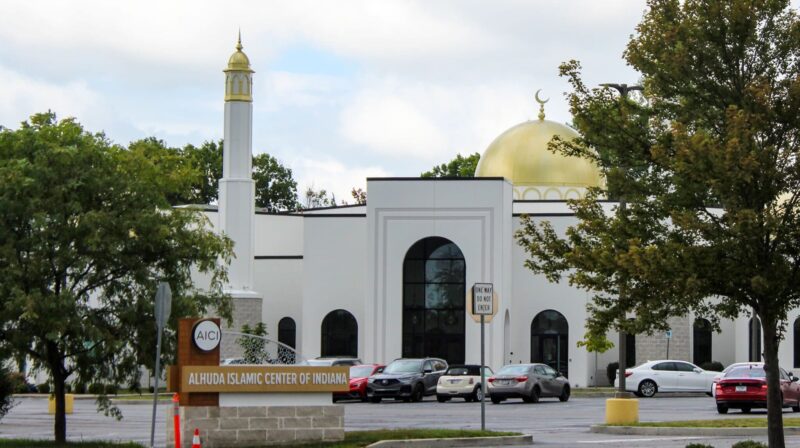
Muslims first came to North America in the 1500s as part of colonial expeditions, and African Muslims were among those brought to the colonies through slavery. Some enslaved Muslims maintained their religious practices despite pressure to convert to Christianity. The museum documents Muslims praying five times a day, writing in Arabic and building religious communities while enslaved.
Muslims also fought alongside American colonists during the Revolutionary War. And the presence of Muslims was known to the nation’s founders.
The Library of Congress notes that there may have been hundreds or even thousands of Muslims in the United States in 1776, many of them enslaved people from parts of Africa where Islam was practiced. Its research into the papers of George Washington, Thomas Jefferson and other Founders also shows that they explicitly considered Islam when debating religious freedom.
Jefferson wrote that Virginia’s religious freedom law was intended to protect “the Jew and the Gentile, the Christian and Mahometan [Muslim].” The language was later amended before the statute was adopted, but the Library of Congress says the Founders’ conception of religious freedom encompassed Islam.
The Smithsonian museum notes that the legacy of early African Muslims can still be seen in American culture, including religious and musical traditions. Some early blues singing styles, for example, resembled the sweeping vocalizations of the Islamic call to prayer.
Sydney Byerly is a political reporter who grew up in New Albany, Indiana. Before joining The Citizen, Sydney reported news for TheStatehouseFile.com and most recently managed and edited The Corydon Democrat & Clarion News in southern Indiana. She earned her bachelor’s in journalism at Franklin College’s Pulliam School of Journalism (‘Sco Griz!).
The Indiana Citizen is a nonpartisan, nonprofit platform dedicated to increasing the number of informed and engaged Hoosier citizens. We are operated by the Indiana Citizen Education Foundation, Inc., a 501(c)(3) public charity. For questions about the story, contact Marilyn Odendahl at marilyn.odendahl@indianacitizen.org.