By Marilyn Odendahl
The Indiana Citizen
August 24, 2026
The Indiana Supreme Court has decided to wade into the Republican nomination fight between Sen. Spencer Deery and Paula Copenhaver for state Senate District 23, requesting front-and-back images of the six disputed ballots and scheduling oral arguments for Sept. 10.
Issued on Monday, the Supreme Court’s order came after Copenhaver argued in her response filed on Friday that the justices should not accept the case, because voters could be confused by any changes to the ballot so close to the November general election. She asserted the incumbent senator’s appeal was moot because she had already been certified as the winner and the deadline for certifying the respective party nominees who will appear on the November ballot has passed, while other election administration deadlines are fast-approaching.
“Respect for the Legislature’s carefully chosen deadlines ensures that elections are conducted in a uniform and equal manner, avoiding chaos that could arise from ad hoc or judicially established election deadlines,” Copenhaver told the Supreme Court.
Copenhaver, a member of Lt. Gov. Micah Beckwith’s staff, was declared the GOP nominee in the race for the District 23 seat on Aug. 10, when the Indiana Recount Commission overturned the results from the May primary. Deery, R-West Lafayette, had been proclaimed the nominee by just three votes in the hours following the close of the polls, but after the Recount Commission rejected 10 absentee ballots, Copenhaver was three votes ahead of the incumbent.
Deery appealed directly to the Indiana Supreme Court, arguing the Recount Commission had erred in discarding six of those 10 ballots. After Copenhaver filed her response to the appeal on Aug. 21, Deery filed his reply by the Aug. 24 deadline.
As part of his reply, Deery asserted Indiana law does not impose a deadline for the courts to complete a review of an alleged error of law or for the results of an election to be corrected. He contended the legislature did not “enact a hard stop” for when an appellate review of the Recount Commission had to be finished. Moreover, he said, the 74-day deadline before an election to certify candidates can be modified by the court “if the facts and law demand and due process so requires.”
In its order, the Indiana Supreme Court did not provide any indication why it had accepted the case. It set an aggressive briefing schedule, calling for Deery’s brief to be filed by Aug. 28 and Copenhaver’s response brief filed by Sept. 1. No extensions of time will be granted except in extraordinary circumstances.
Copenhaver’s response focused on the calendar and in 16 pages, tried to convince the Supreme Court to deny Deery’s appeal because the general election is less than three months away. She did not address any part of the incumbent’s argument that the Recount Commission tossed ballots that it should have accepted.
Emphasizing the importance of maintaining the deadline for candidates to be certified, Copenhaver said shortening the time between certification and the election would negatively impact the public, the political parties and the candidates.
“The post-certification general election period allows candidates to campaign effectively, enables parties to organize and support their nominees, and provides voters adequate time to evaluate their choices,” Copenhaver asserted in her response.
Deery countered that declaring his appeal moot would violate his rights under the Indiana Constitution. In particular, he argued that a judicial review would uphold not only his right to a free and equal election as promised in Article 2, Section 1, of the state constitution, but also the constitutional rights of the constituents who supported him to have their votes counted.
Pushing back on Copenhaver’s deadline argument, Deery asserted the election calendar should not prevent the Supreme Court from reviewing the Recount Commission’s decision in rejecting six ballots.
In a 2-to-1 vote, the Recount Commission discarded six absentee ballots that had been cast for Deery because they did not have the seals and signatures of the respective circuit court clerks from Vermillion, Montgomery and Warren counties. This decision dropped Deery’s vote total and made Copenhaver the winner of the GOP primary in Senate District 23.
Deery argued in his appeal that a “savings clause” in state statute requires the six ballots be counted. Pointing to Indiana Code 3-12-1-12(b), he said the ballots in question could not be tossed solely because they lacked the clerks’ markings, but rather they had to lack the proper insignia coupled with some evidence of fraud.
In his reply, Deery echoed the arguments he made in his appeal for judicial review by the Supreme Court.
“Voting is the bedrock upon which our country has been built,” Deery asserted. “There are few substantial legal questions of greater public interest than those involving the fundamental right to vote and having that vote counted.”
During the Recount Commission hearing, Copenhaver’s attorney, William Bock III, argued the savings clause does not apply to the six absentee ballots. While the clerks had a duty to affix their seals and signatures, the voters had a responsibility to flip their ballots over and double-check that the proper markings were present.
Copenhaver’s response was filed by Bock, Ted Nolting, Adam Doerr and Sarah Pfister, all attorneys with Kroger Gardis & Regas. Deery is continuing to be represented by Samantha DeWester and has added attorneys Karen Celestino-Horseman and William Groth for the appeal.
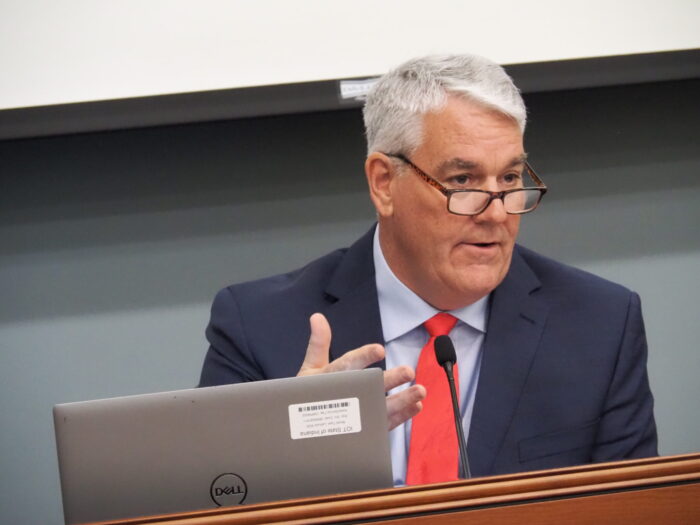
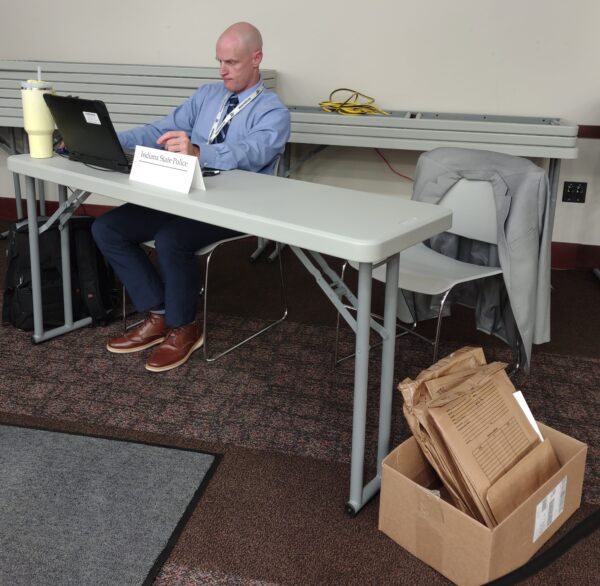
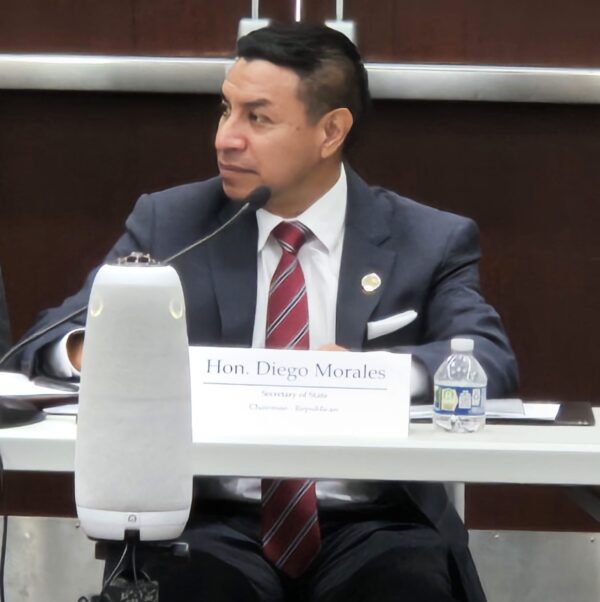
As Deery highlighted in a footnote in his reply, the court docket lists Indiana Attorney General Todd Rokita as appearing for Indiana Secretary of State Diego Morales, who serves as the Recount Commission chair, but he has not appeared for the commission members: Paul Mullin and Michael Claytor. Also, the commission has not filed an objection to Deery’s appeal or his motion to stay.
The case is Sen. Spencer R. Deery v. Paula K. Copenhaver, et al., 26A-EX-2271.
Dwight Adams, an editor and writer based in Indianapolis, edited this article. He is a former content editor, copy editor and digital producer at The Indianapolis Star and IndyStar.com, and worked as a planner for other newspapers, including the Louisville Courier Journal.
The Indiana Citizen is a nonpartisan, nonprofit platform dedicated to increasing the number of informed and engaged Hoosier citizens. We are operated by the Indiana Citizen Education Foundation, Inc., a 501(c)(3) public charity. For questions about the story, contact Marilyn Odendahl at marilyn.odendahl@indianacitizen.org.