By Marilyn Odendahl
The Indiana Citizen
August 27, 2026
In remarks prior to the debate between the Indiana secretary of state candidates, Matt Mindrum, president and CEO of the Indy Chamber, noted the significance of the 2026 race for that office.
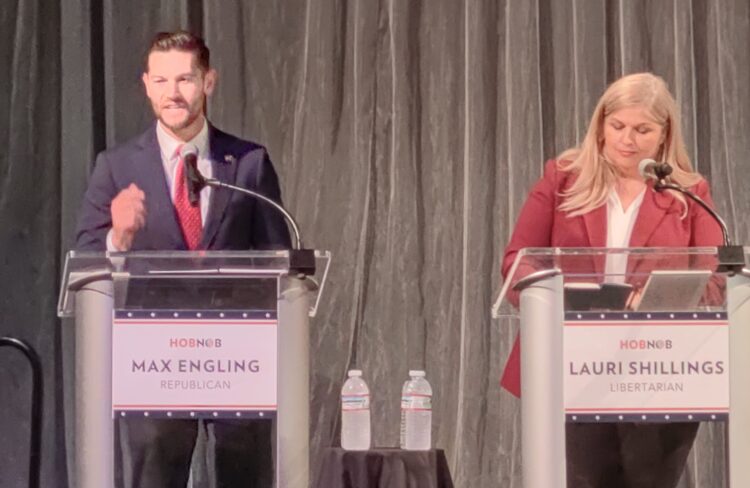
Republicans have handily held the secretary of state’s office in Indiana for 32 years, but this year, the GOP nominee, Max Engling, is facing three strong opponents. The Democrat, Beau Bayh, is well-funded and carries a well-known name in Hoosier politics, while the Libertarian, Lauri Shillings, brings a background in business and entrepreneurship. Also, shaking up the contest even more is former Indianapolis Mayor Greg Ballard, who is trying to create a new political party, the Lincoln Party, and is emphasizing his independence and experience in the public sector.
And even Engling has demonstrated his ability to attract votes, despite entering the GOP nomination race at the last minute. Then, at the Indiana Republican state convention on June 20, he fended off three opponents, including the incumbent, Diego Morales, in two rounds of voting.
“If we’re honest, the secretary of state is often an office that voters don’t spend a lot of time thinking about. Well, I don’t think anyone can say that about this year’s race,” Mindrum said. “Four candidates, four very different backgrounds and political paths, and a contest that has already generated more attention, more competition, more debate than this office has perhaps ever seen.”
The attention has been building as Morales has drawn sharp criticism, from inside and outside the Statehouse, for controversies since his election in 2022, including awarding no-bid contracts to donors, hiring family members, and taking questionable trips abroad. Throughout this year, the spotlight has shifted as the four candidates have crowded onto the November ballot.
“That visibility is a good thing,” Mindrum continued, “because amid all the politics surrounding this race, tonight gives us a chance to come back to a fundamental question: What should Hoosiers expect from this office?”
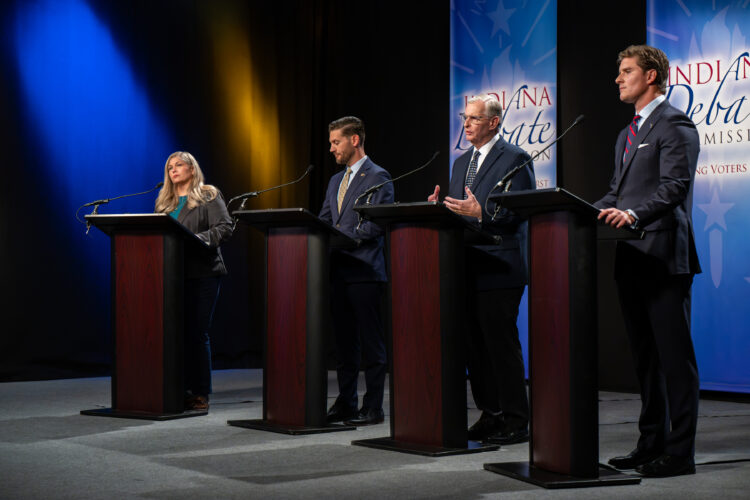
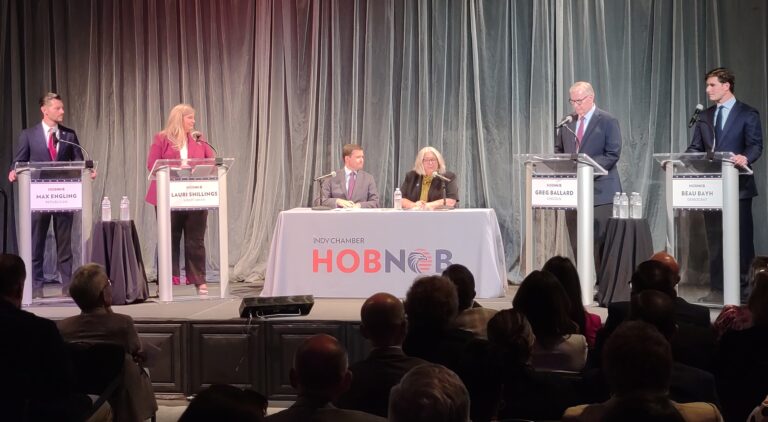
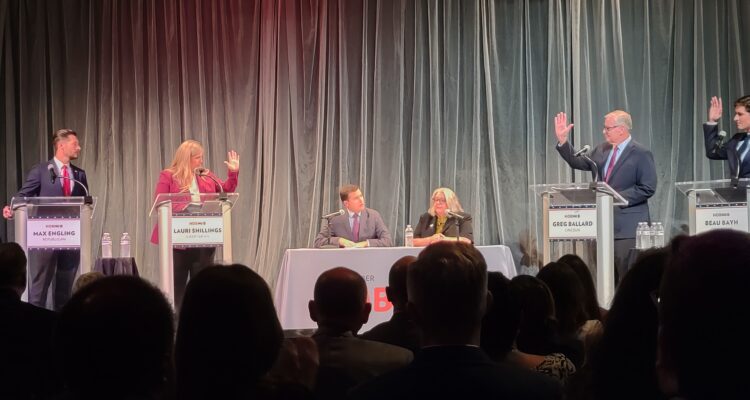
The secretary of state candidates were together Wednesday night for a debate as part of the Indy Chamber’s HobNob event in Indianapolis. As they jostled over questions about the office’s work to ensure election integrity and provide business services, a division emerged with Bayh, Ballard and Shillings often uniting around an issue and taking a similar position, while Engling held an opposing view.
That 3-to-1 split among the candidates first happened when the four were asked how they would try to instill confidence in the secretary of state’s office, after Morales’ checkered tenure. Bayh, Ballard and Shillings said they would conduct an audit of the office’s budget and practices during the past four years.
“Government corruption looks a lot like an iceberg. The top 10% is just what we know …,” Bayh said, referring to Morales putting relatives on the state payroll and giving contracts to political donors. “The 90% working beneath the surface, we need to uncover. We need to see who else is complicit in this and hold people accountable.”
Conversely, Engling obliquely referenced Morales’ hiring practices, joking that he has told his seven brothers-in-law they will not be getting jobs in the office, but he did not mention doing an audit or any kind of review. Instead, he pointed to his experience being part of a transition team into a statewide office.
“I’m committed to working with our team, with others that have been in the office, others outside of the office, to make sure that on day one we present a new vision, a new path, new processes, that we keep the folks that are doing well, but that we execute the office the way that Hoosiers want us to, so that they have confidence in elections and the (office’s) other three divisions,” Engling said.
Throughout the debate, Engling avoided criticizing Morales or the office itself. He repeatedly said the state agency is “doing a good job” but a few times noted, improvements could be made.
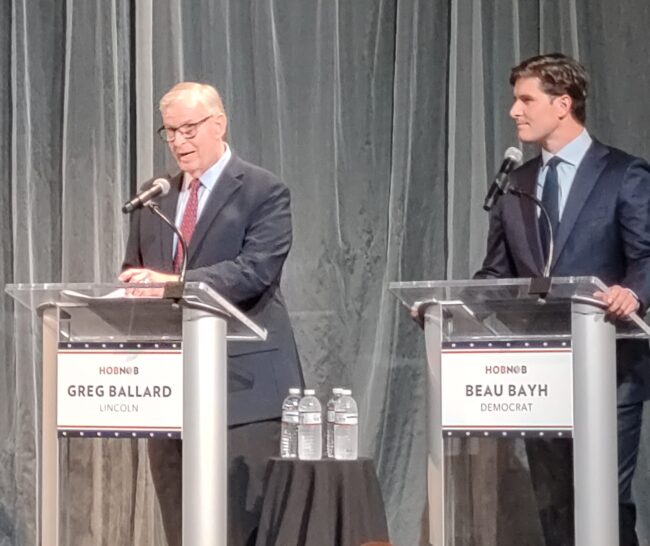
Overall, the debate was civil and respectful, and while the candidates did disagree, they did not raise their voices, throw insults or talk over one another. For a little over an hour, the candidates stood behind their individual lecturns and fielded questions about election administration and building voter confidence as well as improving services to businesses. Each was given 60 seconds to respond and then 30 seconds for any rebuttals.
The debate was moderated by Dan Spehler, evening news anchor at FOX59 News, and Lesley Weidenbener, editor and assistant publisher at IBJ Media.
Shillings strongly criticized the Trump administration’s attempts to regulate and control elections.
President Donald Trump has been pressuring Congress to pass the Safeguard American Voter Eligibility Act, or SAVE Act, which would require every American, including those who have been on the voter registration rolls for decades, to present qualifying documents, such as a passport or birth certificate, to prove they are U.S. citizens.
Schillings described the SAVE Act as a “barrier to voters” and reiterated widely held concerns about its potential to disenfranchise voters. She noted individuals who have changed their name, including married women, could be blocked from the polls because their current names do not match the ones on their birth certificates. Also pointing to the cost to get a passport or copy of a naturalization certificate, she equated the federal legislation to a poll tax.
“When you have national leaders spouting off information about voter fraud when there’s very little actual evidence of that, people decide they don’t trust that system anymore,” Shillings said.
Engling advocated for passage of the SAVE Act and said the effect on Indiana would be very small, because the state is already “doing a great job” administering elections. However, echoing Trump, he said ensuring only eligible citizens are casting ballots is important.
“We have to know who’s voting in our elections,” Engling said. “It is sacred. And if you think that that’s something that’s not important, I would say you’ve fundamentally disqualified yourself for secretary of state.”
Both Ballard and Bayh were critical of Morales’ decision to turn over Indiana’s voter rolls to the U.S. Department of Justice. They said the states have the responsibility to administer elections, as stated in the U.S. Constitution, and the federal government should not interfere.
Indiana is one of about a dozen states that acquiesced to the federal government’s demand and provided the voter information, which the Trump administration is reportedly using to create a national database to allegedly help identify undocumented individuals living in the United States. Numerous other states have been sued because they refused to release their voter rolls, but to date, the courts have consistently ruled against the federal government.
“I’m all for working with the federal government where it’s necessary, but I think that should be a conversation and not just a wholesale delivery of our own personal data without a very important reason,” Bayh said.
A question about the Indiana Recount Commission and its recent decision to overturn the results of the state Senate District 23 Republican primary between Sen. Spencer Deery, R-West Lafayette, and Paula Copenhaver, created another divide between Engling and the other three candidates.
Deery had secured a slim victory in the Statehouse race, but the Recount Commission reversed that initial primary result by rejecting six absentee ballots. In a partisan 2-to-1 vote, the Republican members on the commission, including Morales, voted to toss those ballots while the Democratic member was opposed, arguing that the statute gave the commission the authority to find in favor of the voters.
The commission decision has been appealed to the Indiana Supreme Court, where oral arguments have been scheduled for Sept. 10.
Bayh, Ballard and Shillings rebuked the Recount Commission for tossing those six ballots only because county election officials forgot to affix the clerk’s seal and signature. They said the intent of those six voters to support Deery was clear and state law allows the voters’ intention to be honored when there is no evidence of fraud.
Engling countered the commission followed the law in discarding those six ballots. He also asserted the Recount Commission voted unanimously on the “final outcome” of the Deery-Copenhaver dispute, which made Copenhaver the winner.
The members of the commission did unanimously approve the motion offered at the end of the recount hearing that showed Copenhaver with 6,332 votes and Deery with 6,329 votes. However, the individual votes on the six ballots split along party lines.
Ballard suggested revamping the Recount Commission to remove any partisan stain.
“The secretary of state’s office needs to be free from politics,” Ballard said. “The Recount Commission should be five retired judges. It should not be political. (The membership) should not be a Republican and a Democrat and the secretary of state, who is a political being. There should be five retired judges who are free from politics.”
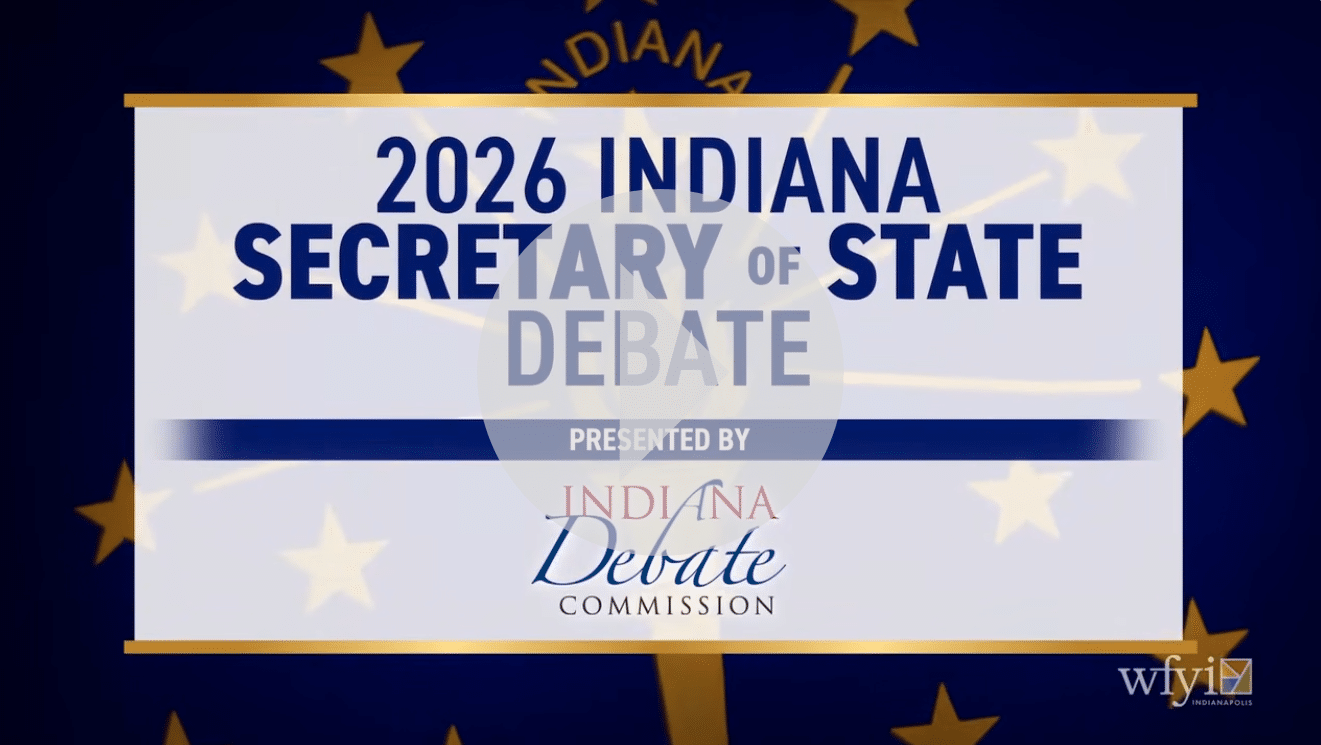
The four secretary of state candidates are scheduled to appear together again in a televised debate hosted by the Indiana Debate Commission. The event will be broadcast and streamed across the state from the WFYI studios in Indianapolis from 7 to 8 p.m. on Oct. 7.
Dwight Adams, an editor and writer based in Indianapolis, edited this article. He is a former content editor, copy editor and digital producer at The Indianapolis Star and IndyStar.com, and worked as a planner for other newspapers, including the Louisville Courier Journal.
The Indiana Citizen is a nonpartisan, nonprofit platform dedicated to increasing the number of informed and engaged Hoosier citizens. We are operated by the Indiana Citizen Education Foundation, Inc., a 501(c)(3) public charity. For questions about the story, contact Marilyn Odendahl at marilyn.odendahl@indianacitizen.org.