This article was originally published on Andrew Whitehead’s Substack, American Idolatry.
On public funding for private school vouchers, Christian nationalism, and services for disabled students
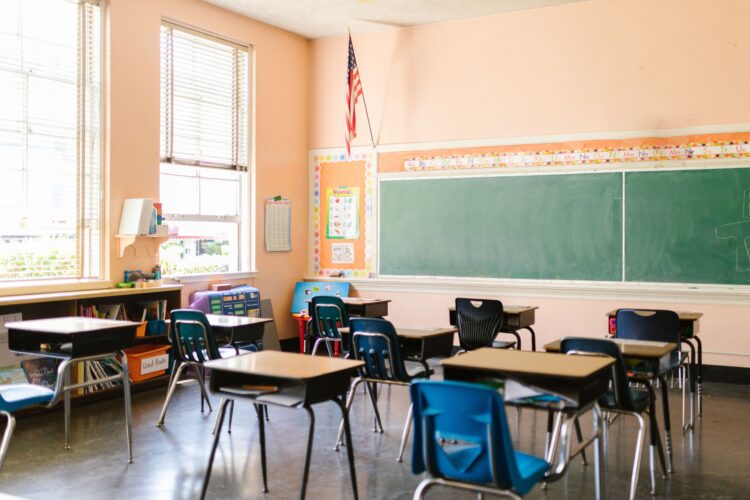
I taught algebra and geometry at a small, private Christian school in central Indiana for one year after college before attending graduate school. One day, in a run-of-the-mill conversation with a popular teacher, I learned he had a son and daughter but only his daughter attended our school.[1]

“Oh, why doesn’t your son attend here?” I asked. He shared his son had Down syndrome and that the public schools in the area provided the services and supports he needed to thrive in the school environment. Left unsaid, but obviously implied, is that these sorts of services and supports were simply not available at the private Christian school that employed us both.
I remember feeling grateful that the public schools in the area provided what his son needed to succeed. I also remember thinking that it was sad that our private Christian school, a place that surely valued my colleague’s son, did not provide the necessary supports. I wondered how widespread his experience was. I also wondered what the implications were for families with children with various sorts of disabilities.
This interaction stuck with me over the years, particularly when I became a father to two boys with Fragile X syndrome, a genetic condition that affects cognitive development and behavior. Their intellectual disabilities demand rather extensive supports for them to participate in the public school environment. Both have individualized education programs (IEPs), which are legal documents developed collaboratively between school, service personnel, and our family. IEPs ensure they receive the support they need.
Over the years of working with teachers and administrators in various public school systems, we have had all sorts of experiences ranging from supportive to downright maddening. Through it all, though, the public school systems could not legally deny our boys the pillars of the Individuals with Disabilities Education Act (IDEA), including IEPs, free and appropriate public education, the least-restrictive environment, appropriate ongoing evaluation, parent and teacher collaboration, and procedural safeguards.
Private religious schools, however, are not always bound by the IDEA — or other federal laws protecting students with disabilities — and may not be legally required to provide children with disabilities a free and appropriate public education in the least-restrictive environment. For instance, if I wanted to enroll my sons in the private Christian school that I taught at all those years ago, and I asked them for admittance indicating the various accommodations my sons would require, they could simply say, “no.”
This means the public school system in the United States is the only broadly accessible place where children with disabilities and their families are legally guaranteed a free and appropriate education. Reduced funding, support, and accountability surrounding the IDEA at the local, state, and federal levels limit the opportunities disabled children have within the public school system.
Sadly, the current cultural and political landscape appears to be moving the country in this direction. Project 2025, an administrative roadmap for dramatically reshaping the federal government written by Christian Nationalist leaders and organizations for the second Trump administration, explicitly seeks governmental changes that have already begun to limit the protections for, and the rights of, disabled students.
These include layoffs within the Department of Education, budget cuts and revisions to how IDEA funding is distributed to states, and reduced oversight on how states spend that funding. Additionally, students with disabilities have even fewer opportunities for accountability since March 2025 when the Trump administration closed seven of the 12 regional enforcement offices of the department’s Office for Civil Rights, drastically reducing the federal government’s ability to investigate disability discrimination complaints in our public schools.
Project 2025 also calls for a federal private school voucher law that would create education savings accounts (ESA) where a percentage of a state’s per-pupil education funding is placed in an account parents can use to pay for approved education expenses, including private school tuition. In states that instituted vouchers, data showed these programs overwhelmingly served well-off families who already enrolled their children in private schools. And in states like Arizona and Indiana, public education budgets shrank dramatically, while the costs to run the programs increased. This diversion of resources limits the ability of public schools to meet all sorts of educational needs, including programs serving disabled children.
Any loss of resources for public schools and funding for disability programs takes on added significance when voucher programs, like the one recently instituted in Texas, explicitly state that private schools are not required to admit students with disabilities or provide accommodations for disabled students. To enroll, disabled students and their families may waive the federal protections guaranteed under IDEA and any other special education laws.
Findings from the growing number of social scientific studies on Christian Nationalism provide insight into the various disability-focused policy aims of Project 2025. In particular, Project 2025’s Christian Nationalist commitments seek to undermine public school funding by instituting voucher programs. Part of the history of Christian Nationalism in the United States includes ongoing attempts to ensure a particular expression of Christianity is privileged through backing private religious educational institutions where the “right” sorts of Christian commitments and social categories are favored. This is one reason why public schools are viewed as such a threat – they exist to serve everyone, regardless of religious or political views.
Christian Nationalism is the desire to privilege a particular expression of Christianity in American civic life using the power and influence of the government. My research on Christian Nationalism over the last decade and a half shows the preferred commitments and social categories of Christian Nationalism imagine an “ideal” citizen who is white, male, heterosexual, Protestant Christian, and a natural-born citizen. And the “ideal” family is one where there is a mom and a dad committed to procreation. Social institutions, like education, that do not privilege the preferred social categories are seen as a threat. A commitment to serve everyone stands in the way of ensuring a particular expression of Christianity is privileged in American civic life.
But there is another preferred social category of Christian Nationalism: being able bodied. In a recent peer-reviewed study using a large survey of American adults, I showed how Christian Nationalism is strongly and positively associated with ableism. Ableism refers to the tendency to stereotype and discriminate against people with disabilities, primarily by assigning value to their intellectual and physical abilities while also preferring able-bodied people.
The link between Christian Nationalism and ableism is important because ableism conceals the social inequalities and discrimination disabled people experience every day. Ableism shrouds how the difficulties disabled people face are not their own, individual faults. It also obscures how successfully addressing the problems disabled people face requires collective action.
Therefore, the policy goals of Project 2025 which weaken public schools — the only places where disabled children and their families are guaranteed free and appropriate educational opportunities — are in part linked to its authors’ Christian Nationalist commitments. They do not see the needs of disabled children and their families as reason enough to ensure public schools are not harmed by changes to federal funding for education.
The desire to privilege private religious education will have real-life implications for families of children with disabilities, even those families who might embrace conservative Christian values. Rolling back federal protections for disabled students and diverting funding from public schools will limit public schools’ ability to provide free and appropriate educational opportunities to all. Moves to privilege private religious education also absolve private schools from having to accept or accommodate disabled students.
Every American should be able to choose where they send their child to school, whether it is a private religious institution or a local public school. However, every other American taxpayer should not be required to cover part of the bill for those families who choose private religious education, particularly when doing so diverts funding from public schools and may result in a reduction of services for all children, especially disabled children.
Doing so may lead to a future where the disabled children of teachers at private religious schools, as well as my two boys with Fragile X, may cease to have access to the public school disability programs we rely upon for all our children to thrive.
[1]: This column originally appeared in the March 2026 issue of Church & State, the magazine of Americans United for the Separation of Church and State.
Andrew L. Whitehead is professor of sociology at Indiana University Indianapolis and a Charles F. Kettering Foundation Research Fellow. (This article represents the personal views of the author and does not necessarily represent the views of Americans United, Indiana University Indianapolis, or the Charles F. Kettering Foundation.)
The views and opinions expressed are those of the author only and do not necessarily reflect the views of The Indiana Citizen or any other affiliated organization.