By Marilyn Odendahl
The Indiana Citizen
May 21, 2026
The intraparty fight among Indiana Republicans is still raging with recount petitions being filed in two GOP primaries for the state Senate where the incumbents – one who invoked President Donald Trump’s ire and one who received Trump’s endorsement – won by whisker-thin margins.
Sen. Spencer Deery, R-Lafayette, held onto his Senate District 23 seat by three votes, defeating former Fountain County Circuit Court Clerk Paula Copenhaver by 6,337 votes to 6,334. Deery angered Trump by voting to block the White House’s push for midcycle redistricting, while Copenhaver benefited from the president’s endorsement and a flood of money from special-interest groups.
On Monday, Copenhaver filed a petition for a recount. She is challenging the validity of the ballots cast by 14 voters who posted on social media or told reporters they were Democrats but pulled a Republican ballot solely to support Deery.
Sen. Liz Brown, R-Fort Wayne, has been declared the winner in the Senate District 15 race by 14 votes. In a brawl between MAGA Republicans, Brown, who supported redistricting and was endorsed by Trump, dispatched challenger Darren Vogt, who had endorsements from U.S. Sen. Jim Banks, R-Indiana, and Indiana Attorney General Todd Rokita, by winning 5,241 votes to 5,227.
Vogt issued a press release after filing a petition for a recount on Tuesday. He said questions had been raised about the vote-counting process and he was calling for the votes to be counted again “to ensure we can have confidence in our elections.”
As part of the recount process, the Indiana State Police will secure the ballots and election materials in the designated races. The Indiana State Board of Accounts, under the supervision of the recount director Jessica Dickinson, will conduct the actual recounting of the votes, examining and manually counting each ballot that had been declared to be valid.
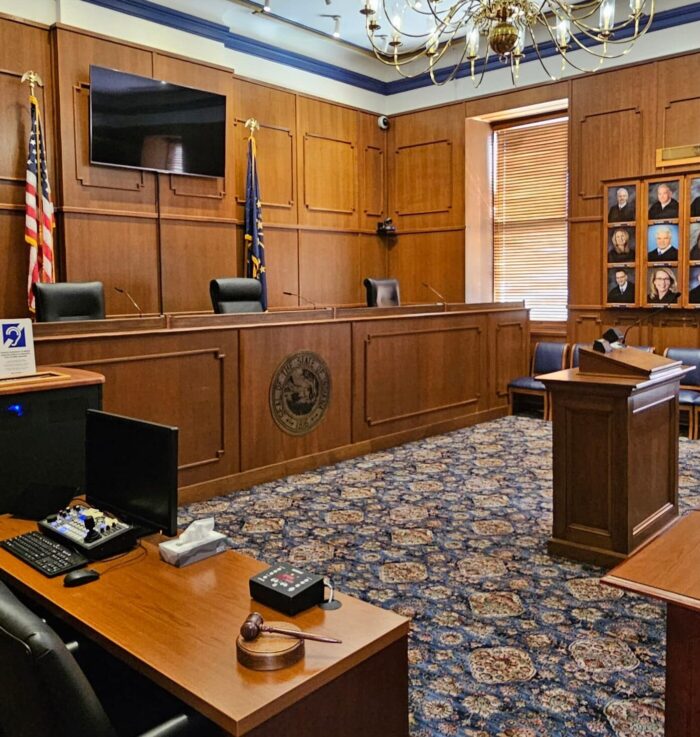
The Indiana Recount Commission, chaired by Indiana Secretary of State Diego Morales, will make the final determination on the validity of any disputed ballots.
Copenhaver is being represented by William Bock III, attorney with Kroger Gardis & Regas in Indianapolis.
Bock represented Trump in a 2020 election lawsuit filed in the Eastern Wisconsin District Court, asking the federal judge to order the Republican-controlled state legislature to name the president the winner over Democrat Joe Biden. Ruling against Trump, the judge said the arguments made by Bock “fail as a matter of law and fact.”
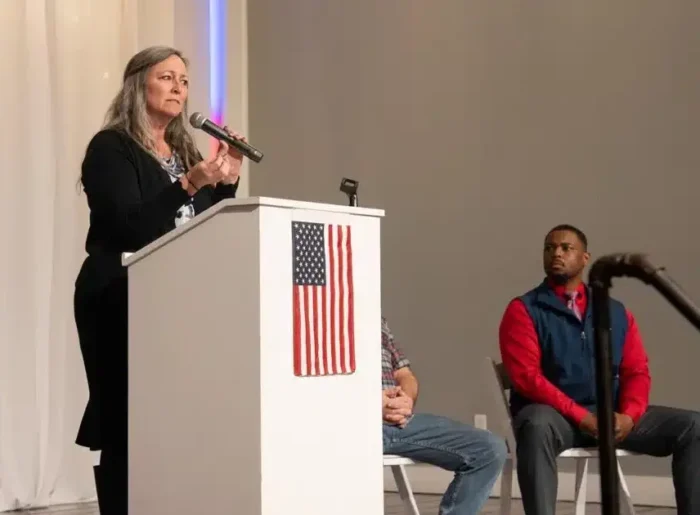
Copenhaver’s petition for a recount raises two additional claims along with the argument against counting the crossover votes.
She alleges another vote was added to Deery’s vote total on May 6 in Tippecanoe County – the day after the primary election day – which she calls an anomaly that has not been officially explained or documented. Consequently, she asserts she is entitled to conduct discovery into the way the Tippecanoe County Clerk and Tippecanoe County Election Board run elections in the county.
Also, Copenhaver requests the individuals who voted in the Senate District 23 Republican primary be checked against the Systematic Alien Verification for Entitlements database. She said the SAVE data “can be used to help determine” whether any ineligible individuals cast a ballot in that primary contest.
Indiana has had access to the SAVE database since Morales entered into a memorandum of agreement with the U.S. Citizenship and Immigration Services in July 2025. Although the accuracy of the database has been questioned, Morales said the state would use SAVE to check the immigration status of Hoosier voters.
Deery issued a press release in response to Copenhaver’s petition for a recount. He cautioned against making “assumptions and accusations designed to undermine confidence in lawful votes.”
“Candidates have a right to request a recount of election results,” Deery said in the release. “That is not a license to intimidate voters or to rewrite election laws after the results are in, or to ignore basic facts.”
Copenhaver’s main claim in her petition is that the votes that were cast by 14 individuals who self-identified as crossing over in the Senate District 23 primary and pulling a Republican ballot are invalid and should not be counted. She found the voters mainly through their posts on social media, in which they said they crossed over “to support Deery against the maga challenger” or they wanted “to vote for the best of the worst,” while one claimed he and two others who crossed over should celebrate because they were responsible for boosting Deery to victory.
Copenhaver’s argument hinges on Indiana Code 3-10-1-6, which mandates that voters may pull a party’s primary ballot only if they voted for a majority of that party’s candidates in the last general or, if they did not vote in the last general election, they intend to vote for most of that party’s candidates in the upcoming general election.
Pointing to Indiana Supreme Court precedent from 1887 and 1925, Copenhaver asserts the veil of secrecy shrouding a ballot is lifted when a voter “tries to game the system by casting a ballot unlawfully.” The 14 individuals, she said, voluntarily admitted they were “not Republican affiliated voters” when they cast their ballots for Deery.
Along with her petition, Copenhaver also filed a motion to subpoena self-identified crossover voters to give depositions before the Recount Commission. The voters, under penalties of perjury, would be questioned by the attorneys for both candidates. These depositions, she said, would assist the commission in “determining whether votes cast by the identified voters should be excluded from Candidate Deery’s recount total.”
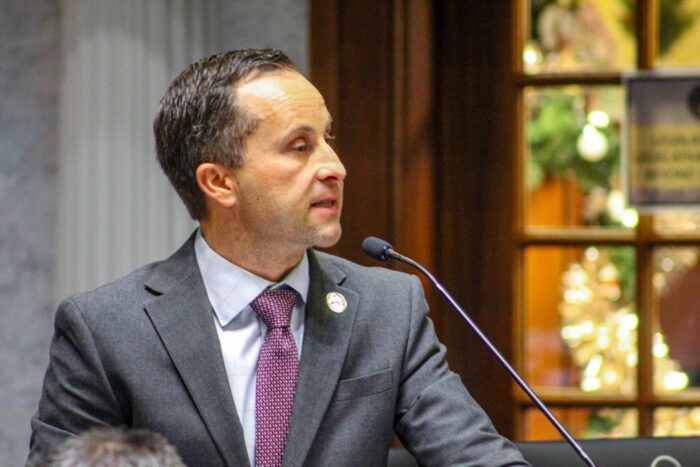
In his press release, Deery disputed Copenhaver’s contention that the votes cast by the 14 individuals were invalid.
“The challenged voters’ records undermine the petition’s central theory,” Deery said. “Included in the subpoena list are voters who were not even voters in this primary, who have a history of voting Republican, and who are being targeted over their social media posts.
“We don’t do that in America,” Deery said. “We respect the results of elections and the voters who decide them.”
Vogt is being represented by Indianapolis attorney James Ammeen Jr., of Ammeen & Associates.
Vogt’s petition for recount asks for all the votes to be counted again in the race for the Republican nomination in Senate District 15. Other than saying Vogt “in good faith believes” a mistake or malfunction occurred at some point in the election process, his filing does not include detailed assertions or arguments like Copenhaver’s petition.
However, in a press release, Vogt contends the vote margin has narrowed between him and Brown and, he asserts, the “actual final result” is not known. Also, he alludes to some potential irregularities in the way the votes were tabulated on election night.
“Following days of counting delays, voters across the district have been asking questions about the long counting process, the inexplicable closing of blinds at critical times during counting, the first attempt at implementing vote centers, and how they can be sure their votes were counted and counted properly,” Vogt said in his press release. “Those are fair questions that this filing will hopefully be able to answer.”
Brown’s campaign could not be reached for a comment.
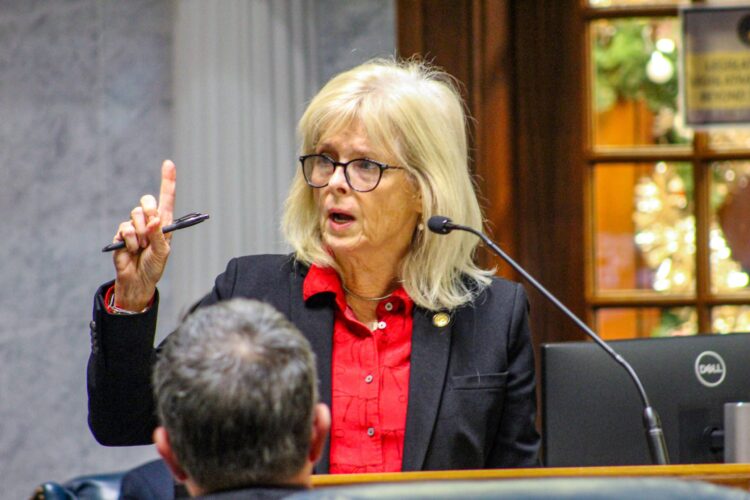
However, the day after the primary when the Vogt campaign announced it was exploring all options because the race was so tight, the state senator was a guest on WOWO, a radio station in Fort Wayne, and said she understood the impetus to take another look at the results.
Even so, Brown defended the vote-counting process, calling it “very methodical” and time consuming because, she said, the Allen County Election Board did not want to make any mistakes. Moreover, the voting machines have backups and the election board is controlled by Republicans.
“I don’t think we should be so quick to say, because I lost or my candidate lost, that there must be something up,” Brown said on WOWO. “Our Secretary of State, who’s endorsed by our senators, said there’s no issue with election integrity in the entire state of Indiana. And now, all of the sudden, we’re casting a little doubt. I don’t think that’s fair to all the voters who came out.”
Dwight Adams, an editor and writer based in Indianapolis, edited this article. He is a former content editor, copy editor and digital producer at The Indianapolis Star and IndyStar.com, and worked as a planner for other newspapers, including the Louisville Courier Journal.
The Indiana Citizen is a nonpartisan, nonprofit platform dedicated to increasing the number of informed and engaged Hoosier citizens. We are operated by the Indiana Citizen Education Foundation, Inc., a 501(c)(3) public charity. For questions about the story, contact Marilyn Odendahl at marilyn.odendahl@indianacitizen.org