By Marilyn Odendahl
The Indiana Citizen
October 5, 2026
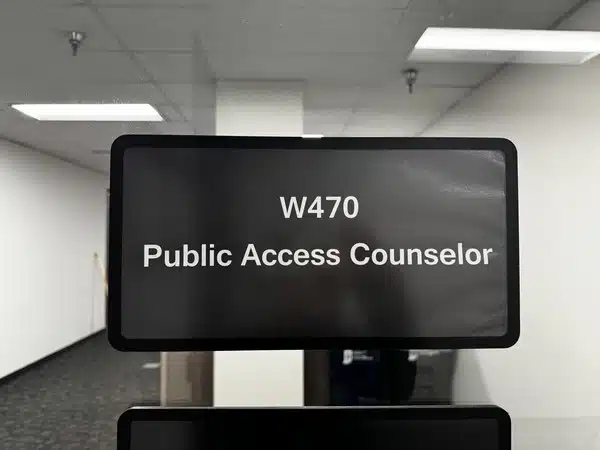
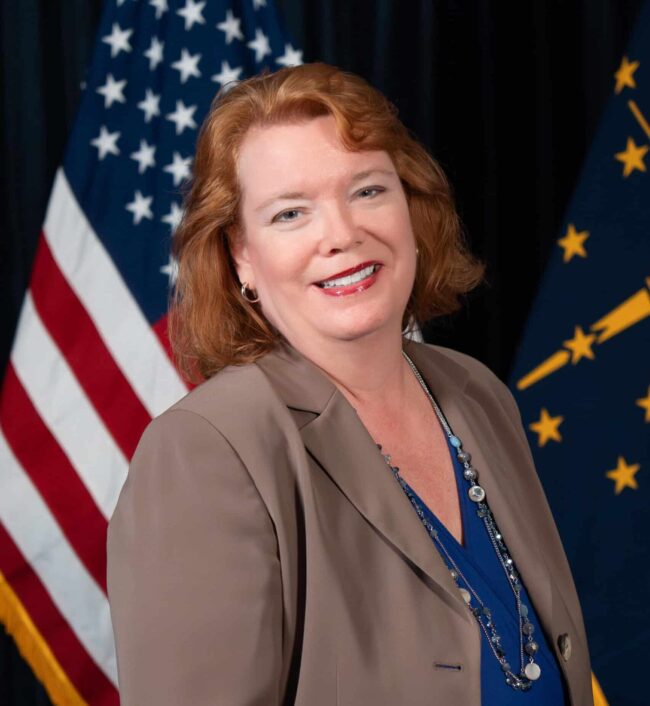
Former Bartholomew County Circuit Court Magistrate Judge Brittney Long has been named Indiana’s public access counselor, replacing attorney Jennifer Ruby, whose 18-month tenure in that job was marked by long delays in responding to public requests for assistance.
Long is scheduled to start in her new position on Monday, Oct. 5.

“Brittney has the legal credentials and passion for public service that makes her an excellent fit for the job,” Gov. Mike Braun said in a statement. “As our next PAC, Brittney will bring added transparency and accountability to our state.”
Ruby, who was appointed public access counselor by Braun in March 2025, resigned from the position, effective Oct. 1, according to the State Personnel Department. The Indiana Citizen requested a copy of Ruby’s resignation letter from the governor’s office, but has not received a response.
Long’s appointment comes after Braun hired attorney Stephanie Flittner in September to serve as his office’s general counsel, according to Flittner’s LinkedIn profile. Previously, Flittner was the general counsel for the Indiana Department of Natural Resources and Long served under her as deputy counsel.
Flittner replaces Patrick Price, who had been the governor’s general counsel since Braun was inaugurated in January 2025. Price has joined the Foundation for Government Accountability as a senior fellow, according to his LinkedIn profile.
A graduate of Indiana University Robert H. McKinney School of Law, Long was a magistrate judge for the Bartholomew County Circuit Court from June 2022 to March 2026. Prior to that, she had been an attorney with Voyles Vaiana Lukemeyer Baldwin & Webb in Indianapolis for nearly 11 years.
The public access counselor was established by then-Gov. Frank O’Bannon in 1998 and tasked with providing guidance on Indiana’s public access laws, including the Access to Public Records Act and the Open Door Law. Private citizens, officials and employees of state agencies and local government offices, as well as members of the media, can turn to the PAC when disputes arise over different interpretations of those statutes.
Serving as a neutral third party, the public access counselor reviews the matter and offers a determination. In response to some complaints, the counselor will issue an informal advisory opinion which outlines the dispute and analyzes the statute in question, providing guidance for how the state law should be applied.
“The Public Access Counselor plays an important role in ensuring Hoosiers understand the public access laws and can fully exercise their right to know what their government at all levels is doing,” Kristopher Cundiff, attorney with the Reporters Committee for Freedom of the Press, said.
In 2024, the Indiana General Assembly sought to limit the role of the public access counselor, a move that critics said would hamper the effectiveness of the position. House Enrolled Act 1338 was amended to include a provision requiring the PAC to consider only “plainly written” public access statutes and “valid” Indiana court rulings. Also, the counselor position was changed from a fixed, four-year term to one serving at the pleasure of the governor.
Longtime former public access counselor Luke Britt subsequently resigned in early 2025 and, after a search, during which former Indiana Attorney General Steve Carter served as interim PAC, Ruby was appointed. At that time, she told The Indiana Citizen she was considering changes that she hoped would streamline some procedures.
“I would like to try to set up some operating procedures, so that we don’t have to keep writing the same opinion over and over and over again,” Ruby said in April 2025.
However, once in that position, Ruby struggled to keep up with the workload. Under state law, the public access counselor is given only 30 days to issue an opinion, but an investigation by The Indianapolis Star found Ruby was taking an average of nearly 250 days. Transparency advocates told The Star that the long delays were making the PAC’s opinions irrelevant.
The frustration reached a boiling point this summer, when the Hoosier State Press Association, Indiana Broadcasters Association and various news outlets wrote a letter to Ruby, asserting the inaction of the public access counselor’s office “has had significant effect on their ability to inform Hoosiers about their government.” Represented by the Reporters Committee for Freedom of the Press, the media coalition requested a meeting with Ruby to outline their concerns and indicated they were prepared to file a lawsuit against the office.
“In sum, the OPAC’s current course of action is untenable, contrary to law, and significantly undermines the ability of the public and the media to avail themselves of the services the law mandates that OPAC provide,” the July 2026 letter said. “Indeed, the end result is that instead of helping facilitate agencies’ compliance with public records laws, the OPAC has become a black hole into which complaints disappear indefinitely.”
The coalition did subsequently meet with Ruby and Molly Craft, the governor’s deputy chief of staff for communications, according to Cundiff. As a result, Braun shifted personnel in his office to put an additional attorney and administrative staff member in the public access counselor’s office. Also, Ruby began posting weekly updates on the status of the complaints filed with the office.
Complaints submitted to the public access counselor are reviewed to determine whether they are complete, timely and appropriate for the office to consider. If the complaint is accepted, the PAC is required by law to promptly notify the official, agency or governmental body and give the individual or entity 20 days to file a formal response. The PAC will then review the complaint, response and any additional documents and issue an advisory opinion on the matter.
In her most recent weekly update filed Oct. 2, Ruby reported that year-to-date, her office had received 673 complaints and 261 were pending. Of those waiting for review, 51 were 180 days or older and 112 had been resolved in under 60 days.
Cundiff worked as an attorney in the public access counselor’s office from 2017 to 2024. He said the PAC provides a valuable service to the media, government and the public in general.
“I’m looking forward to working with Ms. Long in her new role, and I want her to succeed as PAC,” Cundiff said. “It’s not an easy job, but it’s vitally important to government transparency.”
Dwight Adams, an editor and writer based in Indianapolis, edited this article. He is a former content editor, copy editor and digital producer at The Indianapolis Star and IndyStar.com, and worked as a planner for other newspapers, including the Louisville Courier Journal.
The Indiana Citizen is a nonpartisan, nonprofit platform dedicated to increasing the number of informed and engaged Hoosier citizens. We are operated by the Indiana Citizen Education Foundation, Inc., a 501(c)(3) public charity. For questions about the story, contact Marilyn Odendahl at marilyn.odendahl@indianacitizen.org.