By Marilyn Odendahl
The Indiana Citizen
September 2, 2026
As the effort to block the Trump administration’s proposed restrictions on mail-in voting continues to whipsaw between the U.S. Supreme Court and federal district and circuit courts, Indiana voting-rights advocates are encouraging Hoosiers who cast their ballots by mail to do so as early as possible.
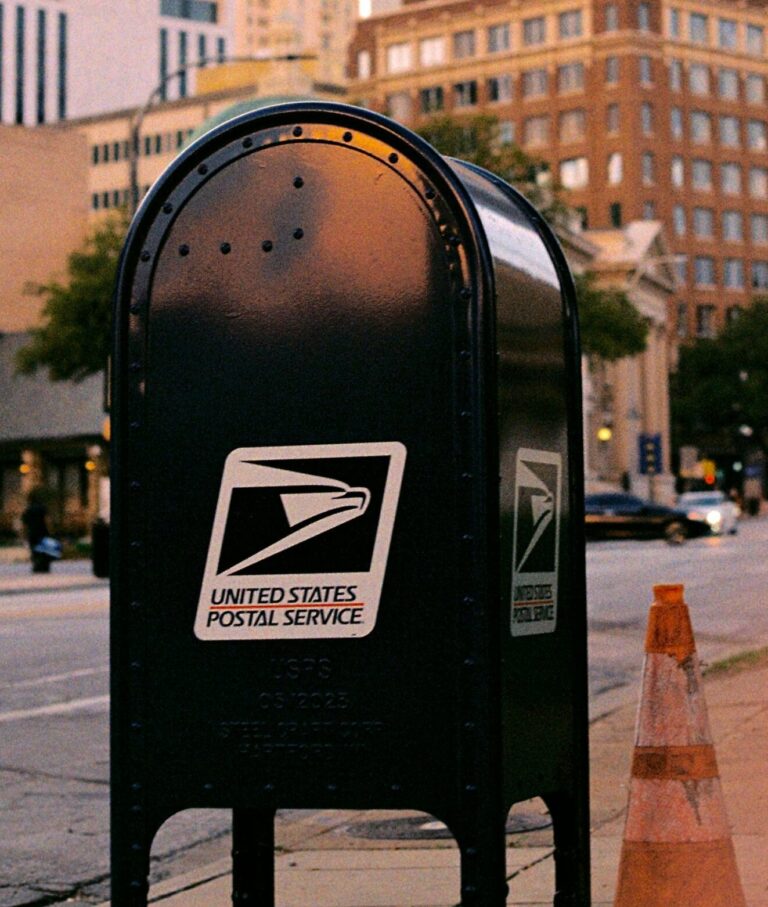
The concern is arising from an executive order President Donald Trump issued in March that, in part, directed the U.S. Postal Service to draft and implement new rules that would enable mail-in ballots to be tracked in federal elections. Over the course of last week, a split Supreme Court lifted an injunction that had been blocking the order from moving forward, but, since the new USPS rule had been finalized by the time the justices ruled, a new petition for an injunction was filed with the district court and another injunction was issued. On Aug. 28, the Trump administration had appealed that latest injunction to the U.S. 1st Circuit Court of Appeals in Boston.
Although this dispute and another challenge to the order are still roiling in the federal courts, Amy Courtney, executive director of MADVoters of Indiana, said the deadlines and process for voting in the November general election have not changed.
“The biggest takeaway is that this ruling does not affect any voter’s ability to cast a mail-in ballot in the 2026 election,” Courtney said of the Supreme Court’s decision. “States, not the federal government or USPS, oversee our elections, and the USPS remains a safe and reliable way to cast your ballot. Because Indiana state law requires mail-in ballots to be received by 6 p.m. on Election Day, we recommend that voters who mail their ballots do so as early as possible to ensure their vote is counted.”
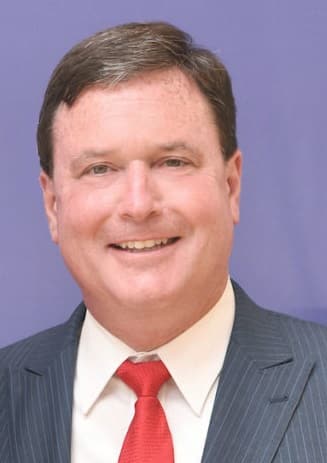
Indiana Attorney General Todd Rokita has been active in advocating for Trump’s executive order. He and Indiana Solicitor General James Barta joined 11 other Republican attorneys general in intervening in State of Alabama, et al. v. State of California, et al., 26A139, when it arrived at the Supreme Court.
Also, Rokita joined 12 other attorneys general in a July 2026 letter to the USPS, supporting the new rule. Although the state officials did not provide any proof, they asserted voter fraud is real and the proposed regulations would help them fight against fraudulent activity while bolstering public confidence in elections.
“While many States work diligently to secure their own elections, there are limits to what they can do,” the attorneys general wrote in their letter. “Most obviously, States cannot regulate the U.S. Postal Service because it is a federal agency – yet most mail-in and absentee ballots are transported by the Postal Service. As it is, then, States can have total control of their ballots until they are mailed, but then the chain of custody becomes anyone’s guess – and with it, the opportunity for fraud ripens.”
Neither Rokita nor Indiana Secretary of State Diego Morales responded to requests for comment on the ruling and what impact it would have on Indiana elections. Sen. Mike Gaskill and Rep. Tim Wesco, Republican chairs of their respective chamber’s election committee in the state legislature, also did not reply to questions about the ruling.
The Chicago Lawyers’ Committee for Civil Rights described Trump’s executive order as enabling the Postal Service to decide who receives a ballot in the mail.
“This executive order is one of many attempts to create chaos and confusion for eligible voters with just over two months before Election Day,” Aneel Chablani, vice president and legal director for the Chicago Lawyers’ Committee, said in a press release. “In America, voters choose their elected officials – elected officials do not get to choose their voters by creating barriers to participation.”
Trump used the executive order to direct the secretary of the Department of Homeland Security to create and distribute to the states a citizenship list that identifies the individuals who are 18 and U.S. citizens. Also, the U.S. attorney general was required to investigate and prosecute state and local officials who issue federal ballots to ineligible voters, and the U.S. Postal Service was ordered to establish new rules to, in part, allow mailed ballots to be tracked.
A coalition of states and the District of Columbia sued the federal government, claiming the executive order violated their constitutional authority to administer elections. However, the 6-3 majority of the justices found that the states did not have grounds to seek legal relief because the Trump administration’s order had not gone into effect. Consequently, since no part of the executive order was operational, the states were not suffering any harm.
Moreover, the justices ruled, the injunction was meddling because the executive branch was prevented “from even trying to lawfully implement the Order.”
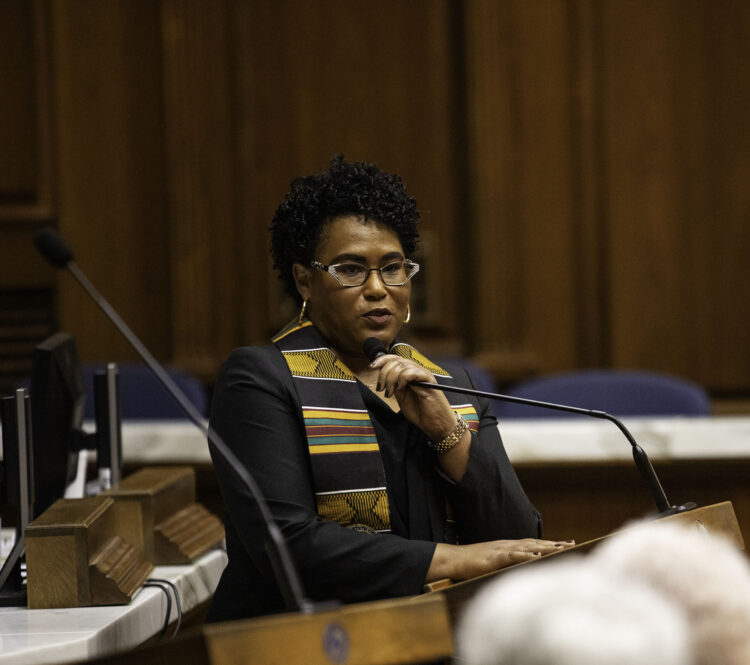
While the executive order says the Trump administration is trying to protect the integrity of elections and ensure only eligible U.S. citizens vote, state Rep. Cherrish Pryor sees the order and the Safeguard American Voter Eligibility Act backed by Trump as part of a concerted effort to disenfranchise certain classes voters.
“It’s really nothing more than an attempt to suppress voters to make sure that minorities, naturalized citizens, and women don’t have the right to vote,” Pryor, D-Indianapolis, said. “I hope that my colleagues (in the legislature) don’t go down that road of trying to disenfranchise and take us back to a time in which women could not vote, and a time when minorities, particularly Black people, had to count jelly beans simply to cast their ballots.”
Women4Change Indiana echoed Pryor’s concerns that the executive order could block otherwise eligible voters from the polls. The nonprofit said a healthy democracy requires every Hoosier has an equal opportunity to engage in the political process.
“Restrictions around mail-in voting could create another unnecessary and arbitrary obstacle for voters who likely already face difficulty in getting to the polls in the first place,” Sara Fichtner, interim executive director of Women4Change Indiana, said in an email. “Our elected officials should encourage citizens to vote in elections, not treat them with skepticism and burden them with ever-changing rules. In the meantime, we will continue our work toward increased civic engagement through get out the vote efforts.”
Pryor said the attempt by the Trump administration to insert itself into federal elections “is a travesty.” The U.S. Constitution grants the authority to administer elections to the states, she said, and now, Washington, D.C., is trying to overreach to prevent some people from going to the polls.
On top of that, Pryor said, the majority of the Supreme Court is acting as a “rubber stamp” to Trump’s agenda.
“I’m disappointed, quite frankly, with the ruling of the Supreme Court, particularly because what they are doing is sowing more chaos in the election system,” Pryor said.
In his Election Law Blog, Rick Hasen, professor of law and director of the Safeguarding Democracy Project at the UCLA School of Law, described the timing of the Supreme Court’s ruling as “just weird.”
Hasen noted the court issued the opinions in Alabama v. California on Monday, Aug. 24, so likely the justices had finished their drafts the Friday before. Yet, none of the justices appeared to reanalyze their reasonings prior to publishing their opinions, even though the Postal Service had issued its final rule for implementing the executive order’s directives on Friday, Aug. 21.
In her dissent, Justice Ketanji Brown Jackson said the Supreme Court’s lifting of the injunction “violates well-established precedents” against judicial interventions close to elections and “needlessly injects chaos and uncertainty into the upcoming midterm elections.”
Hasen, in his law blog, also pointed out that the court’s narrow stay of the injunction merely postpones a ruling on the merits of the case by a few weeks or so “when we will be even closer to the election and it will be impossible for states to comply with some of the rules that will come out.”
Voting-rights advocates in Indiana stressed the Supreme Court ruling did not address the substance of the USPS rule. Instead, the majority found the injunction was issued too early because the Postal Service had not yet completed its rule.
The majority, itself, seemed to acknowledge that in its ruling.
“The Court’s disposition of this application does not mean that any measure taken by the government to implement the Order will necessarily be lawful,” the conservative justices ruled. “On that score, time will tell.”
With this dispute over the president’s executive order, Indiana’s attorney general is again part of the fight over ballot access.
In October 2024, Rokita and Indiana Secretary of State Diego Morales announced they had asked U.S. Citizenship and Immigration Services to verify the citizenship status of nearly 600,000 Hoosiers on the state’s voter rolls. The following September, Morales announced that after getting the greenlight from Rokita, he turned over Indiana’s complete list of registered voters to the U.S. Department of Justice.
Likewise, Pryor has experience in the ballot-access fight.
As a young girl growing up in Mississippi, Pryor would spend long days with her grandmother, riding along the dirt roads and going house to house to register people to vote. The work would pause when they stopped at a convenience store and bought baloney sandwiches, chips and a candy bar for lunch.
Pryor also saw her aunt being able to enroll in the local all-white school because her grandmother used the power of the vote. When the school superintendent opposed integration, Pryor’s grandmother reminded him that she had helped to get him elected and she could get him unelected.
“We’re going to have to continue to fight the fight,” Pryor said. “Unfortunately, quite frankly, we shouldn’t be revisiting fights that we fought years ago. We should be trying to improve upon those policies to make it easier to vote, to make sure that we have a bigger turnout, and that’s not what we’re focused on.”
This story has been updated to clarify Rep. Pryor’s comment that the Trump administration is attempting to suppress the right to vote of minorities, women and naturalized citizens.
Dwight Adams, an editor and writer based in Indianapolis, edited this article. He is a former content editor, copy editor and digital producer at The Indianapolis Star and IndyStar.com, and worked as a planner for other newspapers, including the Louisville Courier Journal.
The Indiana Citizen is a nonpartisan, nonprofit platform dedicated to increasing the number of informed and engaged Hoosier citizens. We are operated by the Indiana Citizen Education Foundation, Inc., a 501(c)(3) public charity. For questions about the story, contact Marilyn Odendahl at marilyn.odendahl@indianacitizen.org.