By Olivia O’Neal
TheStatehouseFile.com
November 24, 2026
Jill Whelan of Indianapolis worries further state Medicaid cuts will affect her son, Andrew Whelan, who is on the autism spectrum and heavily relies on waiver-assisted recreation therapy and 24/7 home-based caretakers.
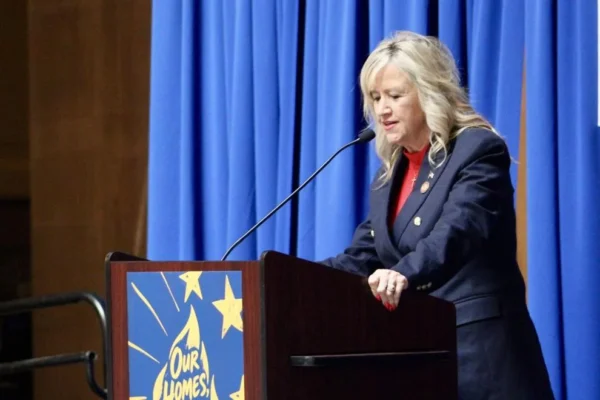
She joined Hoosiers with similar concerns at a Rally to Protect Community Living led by the Indiana Disability Alliance on Nov. 17 at the Indiana Statehouse, where lawmakers had also gathered for Organization Day.
At the heart of the issue: The One Big Beautiful Bill Act of 2025 triggered sweeping changes to Medicaid eligibility on a federal level before Indiana lawmakers took those cuts further a year later with Senate Bill 1. The legislation sparked concern from Indiana residents that more than 100,000 could lose Medicaid coverage. Consequently, last summer, hundreds of enrolled or applying individuals were denied services through the Medicaid waiver program.
Medicaid covers some medical costs for those with limited income, as opposed to Medicare, which is federal health insurance for the elderly and those with disabilities. Congress’s HR 1 impacted Medicare in some ways like immigrant eligibility, but it took a lighter blow compared to Medicaid.
Andrew Whelan has relied heavily on the Community Integration and Habilitation Waiver—Indiana’s Medicaid waiver—since 2011, or for about 15 years, living in an apartment with 24/7 staff.
The Medicaid waiver provides services that help individuals continue living in their homes or another community-based setting. It also helps people in institutions transition back into their home or community.
“He really relies on his waiver to have a full and good life,” Jill Whelan said.
Some families can no longer access those services under the state’s new eligibility requirements. Indiana’s new assessment raised the denial rate from 1% to between 5% and 16% in the first half of 2026. The number of Hoosiers enrolled in Medicaid has also significantly dropped over the past year.
Additionally, Jill Whelan said that low pay may mean staff isn’t up to standards. In-home caregivers in Indiana make roughly $15.44 per hour, below the national average.
“The people that work directly with, you know, my son get paid next to nothing. They’re making $16, $17 an hour and yet they’re responsible for his wellbeing, for cooking his meals,” she said. “It’s really hard to get good people for that amount of money.”
With the 2027 legislative session looming, Jill Whelan hopes lawmakers will pass legislation to increase pay for the in-home staff who care for her son.
Missy Hurley used to be an in-home caretaker herself but now serves as vice president of the Medicaid waiver provider Forte Residential and Home Health Care Services. She highly valued the experience.
“I think that it’s very important because [clients] teach the caregivers a lot more than the caregivers teach them,” she said.
Hurley now heads a company that provides those services across 39 counties, mostly in the northern half of the state. That means letting people live their daily lives with a bit of extra aid: helping the elderly get out of bed, brush their teeth and prepare meals. Hurley’s company also provides transportation so clients can spend time in the community.
“We believe that they should have the right to choose their home,” she said. “We just don’t want to see Indiana go backward, back to institutions, and to devalue the people that we serve.”
In late 2025, Indiana implemented a six-hour-per-month limit of Medicaid coverage for recreation therapy and music therapy. The limit is intended to help more individuals access those therapy options.
Andrew Whelan relies heavily on recreation therapy, which is well known to benefit cognitive function and mental health. It’s exercise and a way for him to get outside, his mother said. Recreation therapy is also about social interaction, both the one-on-one time with his recreation therapist and the engagement with the community.
“He gets to make the choice about what he wants to do, and that’s really important to him,” Jill Whelan said. “Everybody knows him, and so if people see him, they’ll often say, ‘Hi Andrew. … The community’s eyes are on him, and I feel like that helps keep him safe, keeps him engaged.
“He loves being out in the community, and so if he had to just sit in his apartment all day long, that would be a miserable existence for him.”
The cap has forced Jill Whelan to find private means to pay for more hours of recreation therapy for her son. She currently receives extra dollars through the Arc Master Trust, which is specifically for people with disabilities, the elderly and their families, but she knows this isn’t an option for everyone.
“I’m just afraid they’re going to cut more,” Jill Whelan said.
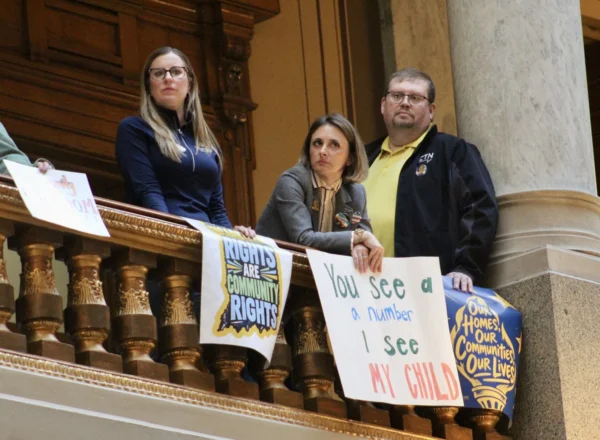
Sarah Cummins, a founding member of the Indiana Disability Alliance, fears Medicaid cuts could have a generational impact. Her son, Miles Cummins, is on the autism spectrum, and both his mother and sister, Emma Cummins, advocate for him.
“He is my best friend, and he has autism and other disabilities, and he should have equal rights too, just like how other people should,” Emma Cummins said.
Sarah Cummins agreed.
“People with disabilities are just as important to the community as the community is to them,” she said. “So, it’s going to be our kids who are going to be impacted.”
Medicaid cuts may be necessary but should be made mindfully when the House and Senate chambers reconvene in mid January, Sarah Cummins said.
“We want to think of it with a scalpel, not with a hatchet,” she said.
Olivia O’Neal is a reporter for TheStatehouseFile.com, a news site powered by Franklin College journalism students.