By Sydney Byerly
The Indiana Citizen
April 27, 2026
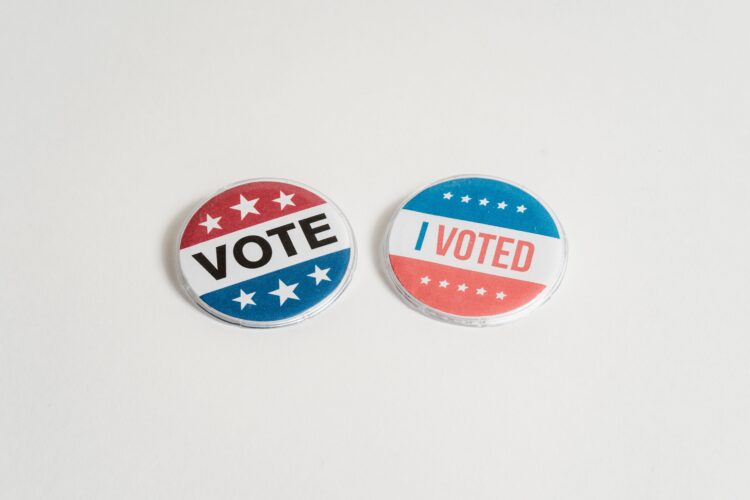
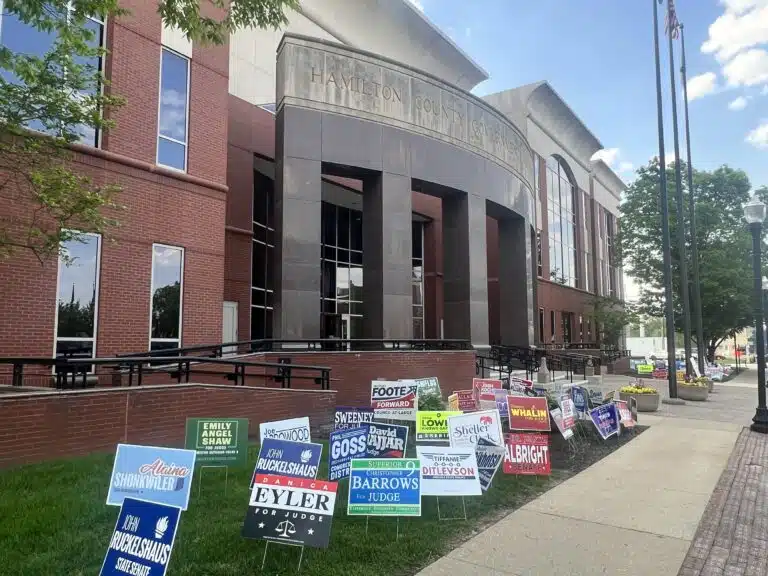
Early voting is outpacing recent election cycles in Hamilton County, offering an early signal of heightened voter engagement in this year’s Indiana primary.
As of Tuesday afternoon, 10 days into early voting, 1,883 ballots have been cast in the 2026 primary, according to county election officials. That’s more than the 692 that had been cast at this point in the 2022 election cycle, and more than the 1,283 cast 10 days into voting in 2024.
The early numbers come before the opening of eight satellite voting locations, which historically account for the bulk of early in-person voting in the county. Primary election day is May 5.
“We have eight satellites [voting locations] opening up… and that is usually where we see most of our early voting,” said Beth Sheller, Hamilton County elections administrator.
The 1,883 early votes cast in Hamilton County so far in the 2026 primary would equal about 44% of the total primary turnout in 2022, when 4,309 total votes were cast. It would amount to 17% of the significantly higher 2024 primary total of 11,248 in a presidential election year that typically drives broader participation.
Despite higher early participation, Sheller said the county hasn’t yet seen long lines and voting has remained manageable, which she attributed in part to administrative updates, including a new online portal for poll workers.
The early uptick is not entirely unexpected given this year’s political environment, said Laura Merrifield Wilson, an associate professor of political science at the University of Indianapolis with expertise in public administration, state and local government.
Indiana typically sees lower turnout in midterm cycles, particularly without a high-profile statewide or U.S. Senate race at the top of the ballot. This year’s combination of competitive primaries and broader political dynamics, Wilson said, is likely boosting engagement. In particular, she pointed to lingering effects of the recent redistricting debate and a Republican electorate in Hamilton County that is not uniformly aligned, creating more meaningful intra-party contests.
The initial increase in Hamilton County could signal that Indiana may buck its longstanding trend of low voter participation.
The 2025 Civic Health Index ranked Indiana 41st in the nation for voter turnout, reflecting a long-running pattern in which the state trails most others in electoral participation.
While the report notes modest improvements in registration and engagement in recent cycles, Indiana continues to lag the national average, particularly in non-presidential elections. Even in presidential cycles, turnout remains below most states.
That pattern is often attributed to Indiana’s status as a reliably Republican stronghold in statewide races and a lack of competitive general elections. As a result, primaries frequently determine who ultimately holds office, increasing the importance of participation at this stage.
Unlike past cycles, this year’s primary features a notable increase in contested races in and around Hamilton County. At least six legislative and congressional primaries affecting the county include multiple candidates in at least one party. By contrast, in 2022 only two comparable races were contested, based on candidate filings in districts overlapping Hamilton County.
Several nearby state Senate districts include crowded primaries. In Senate District 29, formerly held by Democrat J.D. Ford, seven candidates are competing across both parties. Senate District 31, an open seat following the decision by Republican Kyle Walker not to seek reelection, has eight candidates split evenly between Republicans and Democrats.
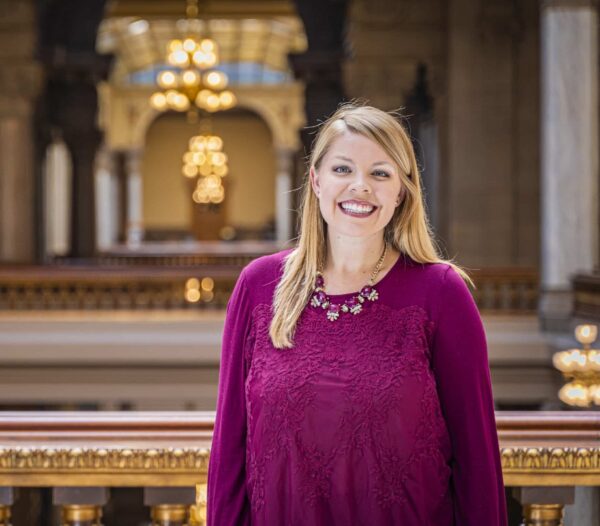
That dynamic is closely tied to voter behavior, Merrifield Wilson said.
“When you have more candidates on the ballot, voters see a real reason to participate,” she said. “If I vote in this primary, I’m helping decide who represents my party across multiple races.”
The relationship works both ways, she added: competitive races drive turnout, and higher engagement encourages more candidates to run.
The large candidate fields also point to a mix of political opportunity and dissatisfaction, Merrifield Wilson said. Open seats, policy disagreements and national political dynamics can all motivate candidates to enter races—even in districts that typically lean one way.
“Some candidates see this as their moment,” Merrifield Wilson said. “While others are responding to concerns about the direction of policy or leadership.”
Hamilton County is also partially included in Senate District 21, where incumbent Republican James Buck, who voted against the mid-cycle redistricting plan, faces a primary challenge from a candidate endorsed by Donald Trump.
At the same time, other lawmakers who opposed the redistricting effort are not facing primary opposition. State Rep. Danny Lopez, R-Carmel, for example, is unchallenged in the Republican primary.
Beyond the Statehouse, competition is also intensifying in Indiana’s 5th Congressional District. Incumbent Republican Victoria Spartz is facing a challenger in the GOP primary while seven Democrats, including J.D. Ford, are competing in their own primary for the chance to turn the seat blue in November.
Indiana House Speaker Todd Huston of Fishers will face a Democratic challenger in November for the first time since 2020, underscoring a broader increase in candidate participation, even in traditionally Republican districts.
The surge in candidates and early voters may also reflect Hamilton County’s evolving political identity.
While the county has long leaned Republican, it is increasingly viewed as competitive, reflecting broader suburban shifts seen nationwide. Hamilton County has experienced rapid population growth, an influx of college-educated residents and changing voting patterns, particularly in higher-turnout elections. These factors have made some races less predictable and increased the importance of primary contests.
In places like Hamilton County, that competitiveness can have a direct impact on turnout, Merrifield Wilson said.
“When voters feel like a race is competitive, their vote matters more,” she said. “That increases the incentive to participate.”
In less competitive districts, she added, voters may be less motivated if they believe the outcome is largely predetermined.
At the same time, several Republican primaries across the state are testing divisions within the party, particularly in races tied to the mid-cycle redistricting debate. In some contests, candidates aligned with former President Donald Trump are challenging incumbents who opposed the maps, highlighting an ongoing split between more traditional Republicans and those aligned with Trump’s wing of the party.
That issue has become a defining factor in some contests, where voters are weighing party loyalty against policy disagreements, Merrifield Wilson said, a dynamic that has shaped Republican politics in Indiana since 2016 when Donald Trump successfully ran for president.
Whether the early surge in Hamilton County translates into higher overall turnout remains unclear.
Merrifield Wilson said one key indicator will be whether strong early voting is matched by high participation on Election Day—a sign that the electorate is expanding rather than simply voting earlier.
Whether this cycle represents a lasting shift is also an open question.
She said the long-term impact will depend on whether increased candidate participation translates into sustained voter engagement, particularly for Democrats, who have fielded more candidates than in recent cycles.
“It’s about whether that momentum continues,” Merrifield Wilson said. “Do voters feel like their participation made a difference?”
Sydney Byerly is a political reporter who grew up in New Albany, Indiana. Before joining The Citizen, Sydney reported news for TheStatehouseFile.com and most recently managed and edited The Corydon Democrat & Clarion News in southern Indiana. She earned her bachelor’s in journalism at Franklin College’s Pulliam School of Journalism (‘Sco Griz!).
The Indiana Citizen is a nonpartisan, nonprofit platform dedicated to increasing the number of informed and engaged Hoosier citizens. We are operated by the Indiana Citizen Education Foundation, Inc., a 501(c)(3) public charity. For questions about the story, contact Marilyn Odendahl at marilyn.odendahl@indianacitizen.org.