This column was originally published on the Ball State University Center for Business and Economic Research Weekly Commentary blog.
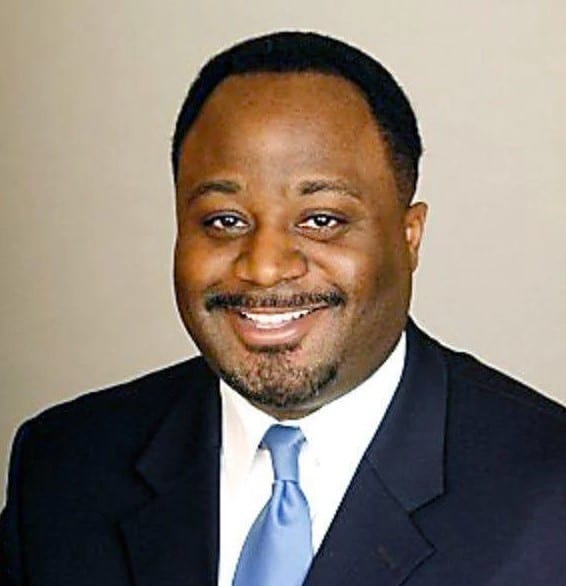
By Michael J. Hicks
May 17, 2026
Graduation day is always bittersweet for me. This year I’m losing an excellent graduate student, saying goodbye to an entire class of students I took overseas and bidding farewell to a treasured colleague and mentor.
Summer is never great at a university. The halls become still, losing the excitement of students rushing to class and stopping to chat. Professors are consumed with research, so they lock themselves behind doors or in libraries. The great exchange of ideas comes to a halt. It is too quiet.
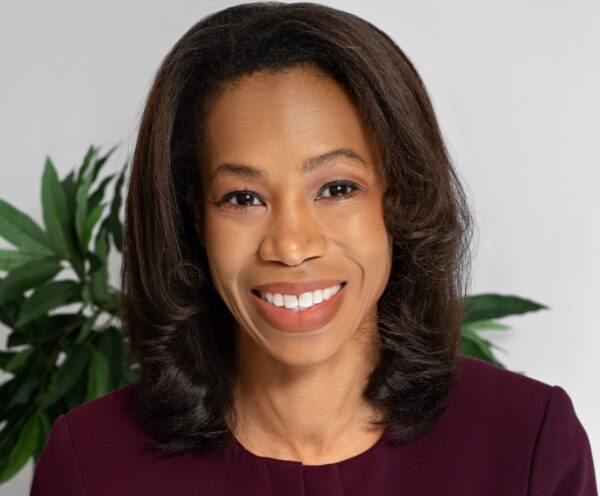
The first goodbye is to one of the many graduate students who have worked in my office. She is a brilliant international student from Nepal. She chose Ball State University for her graduate studies and has loved it here, except maybe for the cold weather.
She has a superb job lined up and exciting future plans. That is pretty much the story for all the students I’ve hired over the years. Rather than demonizing foreign students, we should welcome 10,000 more like her.
I’m also going to miss the class of mostly undergraduate students who I took to Belize this semester on my first study-abroad course. Belize is an excellent place to go for a week’s vacation, but that isn’t why we went.
These 19 students were asked by the Statistical Institute of Belize — the equivalent of the Census Bureau, Bureau of Labor Statistics and Bureau of Economic Analysis — to help analyze their decennial census. There are only 400,000 or so folks in Belize. The United States has hundreds of analysts reviewing its census data. Belize only has a handful.
My students wrote chapters on crime exposure and on internet and telecommunications technology access. Their work will form a permanent record of what is now happening in Belize in two critical areas.
We reported a steep decline in crime rates over time, making Belize a prime location for international investment. We also reported a large increase in the use of telecommunications, particularly among young Belizeans. This work will be critical in helping Belize attract the additional investment and tourism that it richly deserves.
The entirety of the two chapters was written by students. Another professor and I supervised them, but it was all their work.
We broke the students into two groups and forced them to self-organize. They chose leaders, statisticians, writers and publishers. They wrote a small novel — 150,000 words of data transformed into dozens of charts and graphics. Then they worked through what the data had to offer to policymakers and what the data could not reveal. This took several long weeks before we left for the trip.
As I explained to the students, our trip to Belize would consist of Type I and Type II fun.
At the end of our trip, we visited an island, beaches and Mayan ruins. That was Type I fun. It was easy and we were glad to do it.
The Type II fun, which we were also glad to do, is the hard work we had to do first. That involved explaining our research to our clients.
About 18 hours after landing in Belize, our class rode a bus to the Central Bank of Belize and presented our research findings to the economists there. We then traveled to the Belize Chamber of Commerce and did the same.
The next day, we presented our research to the Statistical Institute of Belize and finally to the faculty and students at the University of Belize. The following day, we visited the U.S. Embassy.
My colleague and I introduced the class and they handled everything else. It was a dazzling display of talent by some awesome students, from 19-year-old first-year students to 22-year-old seniors. These graduating students left for jobs, meaning we’ll probably only pass each other again on social media.
The hardest goodbye was to a colleague and mentor who also led this trip and retires this spring.
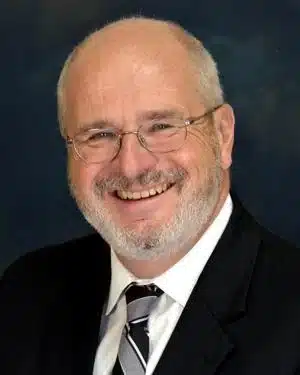
Professor Cecil Bohanon has graced the halls of Ball State since 1980 and has had a deeply consequential academic career.
He completed his doctoral degree under the supervision of Nobel laureate James Buchanan and immediately came to Muncie, immersing himself in this community. His work here could fill volumes. He’s been active in local parishes and supports a wide range of organizations.
Cecil also ran for Congress as a Libertarian in the 1980s in the seat later held by Mike Pence. Like most Libertarians, he lost the election, but not the ideas.
His scholarship has been important. Like many professors, he’s written many niche studies, some in the top journals in his field. One really stands out, Pride and Profit, which people will likely read it a century from now. Michelle Vachris and he tied together the morality of Adam Smith and Jane Austen into a single coherent take in a short book on the virtues of prudence, benevolence and justice, as well as greed, pride and vanity.
I’ve met Ball State graduates from Japan to Florida who know Bohannon and fondly remember his contribution to their education. I’ve never mentioned this to him before, not wishing to foster his pride, but I would not have come to Ball State without his prompting and support. I knew him and his work long before setting foot in Muncie.
It is a tough semester, losing a great student employee and a great class of students. Worst of all, I now face the retirement of the one man, among all I have known, who best represents the title of professor.
Michael J. Hicks is professor of economics and the director of the Center for Business and Economic Research at Ball State University. He previously served on the faculty of the Air Force Institute of Technology’s Graduate School of Engineering and Management and at research centers at Marshall University and the University of Tennessee. His research interest is in state and local public finance and the effect of public policy on the location, composition, and size of economic activity.
The views expressed here are solely those of the author, and do not represent those of funders, associations, any entity of Ball State University, or its governing body. Also, the views and opinions expressed do not necessarily reflect the views of The Indiana Citizen or any other affiliated organization.