By Marilyn Odendahl and Steve Hinnefeld
The Indiana Citizen
November 10, 2026
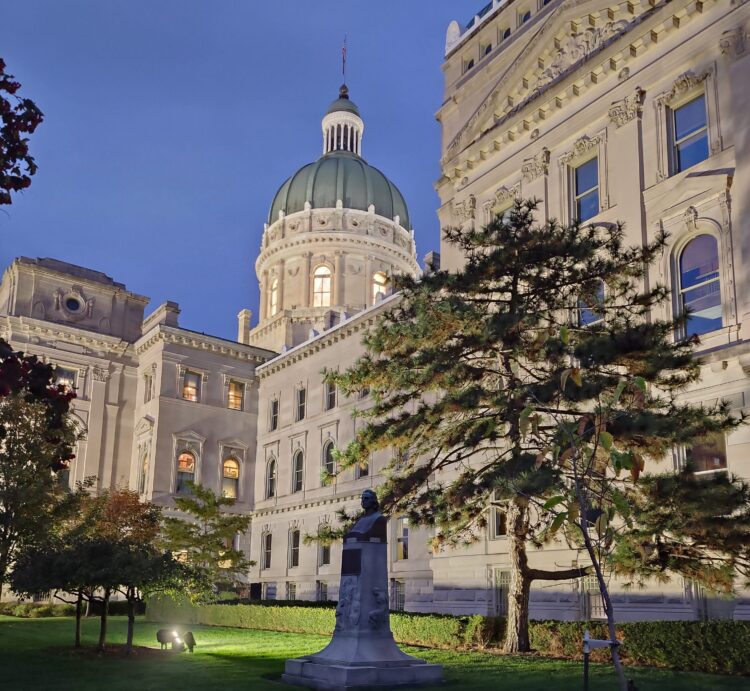
In the aftermath of the blue wave that crashed into the Indiana Statehouse, Republican lawmakers have selected new caucus leaders and are echoing Democrats in pledging to focus on lowering the cost of living for Hoosiers.
Rep. Ben Smaltz, R-Auburn, and Sen. Chris Garten, R-Charlestown, who were tapped by GOP representatives and senators to lead their respective branches of the legislature, issued statements that nodded to the affordability concerns of individuals and families across the state.
“We will continue to build on the progress we’ve made in Indiana and focus on the issues important to Hoosiers – lowering cost of living, growing our economy and expanding opportunity for Hoosiers across the state,” Smaltz said in a statement, after being chosen by his GOP colleagues as House speaker-elect.
Garten has been chosen as Senate president pro tempore-elect.
Meanwhile, Democrats decided to retain their current leadership. Rep. Phil GiaQuinta, D-Fort Wayne, was elected to serve a fifth term as House minority leader and Sen. Shelli Yoder, D-Bloomington, was selected to remain as Senate minority leader.
Beyond the leadership positions, the midterm election created some significant changes among the rank-and-file in the Indiana General Assembly.
Namely, key architects of Indiana’s school voucher program were ousted. Also, a handful of attorneys who served as state lawmakers lost their seats, reducing further the number of law school graduates in the state legislature.
The 125th Indiana General Assembly will officially start Nov. 17 with Organization Day. Lawmakers will not begin their work in earnest until January, when they return to the Statehouse for a long session that will include crafting and passing a two-year state budget.
Aaron Dusso, associate professor of political science at Indiana University Indianapolis, said the pressure on Democratic and Republican state legislators to deliver economic relief for Hoosiers will be immense.
“The reality is there’s probably more pressure on Republicans because people still recognize who has the power here, and doing nothing is something that would … hurt Republicans because they’re going to be blamed” if costs do not decline, Dusso said, noting that such frustration could even carry over into the 2028 election. “We’re going to have a governor’s race here coming up in a couple of years and so you need to show something, some kind of progress on these issues.”
Advocates for public schools were stunned and elated to see two of the primary architects of Indiana’s school-choice policies swept away in the 2026 midterm election.
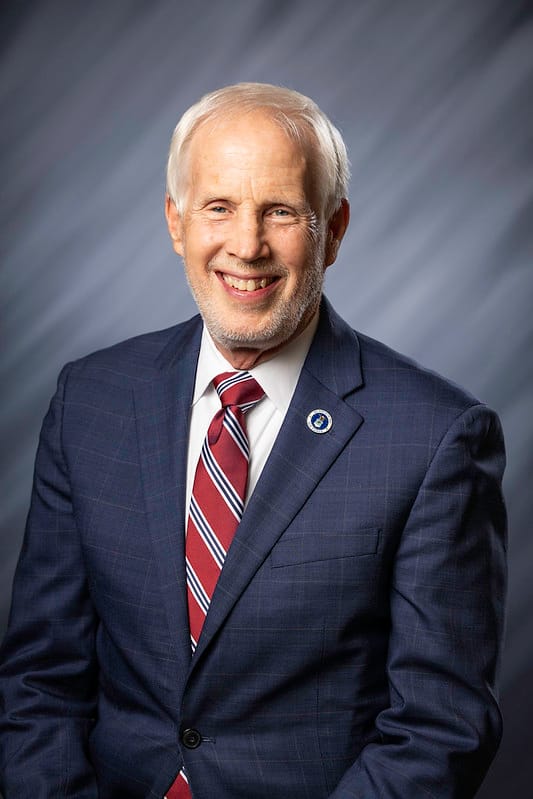
Rep. Bob Behning, R-Indianapolis, who has chaired the House Education Committee for 20 years, lost his re-election bid to Democrat Jarren Hurt. Speaker Todd Huston, R-Fishers, was defeated by Democrat Lauren Cole, who is the first openly lesbian woman elected to the Indiana General Assembly and, at 29, is the youngest member of the incoming Indiana House.
Five of the nine Republicans on the House Education Committee were defeated: Behning, Julie McGuire, Becky Cash, Hunter Smith and Andrew Ireland. Another Republican on the committee, Michelle Davis, will also be departing since she won the race for Indiana Senate District 41.
“It’s a pretty clear message,” said Cathy Fuentes-Rohwer, president of the Indiana Coalition for Public Education. “We know that public schools are the heart of our communities. They’re a huge economic engine for our communities and essential for the future of our kids.”
The election was the first since Indiana’s school voucher program became universal. All students in private schools, regardless of family income, now qualify for state-funded tuition vouchers worth about $6,800 per year. Education policy didn’t play a prominent role in Democratic campaigns – taking a back seat to data centers and the cost of living. But both Hurt and Cole highlighted support for public schools on their respective campaign websites.
Behning, a lawmaker for 34 years, has been at the center of education policy changes in the state for decades. He authored the original school voucher bill in 2011 and has shepherded the program’s growth. Also a strong supporter of testing and charter schools, Behning shaped a Republican philosophy in which state funding “follows the child” regardless of school type.
He authored the 2026 bill that created the Indianapolis Public Education Corp., an appointed board to oversee Indianapolis Public Schools and charter schools in the city.
Huston has been speaker since 2020 and a House member since 2012. In 2009-10, he was chief of staff to Republican Superintendent of Public Instruction Tony Bennett, who championed vouchers, charter schools and testing.
Jennifer Berkshire, a journalist and author who writes about education politics, said Indiana’s election results align with what she sees nationally.
“It’s definitely part of a pattern,” she said, pointing to Texas, where Democrat Gina Hinojosa won the governor’s office while highlighting her opposition to vouchers, and Arizona, where Democrats took advantage of voters’ dissatisfaction with a voucher-like tax credit program. In Iowa, Democratic governor-elect Rob Sand campaigned on curbing private school vouchers.
Advocates in Indiana have tied vouchers to anemic funding for public schools. That situation, coupled with cuts in property taxes, led to a record 39 school funding referendums on Tuesday’s ballots. Twenty-seven were approved and 12 were rejected, according to the Indiana School Boards Association.
In Marion County, referendums were approved for the Indianapolis Public Education Corp. and for Wayne and Warren townships and Beech Grove schools but defeated for Decatur Township schools. Elsewhere, there were successful referendums in Carmel, Hamilton Southeastern, Noblesville, West Lafayette and Columbus. Referendums fell short in Anderson, Elwood, Shelbyville, Sheridan and Franklin.
Four incumbent attorneys fell short in their bids for reelection in the 2026 midterm, depleting the already shallow pool of lawyers in the General Assembly.
In the House, the Republican attorney Reps. Greg Steuerwald, of Avon; Chris Jeter, of Fishers; and Andrew Ireland, of Indianapolis, all lost their seats in the 2026 general election. In the Senate, attorney Sen. Liz Brown, R-Fort Wayne, was defeated as she tried for a seventh term in the state legislature.
However, two incoming Democratic Reps. Amy Huffman Oliver, who defeated Republican incumbent Rep. Dave Hall, R-Norman, and Michele Henry, who won the seat formerly held by retiring Rep. Ed Clere, R-New Albany, are both attorneys.
Huffman Oliver has experience working as a deputy prosecutor, handling domestic violence cases in Marion and Monroe counties and as a deputy attorney general in the Indiana Attorney General’s Office consumer protection division. Currently, she is a family law mediator for low-income litigants.
Henry is in private practice, representing employees in a variety of employment-related cases, including wrongful discharge, harassment and discrimination.
The total number of attorneys in the Indiana House is now seven, down from eight. Also, in the Indiana Senate, the number of lawyers dropped from 11 to 10.
The returning attorneys in the House are Republicans Alex Zimmerman of North Vernon and Garrett Bascom, of Jefferson, and Democrats Ryan Dovrak, of South Bend, Ed DeLaney, of Indianapolis, and Matt Pierce, of Bloomington.
In the Senate, three Democrats are attorneys, Rodney Pol Jr., of Chesterton; Greg Taylor, of Indianapolis; and Lonnie Randolph; and seven Republicans are attorneys, Rodric Bray, of Martinsville; Ed Charbonneau, of Valparaiso; Sue Glick, of LaGrange; Eric Koch, of Bedford, and Cyndi Carrasco, Aaron Freeman and R. Michael Young, all of Indianapolis.
Only two attorney lawmakers have been elected to leadership positions in the legislature. Koch has been chosen to serve as majority floor leader in the Senate and Pol has been selected to be assistant Democratic leader, also in the Senate.
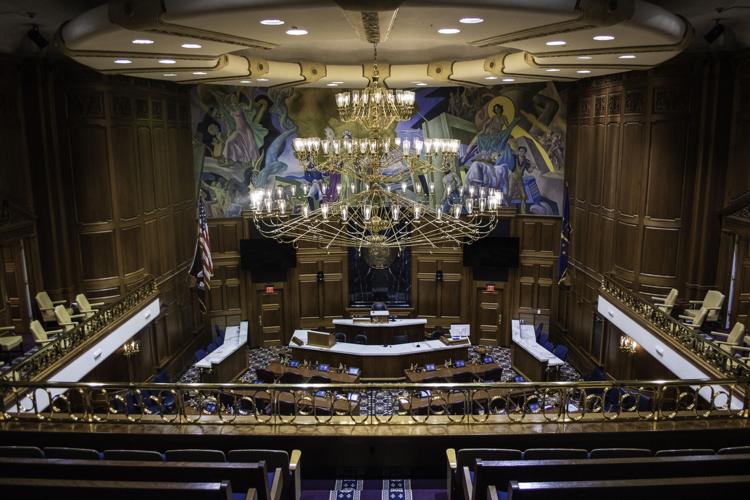
Republicans still maintain their majority in the General Assembly, although the number of seats they hold in each chamber has been significantly reduced. In the House, the Republicans lost their supermajority status, which allowed them to reach a quorum and pass legislation, even without the participation of the Democrats.
The GOP lost 16 seats in the House, reducing the caucus to 54 legislators, and five seats in the Senate, diminishing the caucus to 35 legislators.
Smaltz, who authored last year’s unsuccessful bill for midcycle redistricting, is set to replace Huston, the former speaker, who lost his bid for reelection. Joining Smaltz will be Rep. Matt Lehman, R-Berne, as House majority leader and Rep. Jake Teshka, R-North Liberty, as House majority caucus chair.
Garten is the Senate president-elect, set to take the leadership position from Bray, who is stepping down as president of the upper chamber.
However, the Senate leadership could be upended if Garten fails to win reelection. Currently, Garten has not been declared the winner of his race for Senate District 45 with only 297 votes separating him from his Democratic challenger Nick Marshall.
Filling out the Senate leadership will be Koch and Sen. Tyler Johnson, R-Leo, who has been elected to serve as majority caucus chairman.
In their statements after being selected to serve in leadership positions, many of the new Republican leaders highlighted their focus on affordability issues.
“We will tackle hard issues head-on, working to strengthen our schools, defend our freedom, scrutinize the allocation of every tax dollar, lower health care costs and find ways to keep cutting taxes,” Garten said in a press release.
In the House, Democratic representatives from Indianapolis will be joining GiaQuinta as leaders. Rep. Cherrish Pryor will serve as minority floor leader and Rep. Carey Hamilton will be the minority caucus chair.
Joining Yoder and Pol in the Senate leadership will be Sen. La Keisha Jackson, D-Indianapolis, serving as minority caucus chair.
Both GiaQuinta and Yoder emphasized lowering the cost of living after being elected to the top leadership positions in the Democratic House and Senate caucus.
In the Senate especially, the Democrats say they will confront skyrocketing utility bills, soaring grocery and housing costs, cuts to public schools and child care, and declining access to health care. The Senate Democrats also indicated they would try to reign in the tax breaks given to corporations.
“Hoosiers sent a powerful message this election: They are tired of being ignored while the cost of living keeps climbing and the issues affecting their lives go unanswered,” Yoder said in a press release.
The Indiana Black Legislative Caucus has also elected new leadership for the upcoming legislative session.
Rep. Carolyn Jackson, D-Hammond, will serve as IBLC chair when outgoing-chair Rep. Earl Harris Jr., D-East Chicago, completes his term.
The remaining leaders will be Rep. Alex Burton, D-Evansville, as vice chair; Rep. John L. Bartlett, D-Indianapolis, as parliamentarian; Sen.-elect Allissa Impink, D-Indianapolis, as treasurer; and Rep.-elect Kimberly Townsend, D-Anderson, as chaplain.
Like their counterparts in the General Assembly, the IBLC is also noting the need to help Hoosier households.
“Too many people throughout our state struggle to keep food on the table, their prescriptions refilled and their lights on,” Jackson in a press release. “Hoosiers are tired of hearing the same old empty promises from their elected officials without seeing any results.”
Dwight Adams, an editor and writer based in Indianapolis, edited this article. He is a former content editor, copy editor and digital producer at The Indianapolis Star and IndyStar.com, and worked as a planner for other newspapers, including the Louisville Courier Journal.
The Indiana Citizen is a nonpartisan, nonprofit platform dedicated to increasing the number of informed and engaged Hoosier citizens. We are operated by the Indiana Citizen Education Foundation, Inc., a 501(c)(3) public charity. For questions about the story, contact Marilyn Odendahl at marilyn.odendahl@indianacitizen.org.