By Marilyn Odendahl
The Indiana Citizen
October 9, 2026
As Hoosier voters head to the polls this election, they will find on their ballots the Court of Appeals of Indiana judges and the Indiana Tax Court judge who are up for retention, but many of those voters may struggle to decide whether to retain them or not.
Retention questions are difficult for the electorate, especially for those who are not lawyers. Some voters may even be uncertain as to what the judges on the Court of Appeals and Tax Court do and, therefore, feel unable to make an informed decision.
However, former Court of Appeals Judge Linda Chezem has some simple advice for Hoosier voters: read the opinions the judges have written. She acknowledged reading through the rulings will take time, but she pointed out the decisions made by the appellate and tax court judges impact the entire state, regardless of whom the litigants are and where the case originated.
Chezem brushed off the notion that nonlawyers would have trouble understanding the written opinions from the appellate court.
“You don’t need a law degree to have common sense,” Chezem said. “I just think it’s really important that people not be intimidated, ‘Oh, that person’s a judge, I can’t understand it.’ No law degree ever made anyone smart.”
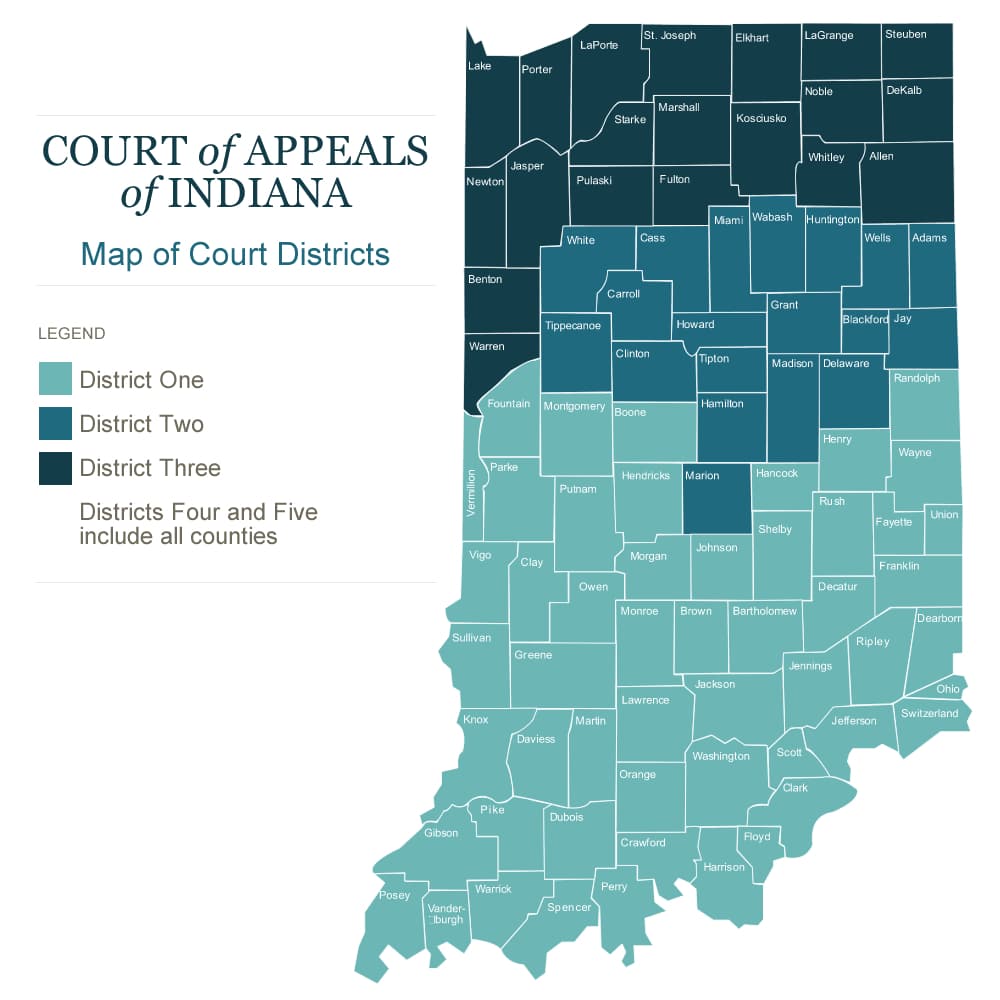
This year, three judges from the Court of Appeals of Indiana and the judge from the Indiana Tax Court will be on the ballot for retention. Appellate Judges Mary DeBoer and Paul Felix will be on every Hoosier voter’s ballot, while Judge Dana Kenworthy will only be on the ballots of voters from the counties in the Court of Appeals’ second district, which includes Marion, Hamilton, Tippecanoe, Delaware and Howard counties.
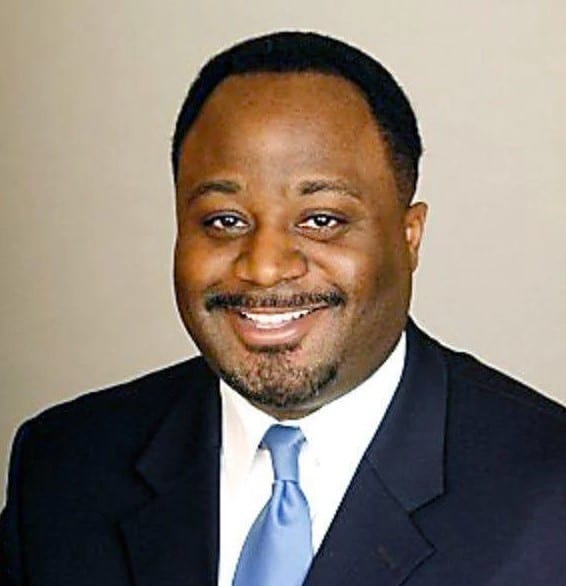
Tax Court Judge Justin McAdam will also be on every ballot.
The voters will be asked to answer “yes” or “no” as to whether each judge should be retained. The judges just need a simple majority to remain on the bench.
If any of the judges are rejected by the electorate, that judge’s tenure on the bench will end when the Indiana secretary of state issues a certificate verifying the judge has not been retained by the voters. No later than the first Friday after Election Day, the secretary of state has to issue a certificate stating whether each judge was retained or removed.
Judges who lose the retention vote can ask for a recount. Consequently, the judge’s term will continue and only end if the Indiana Recount Commission certifies the electorate did vote against retention.
Should one of the judges not be retained, the vacancy on the court will be filled through the same merit selection process that is used to fill any open seat on the Indiana Supreme Court, Court of Appeals or Tax Court. The Judicial Nominating Commission will take applications, interview the applicants and then submit the names of three nominees to the governor no later than 70 days after the vacancy occurred. The governor will then appoint one of the nominees to the bench.
The Indiana Supreme Court’s Office of Judicial Administration has created a judicial retention website, which includes biographical information, videos of oral arguments and links to each judge’s written opinions.
Also, the Indiana State Bar Association has released the results of its survey that found a sizable majority of its members support retaining all four judges. The members of the ISBA, which includes lawyers, judges, law school professors, court administrators and paralegals, were asked whether each judge from the Court of Appeals and Tax Court should be retained in the general election.
The survey results are as follows:
As Indiana’s second-highest court, the Court of Appeals hears most cases that are appealed from the trial courts and some state agencies. It was created by the Indiana General Assembly in 1891 to help with the backlog of cases waiting for adjudication at the Indiana Supreme Court.
Today, 15 judges serve on the appellate court. Each case that comes before the court is randomly assigned to a three-judge panel, which will consider the facts and the law and then make a ruling. Oral arguments are rarely heard at the Court of Appeals. A majority of the opinions are decided based on the briefs the parties file and the trial court record.
Some appellate courts in other states only issue short opinions, stating whether the lower court’s ruling was affirmed or reversed. Conversely, the judges on the Indiana Court of Appeals write substantial opinions, diving into the case and explaining how the panel reached its decision. The court issues more than 2,000 written opinions each year.
The Indiana Tax Court was created by the legislature in 1986. It has one judge.
That court hears any cases that are appeals of decisions made by the Indiana Department of State Revenue or the Indiana Board of Tax. Also, it has jurisdiction over some appeals from the Department of Local Government Finance.
Chezem advised voters to not only read the judges’ opinions but also do some additional work and find any dissents they may have written. Judges typically write a dissent when they do not agree with the majority on the panel, because they have a different interpretation of the law or of court precedent.
A dissent, she said, could entice the Indiana Supreme Court to take a look. The justices might see the dissenting opinion as bringing forth a valid point and something they should consider.
“I consider dissents to be very important,” Chezem said. “The dissents often point the way to the future.”
Joel Schumm, a professor at Indiana University Robert H. McKinney School of Law, who has represented more than 100 indigent clients in the appellate court, cautioned voters against basing their retention decision on a single written opinion. The Court of Appeals judges, he said, decide hundreds of cases every year, so looking at only one ruling might not be enough to make an informed choice.
Rather, Schumm said the decision on whether to retain should be based on the answers to such questions as does the judge work hard, treat people with respect, and write well-reasoned opinions.
Schumm said voters should pay particular attention to the state bar association’s survey, which he called a “useful tool.” The respondents would have included lawyers who have appeared before these judges and have the professional expertise to determine whether the judges are following the law and making logical and rational decisions.
”I don’t think it’s a bad thing that the default is ‘yes’ for a lot of people,” Schumm said of voters choosing to retain judges. “If there is a problem (with a judge’s behavior or rulings), hopefully the message will get out more.”
Judge Mary DeBoer was appointed to the Court of Appeals by Gov. Eric Holcomb in 2024.
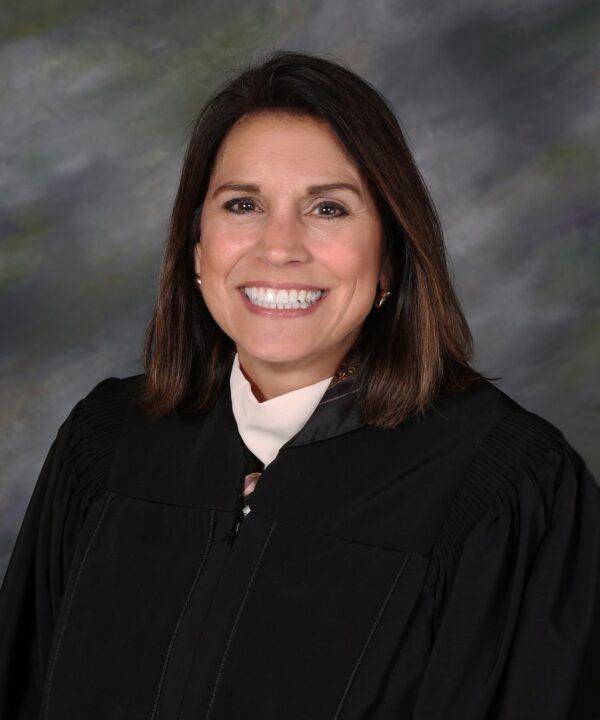
Prior to her appointment, DeBoer served as a deputy prosecutor and magistrate judge in Starke and Porter counties. Then in 2019, she was tapped to serve as Porter County Circuit Court judge.
While on the Porter County bench, DeBoer created two problem-solving courts for juveniles: a truancy court and a transformation court focused on mental illness. She also developed an Immersion Through the Arts Program to help get youths struggling with delinquency connected with mentors in the local community.
DeBoer has served on the Indiana Judges Association Board of Managers and is currently on the Appellate Practice Section Council of the Indiana State Bar Association. Also, she chairs the Criminal Case Flow Management project, which examines and identifies strategies that can improve criminal case processing throughout the state.
A native of Kalamazoo, Michigan, DeBoer graduated with honors from Western Michigan University and earned her J.D. degree from Valparaiso University School of Law in 1993.
Judge Paul Felix was appointed to the Court of Appeals by Gov. Eric Holcomb in 2023.
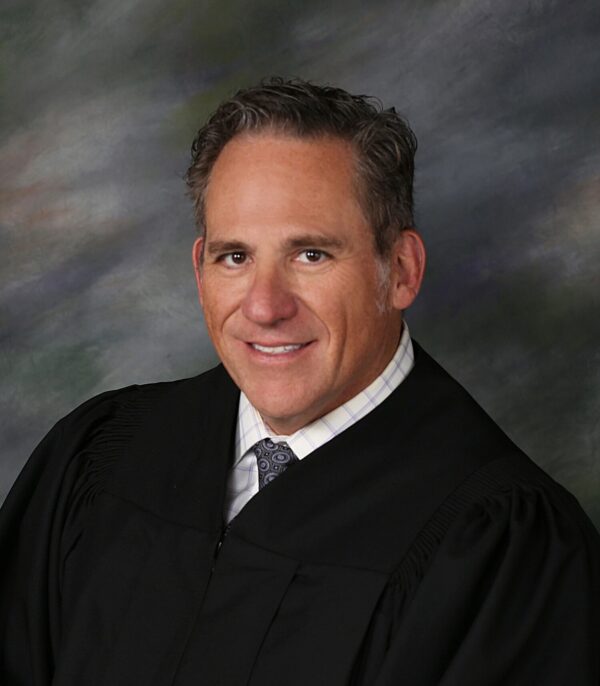
Felix served as a deputy prosecuting attorney in the Johnson County Prosecutor’s Office for more than a decade, where he created the county’s first Domestic Violence Unit and led the prosecution of domestic violence cases for three years. He was subsequently appointed to the Carmel City Court by Gov. Mitch Daniels in 2007 and then elected as a Hamilton County Circuit Court judge in 2009. During that time, he helped create the Youth Assistance Program, which is one of the state’s only judicial programs that focuses on prevention of crime by providing youth with mentors, tutors and other services.
Currently, Felix is the chair of the Indiana Juvenile Detention Alternative Initiative and co-chair of the Marion County Judicial Selection Committee. Also, he serves on the State Board of Law Examiners Committee on character and fitness, interviewing graduating law students to ensure they are fit to practice in Indiana.
Born in Elkhart and raised in Greenwood, Felix earned both his undergraduate and law degrees from Indiana University Bloomington.
Judge Dana Kenworthy was appointed to the Court of Appeals by Gov. Eric Holcomb in 2022. With her appointment, the COA had a majority of women judges for the first time in its history.
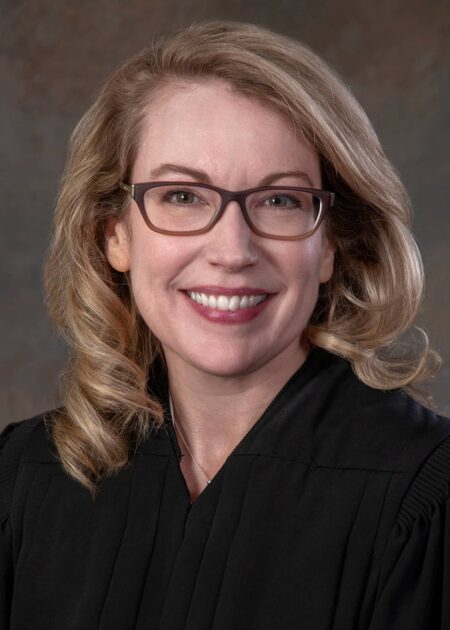
Kenworthy started her career as a deputy prosecutor in Grant County from 2001 to 2010, handling cases involving child abuse, sexual assault, domestic violence, computer-facilitated crimes and juvenile delinquency. In 2025, she received the Outstanding Prosecutor Award from the Indiana Coalition Against Domestic Violence and in 2006, she received the Randall T. Shepard Award from the Indiana Pro Bono Commission.
As judge for Grant Superior Court 2, Kenworthy presided over a variety of cases, including criminal, civil, juvenile and family. In 2015, she established the Grant County Family Recovery Court, which is considered one of the best in the state and in 2021 was named as one of eight Peer Learning Courts in the country.
Kenworthy currently serves on the Commission on Improving the Status of Children in Indiana and is chair of the Youth Justice Oversight Committee.
A graduate of Ball State University, Kenworthy holds a J.D. from Indiana University Robert H. McKinney School of Law.
Justin McAdam was appointed by Gov. Eric Holcomb in 2023, becoming the third judge to preside over the Indiana Tax Court.
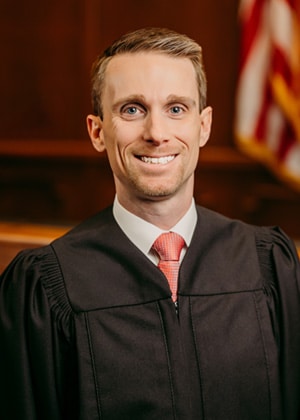
After serving as a law clerk to now-retired Justice Brent Dickson of the Indiana Supreme Court, McAdam joined The Bopp Law Firm, founded by prominent conservative attorney Jim Bopp.
Prior to his judicial appointment, McAdam was deputy director and chief legal counsel for the Indiana Office of Management & Budget. Also, he served as chair of the Indiana Distressed Unit Appeal Board and the Indiana Board for Depositories as well as a trustee of the Indiana Public Retirement System and the Next Level Indiana Trust Fund.
McAdam is a past chair of the Indiana State Bar Association’s Tax Section and serves on several committees established by the Indiana Supreme Court, including the Innovation Committee and the Records Access and Management Committee.
Born in California and eventually settling with his family in Terre Haute, McAdam started his college studies at Purdue University before transferring and earning a bachelor’s degree at Indiana University. He earned his J.D. from Harvard Law School.
Dwight Adams, an editor and writer based in Indianapolis, edited this article. He is a former content editor, copy editor and digital producer at The Indianapolis Star and IndyStar.com, and worked as a planner for other newspapers, including the Louisville Courier Journal.
The Indiana Citizen is a nonpartisan, nonprofit platform dedicated to increasing the number of informed and engaged Hoosier citizens. We are operated by the Indiana Citizen Education Foundation, Inc., a 501(c)(3) public charity. For questions about the story, contact Marilyn Odendahl at marilyn.odendahl@indianacitizen.org.