By Marilyn Odendahl
The Indiana Citizen
October 5, 2026
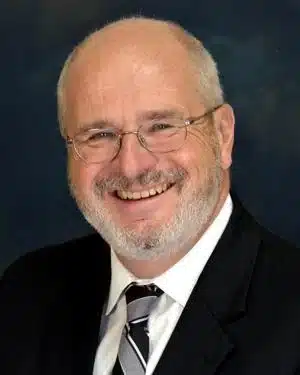
When Greg Ballard stepped before reporters for another news conference at the Statehouse last week, he announced his newest proposal for what has become a key issue in his campaign: election administration.
All the candidates vying to be Indiana’s next secretary of state have offered their own ideas and plans for ensuring the integrity of elections in the Hoosier State. However, Ballard, the former mayor of Indianapolis who is running for Indiana secretary of state as an independent candidate under the newly formed Lincoln Party, has been out front with five detailed proposals, which he has described as ways to improve voter turnout and remove partisan politics from the office of the state’s chief election officer.
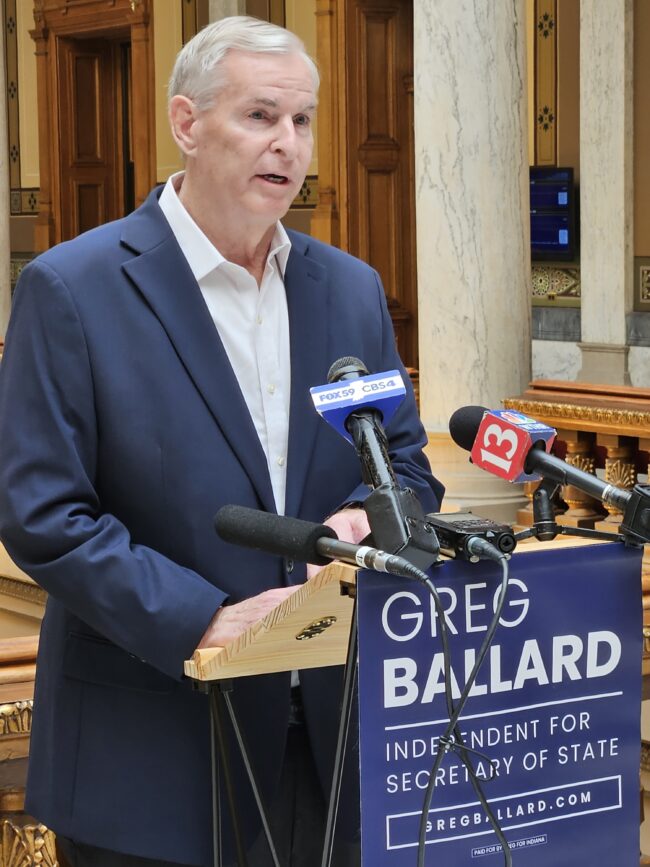
In his latest move, Ballard pledged that if elected secretary of state, he would not endorse, fundraise for or donate to any candidate. Also, he said he would push the legislature to pass a bill prohibiting the secretary of state from participating in political activities such as favoring candidates and speaking at political party dinners.
Ballard then called upon his opponents to make the same pledge to refrain from partisan politicking while in office.
“Hoosiers deserve to know who they can trust to act in their best interests, not those of a political party or the secretary of state’s preferred candidates,” Ballard said. “This is the right thing to do. I hope the other secretary of state candidates on the ballot this year will make the same pledge.”
Greg Shufeldt, professor of political science at the University of Indianapolis, said Ballard has to distinguish himself in order to stand out in what has become a crowded field. While Democrats and Republicans can count on people who have historically voted for them, independents have an uphill battle. Although Ballard served two terms as mayor of Indianapolis, he is little known outside the metropolitan area.
“As an independent, or in this case establishing a new political party that has no track record, no platform, no built-in audience, no history of receiving votes … he has to differentiate himself,” Shufeldt said.
Since securing a place on the November ballot, Ballard has offered five proposals for election administration:
Amy Courtney, executive director of MADVoters Indiana, saw Ballard’s proposals, overall, as helping people to vote.
Courtney said on the basis of what she has experienced as a poll worker, Indiana’s elections are safe and secure, but with some of the actions taken by the Trump administration, such as seizing the state’s voter registration list and pushing states to use the controversial Systematic Alien Verification for Entitlements program, she noted she has concerns about voter suppression. Consequently, educating Hoosiers about the rules and procedures of voting is important, she said, to ensure their votes are counted.
Even so, Courtney was not sure how much traction Ballard was getting among the electorate with his election proposals. Most Hoosiers are not focused on how elections are being run.
“For a lot of people, it’s just about surviving and it’s just not top of mind,” Courtney said of election administration, noting many Indiana residents are preoccupied by the price of gas, groceries, rent and utilities. “There’s a certain part of the population that is very actively engaged, and then there’s another part that they almost don’t have the luxury of being in that space.”
The other candidates in the secretary of state race have given Ballard’s proposals a cool reception.
None have pledged to refrain from partisan political activities, such an endorsing candidates or being the keynote speaker at party dinners, while serving as secretary of state.
Max Engling, Republican candidate for secretary of state, did not respond to a request for comment. However, at the Indiana GOP convention where he was nominated to run for the office, he advocated for closing the state’s primaries to prevent crossover voting.
In an interview with The Reflector, the student newspaper at the University of Indianapolis, Engling outlined his idea for an “eyes on elections” transparency portal. He said anyone who sees potential fraud, a conflict of interest or any other issue when they are voting or helping to administer a polling place, could send that information directly to the secretary of state’s office.
Beau Bayh, Democratic candidate for secretary of state, echoes what voting-rights advocates have long called for in Indiana elections. He wants to maintain the state’s 28-day early-voting period and keep polls open longer on Election Day. Also, he is calling for an end to straight-ticket voting and is opposed to closing the primaries.
“Our elections are at their best when more eligible Hoosiers are participating. We need structural reforms to increase voter participation in Indiana,” Bayh told The Indiana Citizen in an email. “We need to end straight-ticket voting and partisan gerrymandering to increase competition, institute citizen-led ballot initiatives to put big policy questions on our ballot, protect early voting, and keep our primary system open.”
Lauri Shillings, Libertarian candidate for secretary of state, has offered her own election and voting proposals since she announced her run in March of last year.
Responding to an inquiry from The Indiana Citizen, Shillings said her plans for the office including revamping the secretary of state’s online election portal, so voters can get more information about each candidate and easily see “who is paying for their politicians.” Also, she wants to conduct audits of the office regularly to identify waste and fraud, and to make the election certification audit results public, so Hoosiers “can trust that their elections were fair and accurate.”
Likewise, Shillings has been pushing for “proper tools and training” on election administration for county clerks and their staff and sees better education for election workers as the key to avoiding another recount debacle as happened this year between Spencer Deery and Paula Copenhaver, two Republican candidates for Indiana Senate District 23. Still, she is careful to point out that local election officials should have some autonomy, and the secretary of state should not “micromanage their methods.”
Shillings said Ballard’s proposals to change the members of the recount and election commissions are interesting, but she noted that remaking those commissions could only be done by the General Assembly amending state law. In addition, while bringing neutrality, balance and fairness to those roles would be welcomed, she said, the potential to appoint judges with partisan leanings would still exist.
“I agree these boards could use some adjustment, and certainly need more perspectives outside the two-party system, but the specific mechanism for that change may need more detailed study and consideration,” Shillings said in an email to The Indiana Citizen. “Still, I do appreciate Mayor Ballard bringing these issues into the conversation.”
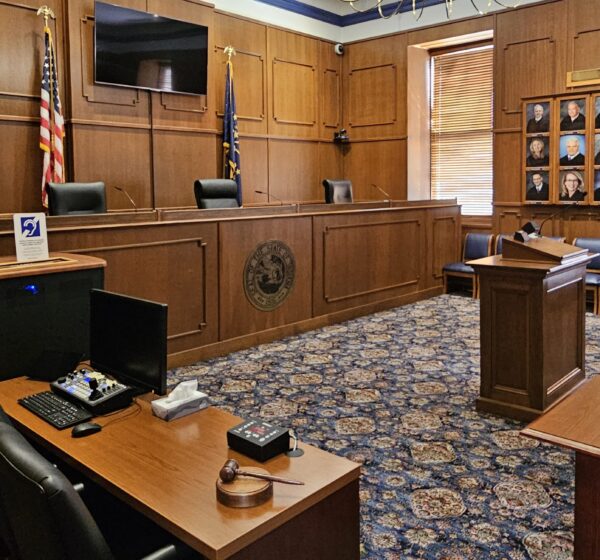
Throughout his press conferences and interviews about his proposals, Ballard keeps returning to the Republican election dispute in Senate District 23.
Deery, the incumbent state senator, won the GOP nomination in the May primary by just three votes. His rival Copenhaver, who was endorsed by President Donald Trump, filed for a recount and sought to depose the voters who identified themselves on social media and to news reporters as being Democrats who crossed over specifically to support Deery.
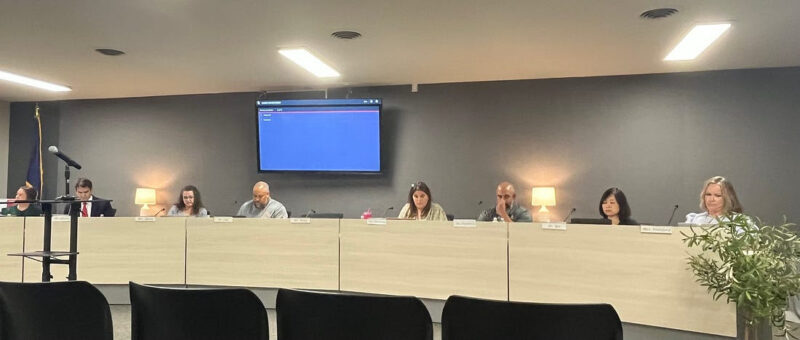
During a hearing before the Indiana Recount Commission, the two Republican appointees
tossed six ballots that did not have the county clerk’s signature and seal. Thus, the results of the GOP primary were overturned and Copenhaver became the party’s nominee.
“That was a political decision,” Ballard said. “Somebody told them to vote that way.”
Although the Indiana Supreme Court restored Deery to the ballot, Ballard said he is disturbed that a “large faction” of the Republican party not only wanted to depose Hoosiers about how they voted but also overturn an election by discarding votes. He said as a veteran of the U.S. Marines, he fought to ensure Americans have the right to vote and to have their votes counted.
“People wanting to subpoena voters, Holy Cow!” Ballard said. “And then the secretary of state (who chairs) the Recount Commission voted to throw out six ballots where the vote intent was clear and that’s exactly what the law says: Voter intent will predominate. You have to think about that.”
Ballard’s proposals look to the judiciary not only for individuals to serve but also for ideas on ethical standards. He believes appointing judges would put the recount and election commissions beyond the reach of political parties. Also, his prohibitions on any secretary of state from engaging in political activities mirror the restrictions in the Indiana judicial code of conduct, which limit judges’ participation in party politics.
Former Judge Linda Chezem, who served nearly a decade on the Court of Appeals of Indiana, sees Ballard’s proposal for the recount commission as a first step.
“I think it’s a great start,” Chezem said. “I congratulate him for saying, ‘OK, folks, we got to do something.’ I totally agree we’ve got to do something.”
Still, Chezem noted members of the judiciary are not untainted by politics. Many trial court judges in Indiana have to run in a partisan election to get on the bench, and, when they retire, some jump back into partisan politics. Moreover, the Court of Appeals judges and Supreme Court justices are appointed by the governor who historically has chosen nominees from the same political party.
“Look, as a former judge, I am not going to tell people we’re miracle workers,” Chezem said. “No way, no how. I appreciate what the judges do, but I also know some of us have some failings, too.”
Julia Vaughn, executive director of Common Cause Indiana, said Ballard’s proposals are good but more needs to be done on the administration of elections in the state.
“For everybody whose job at the local level entails some sort of election administration, we have to do a better job, and we have to have the voting experience be consistent across Indiana, and it just isn’t,” Vaughn said. “It could be a very different experience in Marion County versus Hamilton County versus other places.”
Shufeldt, of the University of Indianapolis, said election proposals like the ones offered by Ballard “communicate the importance of democracy.” Indiana does not have a healthy civic culture, he said, which has not been caused by one party alone.
Citing national studies and statistics, Shufeldt said while some states have been making voting more accessible, Indiana has been going in the opposition direction.
Shufeldt said Indiana was the first state to introduce strict photo ID legislation, and it is one of 15 states that requires voters to register between 28 and 30 days before an election, instead of offering automatic registration and same-day registration at the polls on Election Day. Also, it only keeps the polls open on Election Day from 6 a.m. to 6 p.m., which is the shortest amount of time allowable under the law.
The Elections Performance Index, a project of the Massachusetts Institute of Technology Election Data and Science Lab, ranked Indiana 38th in its election administration during the 2024 presidential election, a decline from its ranking of 31st in 2020. The Hoosier State scored worse in voter turnout and voter registration rate than the national average.
Indiana has to boost turnout and participation in its elections in order to improve its civic culture, Shufeldt said.
“Democracies don’t die by coups anymore,” Shufeldt said. “They happen by thousands of small, perceptible things that might appear legitimate using the institutions of government. For example, if you’re campaigning solely on the fact that we need to stop noncitizens from voting, even though that’s not happening or it’s not happening in a systemic way, you are sowing doubt and distrust in the system.”
Dwight Adams, an editor and writer based in Indianapolis, edited this article. He is a former content editor, copy editor and digital producer at The Indianapolis Star and IndyStar.com, and worked as a planner for other newspapers, including the Louisville Courier Journal.
The Indiana Citizen is a nonpartisan, nonprofit platform dedicated to increasing the number of informed and engaged Hoosier citizens. We are operated by the Indiana Citizen Education Foundation, Inc., a 501(c)(3) public charity. For questions about the story, contact Marilyn Odendahl at marilyn.odendahl@indianacitizen.org.