By Sydney Byerly
The Indiana Citizen
May 22, 2026
Indiana conservatives are raising questions about whether the state’s current religious liberty protections go far enough as President Donald Trump’s Justice Department seeks to combat what it calls “anti-Christian bias” in government.
A 200-page report, released April 30, by the Justice Department’s Task Force to Eradicate Anti-Christian Bias argues policies under former President Joe Biden’s administration discriminated against Christians on issues including abortion protests, gender identity, religious exemptions for vaccine mandates. Created through a February 2025 executive order, the task force was directed to identify federal policies or practices perceived as hostile to Christianity.
The report arrives more than a decade after Indiana’s Religious Freedom Restoration Act law drew national backlash and made the state a focal point in debates over religious liberty, LGBTQ rights and the relationship between religion and government.
Now, some Indiana conservatives say the report validates concerns they believe have existed for years.
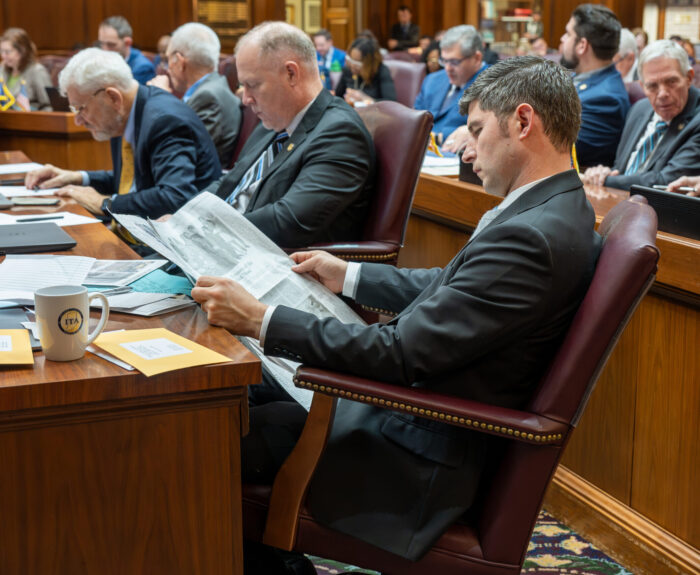
Rep. Timothy Wesco, R-Osceola, said Indiana should strengthen protections for religious expression, including potentially revisiting changes lawmakers added to the state’s RFRA law in 2015 after that measure was met with a national uproar led by civil rights groups and businesses. The “fix” signed into law by former Gov. Mike Pence a week after the law’s initial passage was aimed at making clear that RFRA could not be used to discriminate against patrons of businesses on the basis of their sexual orientation or gender identity.
Wesco said the bias stems from what he described as a shift away from traditional Christian teachings regarding marriage and gender identity.
“Anti-Christian bias is occurring nationally, as cited by the DOJ report, and in Indiana,” Wesco said in an emailed statement. “This bias is occurring as a result of the societal shift away from Christian moral ethics, such as defining marriage solely as between one man and one woman, and gender as immutably male or female.”
Wesco pointed to multiple Indiana disputes involving religion and gender identity as evidence of what he sees as growing conflicts between Christian beliefs and public institutions.
John Kluge, a former orchestra teacher at Brownsburg High School, resigned in 2018 after a dispute with the district over transgender students’ names. Kluge had requested permission to refer to all students by their last names rather than use names that conflicted with his religious beliefs regarding gender identity. After initially allowing the arrangement, the district later said the practice was disruptive and inconsistent with school policy. Kluge later sued the district, arguing school officials failed to reasonably accommodate his religious beliefs, before reaching a settlement with the district in 2024.
Wesco also referenced disputes involving foster care and parental rights, including a high-profile Indiana case involving Mary and Jeremy Cox, an Anderson couple who argued the state removed their transgender child from their custody because of the family’s religious beliefs about gender identity. The U.S. Supreme Court declined to hear the couple’s appeal in 2024.
“No one should be compelled, for any reason, to violate their sincerely held religious beliefs without a compelling government reason,” Wesco said.
Jim Bopp, a Terre Haute attorney and longtime conservative legal activist, and the Terre Haute-based James Madison Center for Free Speech recently helped sponsor a Washington, D.C., premiere of a documentary tied to the DOJ task force report.
He said the DOJ report reflects concerns many religious conservatives have raised for years about conflicts involving public schools, gender identity policies and religious accommodations.
“It was chilling and frightening that the federal government would be weaponized to attack people of faith,” Bopp said.
Many of the same religious liberty questions raised in the DOJ report, Bopp said, are now surfacing in Indiana courts, including in disputes over abortion and religious objections tied to gender identity policies.
He also defended Indiana’s RFRA law, arguing it was widely misunderstood during the backlash that followed its passage more than a decade ago.
“Maybe now that all the firestorm has passed, people can take a more sober look at what RFRA really does,” Bopp said.
In recent legislative sessions, Indiana Republicans have increasingly embraced efforts to expand religious expression rights in schools and government.
Lawmakers signed off on allowing students to participate in released-time religious instruction programs such as LifeWise Academy, which has drawn scrutiny in several Indiana communities.
State lawmakers and conservative officials have also made proposals involving chaplain programs in public schools and requiring the Ten Commandments be posted in classrooms, though those did not win final passage this year.
Last year, Indiana Attorney General Todd Rokita and Lt. Gov. Micah Beckwith promoted a “Churches’ Bill of Rights” describing legal protections for churches and political engagement by religious organizations.
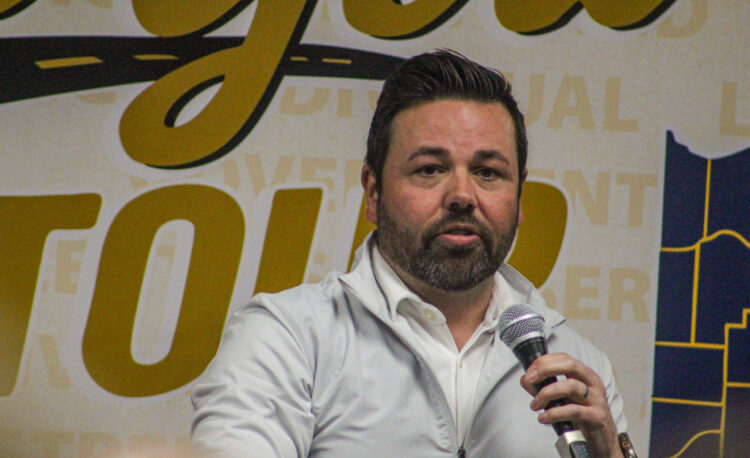
Beckwith, who remains pastor of Life Church in Noblesville while serving as lieutenant governor, has become one of Indiana’s most visible advocates for a larger role for Christianity in public life. He previously drew attention for opposing COVID-19 restrictions and promoting religious exemptions for the vaccine during the pandemic, themes that overlap with many of the concerns highlighted in the DOJ report.
Other Indiana faith leaders, however, sharply disagreed over whether claims of “anti-Christian bias” reflect legal discrimination, broader cultural change or political conflict.
“I have not encountered anything living in the state that has prevented me from running my church, doing our programming, personally as a Christian, practicing my faith,” said Beau Underwood, senior pastor of Allisonville Christian Church in Indianapolis. “I’ve never encountered an obstacle that I thought was a barrier.”
Underwood said he believes the current national conversation often confuses the declining cultural dominance of Christianity with actual discrimination.
He also said he worries political efforts to protect what he described as a narrow version of Christianity could undermine religious liberty rather than strengthen it.
“I want the church to be the church and the state to be the state,” Underwood said. “I do not expect the government to teach the Bible. I do not expect the government to promote Christian worship.”
Rabbi Aaron Spiegel, president and CEO of the Greater Indianapolis Multifaith Alliance, similarly questioned the DOJ report’s framing.
“It’s ridiculous,” Spiegel said. “It’s using faith to determine or influence secular law.”
Spiegel said he has seen greater concern nationally surrounding antisemitism and Islamophobia than anti-Christian discrimination.
“To claim that there’s an anti-Christian bias when there’s true harm being done to other minority communities … it just seems silly,” he said.
For Spiegel, religious liberty is tied to preventing government endorsement of religion.
“When that’s followed—if there’s no established state religion—I think we have religious liberty,” he said.
Spiegel also pointed to Indiana’s limited hate crimes protections as evidence that lawmakers have not consistently prioritized protections against religiously motivated discrimination or violence.
“If they truly believe that Christians are being broadly persecuted, then I would expect stronger support for hate crimes protections and broader protections for religious minorities generally,” Spiegel said. “Instead, a lot of these conversations seem focused on protecting one particular political or religious viewpoint.”
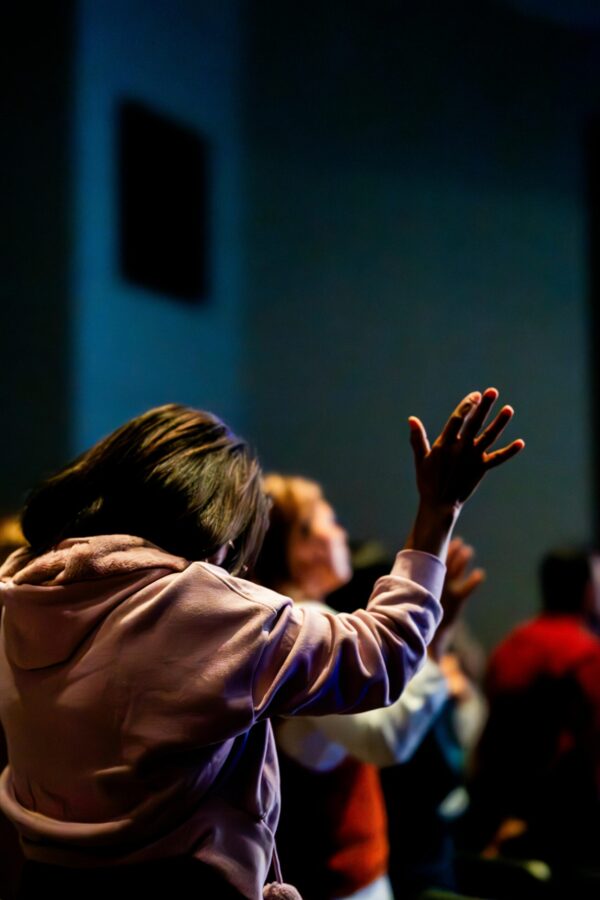
The disagreement reflects a broader national divide over religion, politics and cultural change.
A 2025 survey from the Public Religion Research Institute found that most Americans reject the idea that discrimination against Christians has become as serious as discrimination against other groups. About 60% of Americans disagreed with that claim, though majorities of Republicans and white evangelical Protestants said they believed anti-Christian discrimination is a significant problem.
The same survey found Americans who identified as adherents or sympathizers of Christian nationalism were significantly more likely to believe Christians face widespread discrimination.
At the same time, some recent research suggests Christianity remains deeply influential in American life despite concerns about marginalization. A 2025 Barna study found 66% of U.S. adults said they had made a personal commitment to Jesus that remains important in their lives, up from 54% in 2021 and 2022, which Barna described as the lowest level in more than three decades of tracking.
Some Christian organizations argue concerns about anti-Christian hostility should not be dismissed outright.
National groups tracking attacks on churches and religious institutions have pointed to shootings, arson attempts and vandalism targeting Christian communities across the country in recent years. Incidents in 2025 included attacks at churches in Kentucky, Minnesota, Michigan and Oregon.
Hate-crime tracking reports show relatively low numbers of anti-Christian incidents in the United States compared with antisemitic or racist incidents, though researchers caution the data may be incomplete and underreported.
A Pew Research Center analysis also found Christians face harassment in more countries than any other religious group, though researchers noted that Christians are also the world’s largest and most geographically widespread religion.
Rev. Aaron Ban, lead pastor at St. John’s United Church in Chesterton, said he does not see policies in Indiana that discriminate against Christians, though he noted broader cultural shifts have made religious participation less central in daily life for many.
Ban last year participated in a pastoral roundtable hosted by Beckwith, whose outspoken Christian conservative politics have made him a prominent voice in debates surrounding religion and public life in Indiana.
“In Indiana, there is still a certain amount of prestige and privilege associated with the Christian faith,” Ban said. “[But] with church affiliation in decline, there is a narrative on the right that equates loss of prestige with loss of liberty — these are not the same.”
Sydney Byerly is a political reporter who grew up in New Albany, Indiana. Before joining The Citizen, Sydney reported news for TheStatehouseFile.com and most recently managed and edited The Corydon Democrat & Clarion News in southern Indiana. She earned her bachelor’s in journalism at Franklin College’s Pulliam School of Journalism (‘Sco Griz!).
The Indiana Citizen is a nonpartisan, nonprofit platform dedicated to increasing the number of informed and engaged Hoosier citizens. We are operated by the Indiana Citizen Education Foundation, Inc., a 501(c)(3) public charity. For questions about the story, contact Marilyn Odendahl at marilyn.odendahl@indianacitizen.org.