By Marilyn Odendahl
The Indiana Citizen
April 9, 2026
The court order to consider an expungement incited a lot of confusion and some tense moments at Wednesday’s Indiana Election Commission hearing, but the proceeding ended in the same place it began: Alexandra Wilson remains on the Republican primary ballot and the dispute over her candidacy returns to the Clay County Circuit Court.
Yet, even as commission members wrangled over what could be discussed at the hearing, they shared frustration with Indiana Attorney General Todd Rokita’s office. The attorney general has been representing the Election Commission as the candidacy fight has progressed to court, but the members said the state’s top lawyer has ignored their requests for legal guidance.
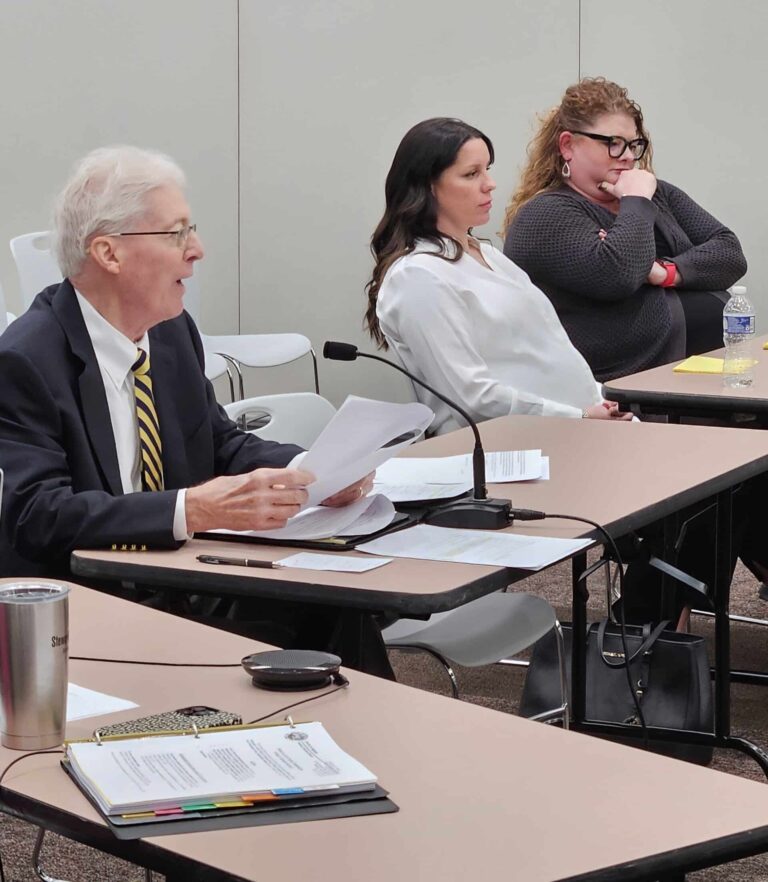
The strongest criticism came from Republican commission member and attorney John Westercamp. Reading from a prepared statement, Westercamp said he has “repeatedly requested legal advice” from the attorney general’s office and, this week, received an email from Rokita’s chief deputy Lori Torres “refusing to provide any guidance.” He then forwarded his questions to Rokita but has not received any response.
“As such, the attorney general’s office has abandoned the Indiana Election Commission as a client,” Westercamp, who ran against Rokita in 2019 for the Republican nomination for attorney general, said. “As a result, it’s not clear what the commission can do today to move this case forward.”
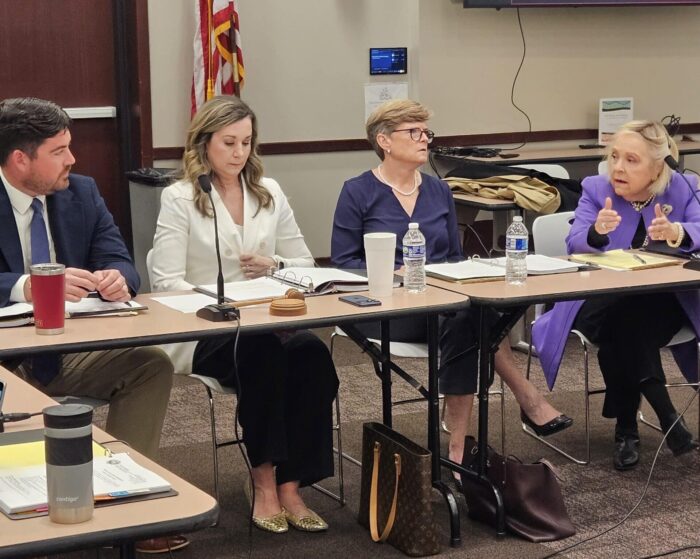
The confusion over how to proceed began about a minute after the commission members started discussing the expungement of Wilson’s 2010 arrest for resisting law enforcement and subsequent guilty plea. At one point, the hearing stalled when the two Democrats and the two Republicans on the commission deadlocked over how much the parties could say about the criminal matter that had been expunged.
Suzannah Overholt and Karen Celestino-Horseman, the Democrats, pointed to the state’s expungement statute and argued the parties and their attorneys could not mention or reference Wilson’s encounter with police. In fact, they said, the parties should not even acknowledge an expungement had been granted.
Westercamp and commission chair Beth Boyce, the Republicans, countered the parties should be allowed to present the evidence and make their legal arguments. They said they shared the Democrats’ concerns, but they added not giving the individuals and their lawyers the opportunity to debate the issue could be a violation of due process.
Overholt relented, switching her vote so the parties could present their arguments, although, she cautioned, she would still oppose an unlimited discussion of the expungement.
“Believe me, I understand due process,” Overholt said. “I understand the protections that apply, but I also understand the other legal frameworks in which we’re required to operate. At this point … I also think we need to comply with the court’s order.”
Wilson’s candidacy for the Republican nomination in the Indiana Senate District 38 race was challenged in February. Conservative attorney James Bopp, who is representing the challenger, has argued that under state statute, Wilson is disqualified from running for public office because the criminal charge she pleaded guilty to is classified as a felony.
Not only is Wilson one of two GOP candidates trying to unseat Senate District 38 incumbent Greg Goode, R-Terre Haute, but she also has the same last name as the other GOP opponent, Brenda Wilson. Bopp has asserted that Alexandra Wilson’s candidacy is a ruse meant to ensure Goode retains his spot in the legislature by splitting the opposition vote.
The challenge failed before the Election Commission and Bopp filed for a judicial review. In the court case, the attorney general represented the Election Commission, which was named as a defendant.
During the March 24 hearing on the merits of the case, Indianapolis attorney Samantha DeWester, representing Wilson, presented to the court an order which expunged her client’s criminal record.
Putnam County Superior Court Judge Charles Bridges, a special judge assigned to the case, sidestepped the central question of whether Wilson should be on the May ballot given her guilty plea. Instead, commission members said, he adopted the order proposed by the attorney general’s office, which called for the case to be remanded to the Election Commission.
Bridges wrote that sending the case back would give the Election Commission the “opportunity to consider Wilson’s notice of expungement and whether her candidacy is disqualified in light thereof.”
Westercamp said neither the trial court nor the attorney general identified the Indiana law that supported the remand of the case to the Election Commission. Moreover, he said, the commission did not consent to the proposed order submitted by the attorney general.
“Therefore, if this case is appealed after our decision today, Indiana courts should take notice that filings made by the Indiana Attorney General’s Office on behalf of this commission, may or may not have been authorized by this commission and the attorney general has refused to provide any guidance to this administrative body,” Westercamp said.
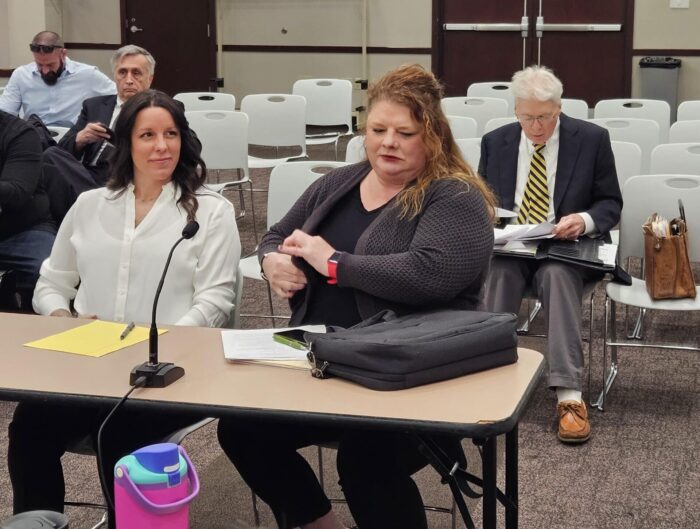
Both DeWester and Bopp made somewhat similar arguments that the expungement had no bearing on Wilson’s qualification to run for office.
DeWester told the Election Commission that the expungement would apply to Wilson’s current candidacy, even though she obtained it more than a month after she filed for office. DeWester cited an Indiana appellate decision, which allowed an individual who had already declared his candidacy to avoid violating the Hatch Act, which prohibits government employees from running for elected office if their salary is paid by federal funds, by switching jobs.
However, DeWester argued, even without the expungement, Wilson is still qualified to run in the primary. The commission had already taken a vote in February which allowed Wilson to stay on the ballot and, in its order, the court did not reverse and strike down anything the commission had done.
“The expungement is just a mere piece of evidence that makes (Wilson’s arrest and plea agreement) moot,” DeWester said. She added the commission can consider the expungement any way it wants, but because the question of Wilson’s candidacy had been decided before the expungement was issued, any ruling the commission issues in regards to the expunged record will not change her status.
“She was qualified already,” DeWester said of Wilson. “You guys already said that. She’s still on the ballot.”
Bopp dissected state statute and argued the expungement does not change what he said is Wilson’s ineligibility to run in the primary. Specifically, he said, the expungement statute applied to a conviction, where the issue in Wilson’s case is her guilty plea to a charge that is a felony. Also, he asserted, the language of the state statute indicates the expungement must have been granted before the declaration of candidacy was filed.
“The legislature has made it crystal clear they don’t want felons who have pled guilty to a felony running for office or assuming office,” Bopp said. “If you permit a subsequent expungement days, weeks, months, years later, then we have legalized felons running for office and assuming office by that action of the commission. That is exactly what should not occur and what the legislature sought to prevent.”
Overholt and Celestino-Horseman pushed back on Bopp’s assertion. The pair said candidates who are qualified when they file to run can been removed from the ballot if they run afoul of the law at a later date.
Throughout the hearing, the commission members reiterated they were confused by the court’s order that they “consider” the expungement. However, after hearing the parties’ arguments, the commission split 2-2 on a motion to dismiss the challenge, so, under the commission’s rules, Alexandra Wilson remains a candidate in the Statehouse race.
Bopp told The Indiana Citizen that he would be taking the matter back to the trial court to get a hearing on the merits of the case.
Westercamp nodded to the approaching primary election as he continued to express his frustration at the attorney general’s actions.
“Voting in this election has already begun,” Westercamp said. “The question that should be asked, in addition to many other questions, is what did the attorney general’s office hope to achieve through this remand? I’ve asked the question. I’m still waiting for an answer, but the voters can’t wait anymore.”
Dwight Adams, an editor and writer based in Indianapolis, edited this article. He is a former content editor, copy editor and digital producer at The Indianapolis Star and IndyStar.com, and worked as a planner for other newspapers, including the Louisville Courier Journal.
The Indiana Citizen is a nonpartisan, nonprofit platform dedicated to increasing the number of informed and engaged Hoosier citizens. We are operated by the Indiana Citizen Education Foundation, Inc., a 501(c)(3) public charity. For questions about the story, contact Marilyn Odendahl at marilyn.odendahl@indianacitizen.org