By Sheila Suess Kennedy
August 31, 2026
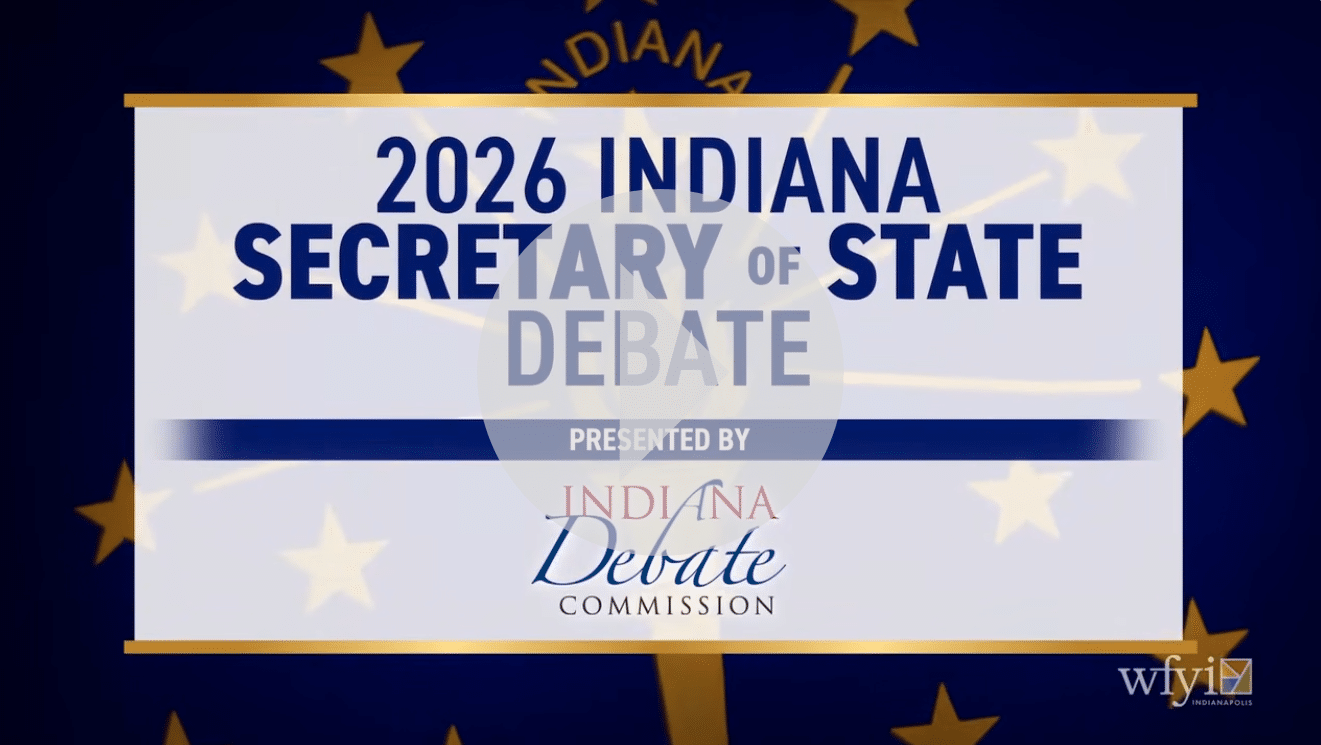
Indiana’s Secretary of State race gets more interesting–as well as more annoying–every day.
For those of you who don’t live in our backward Red state, a short explanation: Indiana has laws that protect the power and status of the two major parties. We also have extreme gerrymandering that ensures that our politics are dominated by rural folks who would sooner run naked down Main Street than vote for a Democrat. An Independent candidate wishing to run statewide needs to procure 37 thousand signatures from certified voters. So while Independents have done surprisingly well in local races where the signature requirement is less daunting, the two major parties have succeeded in keeping Independents and third-party candidates out of the “big time.” (The sole exception has been the nonthreatening Libertarian Party, which earned the right to a spot on the ballot by exceeding 2% of the vote for Secretary of State.)
That cozy arrangement is now under attack by the new Lincoln Party, a creation of Independent Indiana. Greg Ballard, a former Republican mayor of Indianapolis, obtained considerably more than the required signatures, and is running for Secretary of State. If his vote exceeds 2% of the votes cast for that office, the Lincoln Party will join the Libertarians on our future ballots.
That 2% goal appears to be a slam dunk, and Ballard actually might even win the office. Indiana’s Republican officeholders are a less-than-mediocre bunch (to be kind), and Hoosiers who are unenthusiastic about them but would vote for a rutabaga rather than a Democrat may be less reluctant to vote for a Lincoln Party candidate–especially one who was once a Republican.
The Lincoln Party is doing more than offer Hoosier voters a new choice–it is challenging our low civic literacy.
Ballard is promoting the distribution of a state-sponsored voter’s guide, saying “No Hoosier should ever walk into the voting booth feeling unprepared to cast their ballot, and no one should stay home because they didn’t have time to learn who or what would be on that ballot.” The proposed guide would include a sample ballot, candidate information, ballot questions or constitutional amendment guidance, polling locations, calendar reminders for early voting or Election Day and more.
Currently, five states mail out such guides, and–at least in 2001, the latest information I could find– thirteen others make them available at election offices and online. All of those states have higher voter turnout than Indiana.
The major party candidates were unenthusiastic–to say the least– about this proposal to give Hoosier voters basic information. According to the Indiana Capital Chronicle, Republican candidate Max Engling’s campaign issued a statement pointing to the costs of informing voters, and accusing Ballard of wanting “to grow state government and stick taxpayers with the bill.” Democrat Beau Bayh’s campaign was somewhat less dismissive, but issued a statement to the effect that Bayh “believes that “the millions of dollars of taxpayer resources required to mail a 32-page booklet that many people will discard upon receiving, can be better spent elsewhere.”
Implicit in these dismissive statements is the notion that giving voters unbiased information about the candidates, the functions of the offices they are seeking, and the mechanics of casting a ballot is wasteful.
Now, there may well be a less expensive way to reach Hoosier Voters. Perhaps the Secretary of State could partner with the League of Women Voters, which currently offers much of that information online. But there is much to be said for putting tangible information in the hands of hardworking Hoosiers, large numbers of whom are unlikely, for a variety of reasons, to search out online information.
And I do wonder if there isn’t a reluctance to inform voters of the actual duties of elected offices. A surprising number of the television ads I’m seeing in the run-up to the midterms has candidates making promises they would have absolutely no authority to keep even if elected (I’ll lower your taxes!)– ads that obviously rely on the voters’ ignorance of those realities.
If our candidates for public office are truly concerned about Indiana government’s wasteful spending, I can offer a number of examples that I consider far more wasteful than an effort to provide voters with accurate and useful information. For example, Indiana loses over $605 million annually just to data center tax breaks, with most going to Amazon. I’m sure an investigation of various other “incentives” would uncover equally egregious examples.
The Lincoln Party is sure shaking things up in our backward Hoosier state….
Sheila Suess Kennedy is Emerita Professor of Law and Public Policy at the School of Public and Environmental Affairs at Indiana University Purdue University Indianapolis. As an attorney, she practiced real estate, administrative and business law in Indianapolis before becoming corporation counsel for the City of Indianapolis in 1977. In 1980, she was the Republican candidate for Indiana’s then 1th Congressional District and in 1992, she became executive director of the American Civil Liberties Union of Indiana. She joined the faculty of the School of Public and Environment al Affairs in 1998.
The views and opinions expressed are those of the author only and do not necessarily reflect the views of The Indiana Citizen or any other affiliated organization.