This column was originally published by Sheila Kennedy on her blog, “A Jaundiced Look at the World We Live In.”
By Sheila Kennedy
August 5, 2026
Here in Indiana, our status as a reliably “Red” state has depended to a significant degree on a lack of electoral competition. For a number of years, Hoosier Democrats failed to run candidates in “safe” districts gerrymandered by the Republican legislative majority (a situation that has finally been remedied this year)–giving voters in those districts who are dissatisfied with GOP rule no reason to cast a vote.
As I have previously pointed out, that lack of competition has given us a legislature dominated by culture warriors chosen in Republican primaries. The lack of competition has also fostered corruption and self-dealing by elected officials.
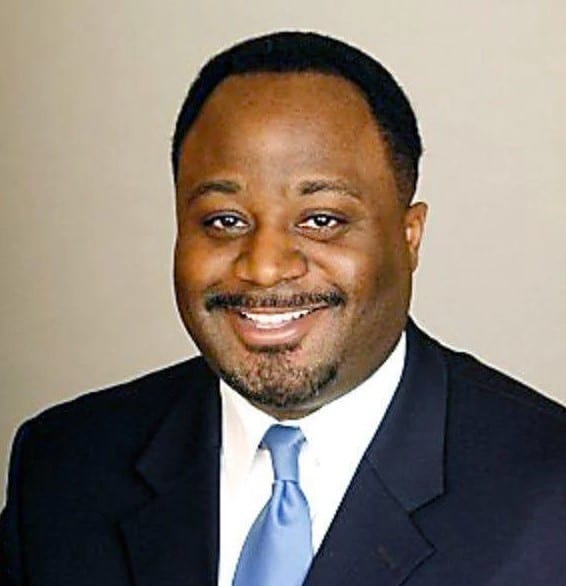
That situation is what motivated the emergence of Independent Indiana and its Lincoln Party, which has recruited Greg Ballard, a former Republican mayor of Indianapolis, to run for Secretary of State. The effort has overcome significant barriers faced by Independents under Indiana law–amassing far more than the required 37,000 signatures to get on the ballot, and raising a million dollars (so far) to fund Ballard’s campaign. The goal isn’t simply winning–if Ballard just exceeds 2% of the vote for Secretary of State, Lincoln Party/Independent candidates will no longer need 37,000 signatures to appear on our ballots; they will be able to compete on a more level playing field.
Such a result would provide Hoosier voters with a welcome change–competition.
It’s true that in rural areas of Indiana, a significant percentage of voters who are unhappy with Republican officeholders nevertheless cannot bring themselves to vote for a Democrat. A Lincoln/Independent option will give them a less distasteful alternative.
Indiana isn’t the only state where longstanding political dominance is being challenged by Independent candidacies. The New Republic recently reported on similar situations elsewhere, arguing that there are states where the Democratic party’s brand is “so toxic that they just ought to let independents run and win. At least they’re not Republicans.”
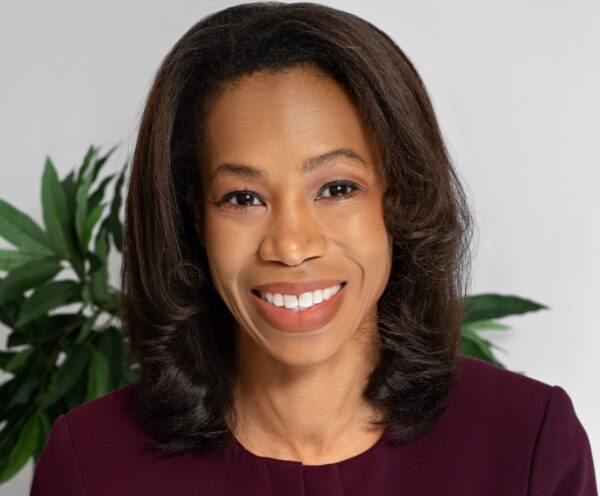
Alani Bankhead, the Democratic nominee for Senate in Montana, should end her campaign and clear the path for independent Seth Bodnar to consolidate the votes of the state’s non-Republicans. Bodnar is polling better than Bankhead in head-to-head matchups against Republican candidate Kurt Alme and probably has a better chance of winning. And a Bodnar win could be critical, potentially denying the Republicans the fiftieth seat they need to control the Senate.
This shouldn’t just be a strategy for one Senate race in Montana. Democratic leaders, strategists, and ultimately voters need to start regularly backing independent candidates in very red places, at least for the next few election cycles. This may not work. But we should test every possible approach to keep politicians nominated by today’s radical, antidemocratic Republican Party out of power, and running independents has real potential to do just that.
As the article points out, Democrats in these areas don’t lose because they are too liberal–several are arguably quite conservative. They lose because the party’s label has become toxic. (In states like Massachusetts, it’s the GOP that is seen as beyond the pale.)
In our polarized time, most voters will simply not cast a ballot for a candidate of the other party. Policy positions are irrelevant– the partisan identification eclipses any stance by the individual. Genuinely swing voters are rare. In some states, like Michigan or Wisconsin, either party can win, but states like Kentucky or Indiana–or Massachusetts–are firmly in the hands of a single party.
Discarding a party label seems to shake this situation up.
Perry Bacon, the author of the linked essay, points out that reliably Red states are electing people who are much farther to the Right than the electorate. He lives in Kentucky, and–like Indiana–the state’s voters are not nearly as ultra-conservative as those they elect. (Kentucky voters rejected ballot initiatives designed to outlaw abortions and create an expansive school voucher program.) But–just as in Indiana– voters in the state’s rural areas hate the Democratic Party, making it likely that the only way to have competitive elections that can oust radical Republicans is by running alternative candidates as independents.
In Indiana, 52% of the over 220 independent candidates who qualified for partisan races in 2023–2024 won their elections, and analyses show that nearly 44% of registered voters in Indiana lean independent.
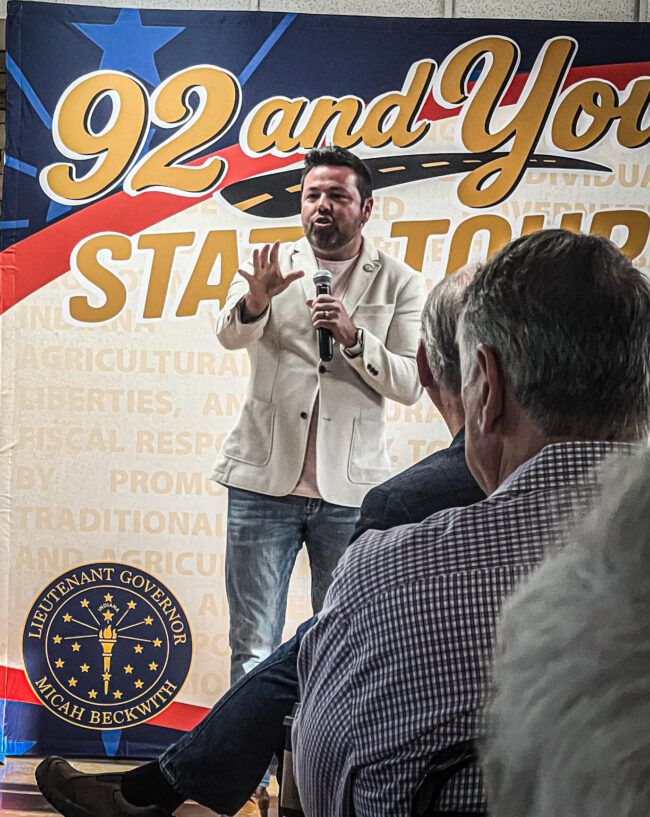
Republican electoral victories do not signify Hoosiers’ endorsement of the White Christian nationalists who currently “govern” Indiana. The performance of the independent Lincoln Party –and the worse-than-mediocre polling of Braun, Beckwith, et al, confirms that fact.
The Lincoln Party is a welcome and overdue corrective.
Sheila Suess Kennedy is Emerita Professor of Law and Public Policy at the School of Public and Environmental Affairs at Indiana University Purdue University Indianapolis. As an attorney, she practiced real estate, administrative and business law in Indianapolis before becoming corporation counsel for the City of Indianapolis in 1977. In 1980, she was the Republican candidate for Indiana’s then 1th Congressional District and in 1992, she became executive director of the American Civil Liberties Union of Indiana. She joined the faculty of the School of Public and Environment al Affairs in 1998.
The views and opinions expressed are those of the author only and do not necessarily reflect the views of The Indiana Citizen or any other affiliated organization.