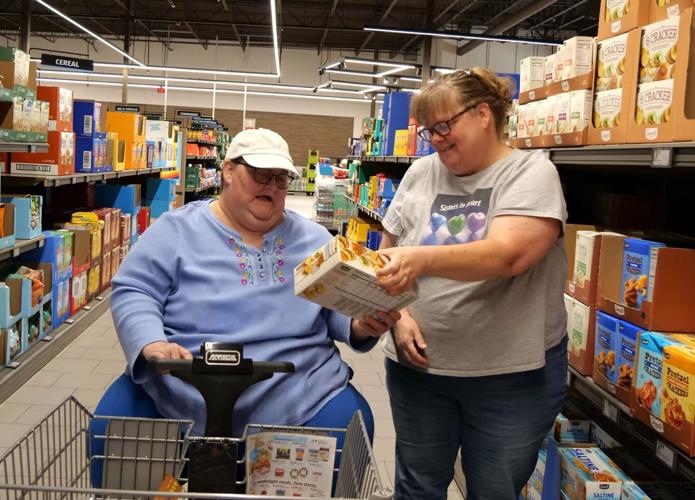
She struggles with mobility, things like walking, standing and pivoting, so these workers help Crain bathe, cook, clean and dress, among other duties.
But in 2014, Crain was robbed by one of her former caregivers, months after that individual had last cared for her.
Since then, Crain has made her address unlisted and been more cautious about who she lets into her apartment—including a revolving door of different helpers—but it complicates care for her and many others Hoosiers with disabilities who feel they need more consistent, quality and safe help at home.
Crain is on the Pathways to Aging Medicaid waiver, which means she qualifies for home-and community-based services paid for by the federal and state government, allowing her to have the in-home care she has needed for decades. In Indiana, waivers allow aging and disabled people who need nursing-level care to stay at home instead of live in a nursing home.
To be eligible for a waiver, the Hoosier must be aged, blind or otherwise disabled, live somewhere other than an institution, require nursing facility level care and have income that is below 300% of the maximum Supplemental Security Income.
Through her waiver, Crain also qualifies for a program called self-directed care. This in-home nursing alternative allows aging and disabled Hoosiers to choose and train their own caregiver rather than having one assigned to them at random by a care agency through Medicaid.
With self-direction, vulnerable Hoosiers like Crain are able to have consistent caregivers—not visits from a variety of nurses week after week.
In December, the Indiana Family and Social Services Administration (FSSA) opened up self-directed care to five waiver categories instead of just two. So now, Hoosiers on the Community Integration & Habilitation Waiver, Family Support Waiver, Traumatic Brain Injury Waiver, Health & Wellness Waiver and PathWays for Aging Waiver all have the option of self-directed care.
“We have heard for years Hoosiers ask for this option, and so we were really excited to be able to offer it to them,” said Heather Dane, chief program officer of the Indiana FSSA. “It’s really because they know someone, you know, that they feel comfortable with providing their care, and they want to be able to have that choice and control.”
Although self-direction can be a viable solution to many of the problems that Hoosiers like Crain face because they need in-home services, the long process of finding a nurse, completing paperwork and navigating Medicaid in general can make the journey to self-direction, in Crain’s case at least, frustrating.
Crain chose to live six weeks alone in her Bloomington apartment with no one to help her with her daily needs rather than letting a new nurse into her home.
She said in February she had gone many of weeks without a proper bath and was eating highly processed foods, typically from a can, that she could easily microwave. Her diet lacked fruits, vegetables and the home-cooked meals she craved.
Her apartment was another cause for concern, she said. It had not been cleaned in a while and dishes were quickly piling up. Although she had sporadic visits from friends and her children, Crain said she was often alone and uncomfortable asking for help.
“There were three weeks that I basically had no physical human contact,” she said. “I am not going to let my sons do the personal care I need.”
To Crain, the situation was more of a necessity than a choice—despite the fact that she could have had an in-home caregiver for that time. The fear of being vulnerable to another caregiver was enough for her to keep living without help.
Crain said she was approved for self-directed care in September but had to wait nearly eight months until her caregiver could begin working due to budget discrepancies. Those final six weeks without care were the weeks leading up to the start of her self-direction.
Dane could not confirm that Crain’s wait was a normal part of the self-directed care process. She said self-direction may take longer for some individuals due to the high volume of paperwork they must fill out because it turns the patient into the employer.
Nancy Griffin, a disabilities advocate since the 1970s and Indianapolis resident with a disability, told TheStatehouseFile.com that it seems like most people who are in the process of getting self-direction have experienced long waits. She said private insurance companies and the care entities that manage waivers seem to not be well staffed and the workers are not well trained.
“People like Beth would call and try to ask questions and they just wouldn’t even get to talk to anybody and just have to leave a message,” Griffin said. “And then you call over and over and over again and you’d get to talk to somebody and they’d go ‘Well, I’ll have to ask about that. I really don’t know.’”

The why behind Hoosiers’ call for self-direction
Teri Whittaker, a 46-year-old Whiteland resident with a disability and advocate for Hoosiers who are disabled said most people who need in-home care have a story about theft or abuse from one of their caregivers.
In a study over crimes against people with and without disabilities, the Bureau of Justice Statistics found that 33% of participants that were victims of robbery had at least one disability.
“The challenge is not only finding a nurse, you know, but finding a nurse you feel comfortable and safe with,” Whittaker said. “I’ve been robbed. I’ve also been trapped in my home with a caregiver for over an hour and verbally abused. … She would not leave my home no matter how many times I asked her.”
Whittaker is currently waiting for her self-directed care to be approved on the Health and Wellness Waiver. If she is not approved, she is afraid that she may be forced into a nursing home due to the loss of her family caregiver and the high volume of care hours she requires.
Griffin told TheStatehouseFile.com that the biggest reason many aging and disabled Hoosiers opt for self-directed care is so they can comfortably stay in their communities.
“That’s where all the connections are. That’s where your family is; that’s where your friends are. That’s where you can go to church. … You can go out with friends and have a cup of coffee or just sit outside on the front porch and watch the cars go by,” Griffin said. “But primarily it’s the ability to stay in touch with the people who care about you and that you love. That gets lost so often when people can’t get the care they need.”
But according to Griffin, in order to stay at home, people like Whittaker and Crain need to feel safe and well taken care of by their caregivers. To Griffin, this is where self-direction comes in as a viable “solution,” she says, to the challenges that come with in-home care.
“When you can select your own people, instead of having an agency send whoever they’ve got whether you know them or not or they know anything about you or not, it makes a huge difference in the quality of care,” Griffin said. “If somebody’s just showing up to get their hours or you know, even if they’re well-intended, but they don’t know you and they don’t know the nature of your needs, it’s really hard to get good service.”
The nursing side of things
Most in-home caregivers in Indiana only make $13 to $18 per hour. The University of California San Francisco reported in 2024 that nationally, 45% of those workers live below 200% of the federal poverty level.
Diane Hountz, CEO of the Indiana Center for Nursing, said in-home health aids are trained by the agency they work for and are not required to have an education from a nursing school, thus the lower wages.
But even for registered nurses, who work for Hoosiers on waivers, the pay rate may be as low as $25 per hour or as high as $75 per hour depending on education level.
According to Whittaker, this doesn’t always mean higher care quality.
“It’s just really hard to find nurses right now, and the nurses that are out there, I’ve never seen anything like it. … The quality of nurses is just terrifying,” Whittaker said. Since she has been receiving care through Medicaid, Whittaker said she has experienced no-call, no-show situations leaving her without a caregiver.
“We’re in a very desperate situation,” she said.
Hountz said this may be related to professionalism in general but also the high level of demand for in-home care across the country.
A 2021 survey by AARP found that 70% of U.S. adults over 50 want to age at home rather than in an institution. With the growing level of demand to stay at home, Hountz stressed the importance of a reliable workforce to care for that population as they age.
“I just wish people would show up for work,” Hountz said, “especially if you’re depending on them. … What happens when they don’t show up? Does [Whittaker] have family to take care of her? Hopefully. But if not, what happens?”
The self-directed care model in Indiana allows patients to set the wage for the caretaker they choose based on the budget their waiver allows. Ideally, eliminating the issue of an absentee and according to Whittaker, low-quality caregiver.
A success story
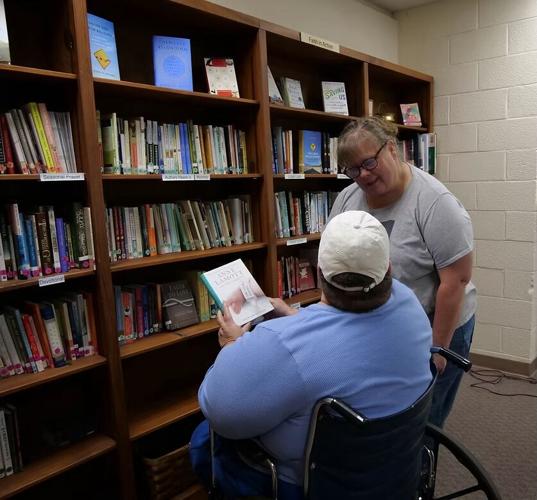
Crain’s self-directed caregiver was finally allowed to start in March, and Crain can pay her between $15 and $30 per hour based on her skill level and performance. Crain currently employs one of her friends, Rhonda Kraese, who is a former registered nurse.
When Crain was without consistent care, she said she was missing several doctor appointments because she did not feel comfortable being picked up from her apartment and transported to the doctor by someone she was unfamiliar with.
“I’ve been able to keep all my appointments, and I’ve been able to schedule a couple of the ones I had to cancel,” Crain said.
She’s also been able to have a better diet.
“We have made lots of stuff,” Crain said. “We made deviled eggs, egg salad, pork and noodles, chicken noodle soup from scratch. We made a ground beef and pasta dish. We’ve cooked vegetables.”
Most importantly, though, Crain said she has been able to see her people more often. She told TheStatehouseFile.com in early March that she was finally able to visit her grandchildren and see her sons.
She even had a trip planned to visit her hometown of Washington, Ind., and her college town, Vincennes.
“The difference is night and day,” Crain said. “I don’t feel like I’m fighting depression constantly, and I have things to look forward to everyday—not just the walls around me here and my TV and my phone.”
Improvements to self-direction
Although Crain already had a caregiver who was ready to work, Griffin said that even when self-direction is enacted, it can be difficult for many to find someone to work for them.
She suggested that FSSA should create a database for caregivers and people who need care that includes a map of available aids who are open to work near the disabled or aging person’s home. Ideally, the database would include the caregiver’s contact information, so the patient could reach out to them for an interview.
“It’s really challenging trying to figure out how to find people, how to interview them properly and figure out if they’re the right person to meet your needs,” Griffin said.
Additionally, Crain expressed a desire for more hours. Kraese can currently only work for Crain 40 hours per week. This means that Crain still isn’t able to attend church on Sundays, or live her life to the fullest outside of the 40 hours that Kraese is working.
Though the system may still be flawed, the bottom line for many of those in the process of getting self-directed care and those who already have it is that they deserve the choice to live at home—not in an institution.
“It should be a human right to be able to live in your home and community,” Griffin said.