By Steve Hinnefeld
The Indiana Citizen
October 14, 2026
Indiana’s brand-new Lincoln Party is focused on trying to elect former Indianapolis Mayor Greg Ballard as Indiana secretary of state. That’s a tall order. Democrats and Republicans have dominated statewide elections for over 150 years.
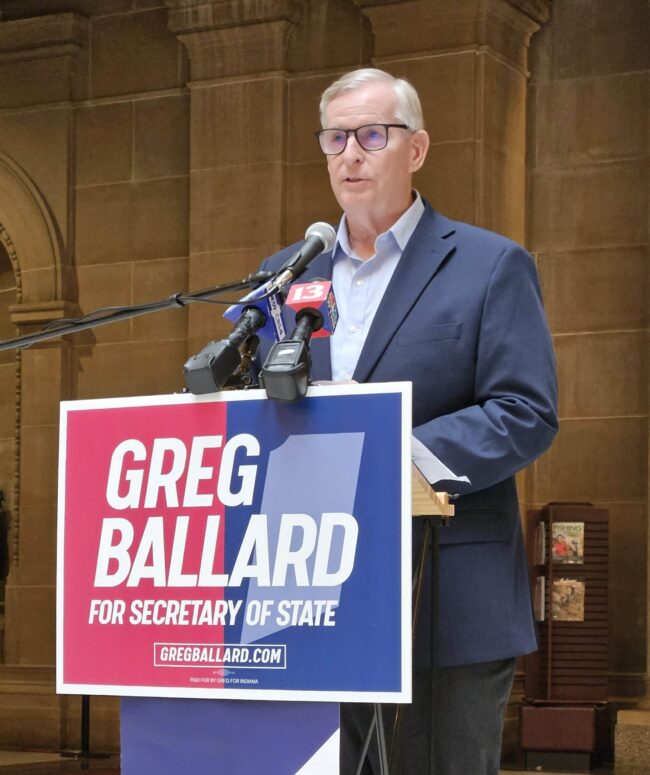
But the party also has bigger and longer-term goals, according to its chairperson, Nathan Gotsch. It wants to disrupt the two-party system, clear the way for independent candidates, generate more competitive elections and revive civic engagement.
Gotsch, also Ballard’s campaign manager, insists the time is right for independent candidates. “That’s what people in the state of Indiana want,” he said. “That’s what the polling shows.”
And Gotsch, the former executive director of Independent Indiana, a nonprofit promoting independent candidates in the state, says the Lincoln Party has already shaken up state politics.
With Ballard in the race, Republican leaders dropped Diego Morales, the scandal-plagued secretary of state, and threw their support to Max Engling, a relative unknown. Ballard, Engling, Democrat Beau Bayh and Libertarian Lauri Shillings are facing off on Nov. 3 in the race for secretary of state.
Experts are skeptical. Running a strong campaign with a credible independent candidate is one thing, they say; establishing a new party with broad appeal and lasting impact is something else.
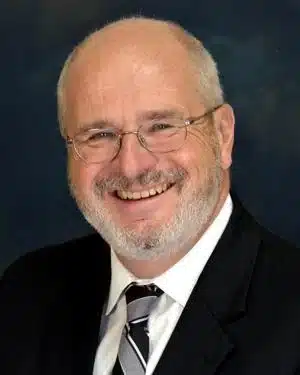
“I don’t think there’s much of a future for a viable third party in Indiana or elsewhere,” said Robert Dion, a political science professor at the University of Evansville. “I could be shown to be wrong, but the odds are not in its favor.”
It’s true that polls show voters like the idea of independent candidates. In January, Gotsch released a report from Independent Indiana that said 88% of Hoosiers would vote for an independent if they agreed with the candidate on most issues and thought the person could win. A poll by the Gallup organization found a record 45% of U.S. voters identify as independents.
But most independents said in the Gallup poll that they lean toward one party or the other. Independents also face obstacles in filing for office and getting the word out to voters. Ballard had to collect at least 37,000 verified signatures to get on the ballot.
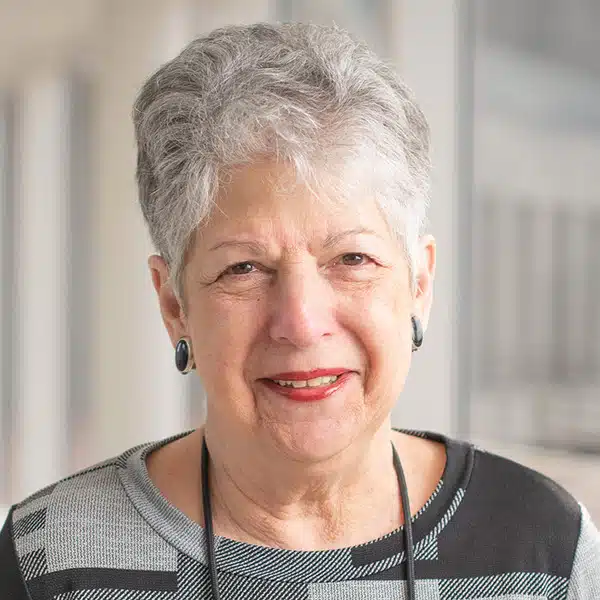
“Once you get on the ballot, you’ve got the problem that the overwhelming majority of Americans identify as Democrats or Republicans,” said Marjorie Hershey, professor emeritus of political science at Indiana University Bloomington.
“Tons of people will tell you they don’t. They’ll say they vote for the best candidate, regardless of party. But they’re fibbing,” Hershey said, pointing to decades of political science research.
The skeptics admit that Ballard is a different kind of independent. An Indianapolis native, he spent 23 years in the Marines and retired as a lieutenant colonel. He served two terms as Republican mayor of Indianapolis, defeating Democratic incumbent Bart Peterson in 2007 and winning re-election in 2011. He governed as an efficiency-conscious moderate and left office with a favorability rating of over 65%. Tapping a network of donors that’s not available to most independent candidates, he has raised over $1 million, according to state data.
Days after launching his campaign in March 2026 as an independent, Ballard said he would run under the banner of the newly formed Lincoln Party. He said two-party dominance has produced an imbalanced system in which candidates focus only on primary elections. That drives them to extreme positions, feeding a polarized electorate with no one speaking for the middle.
“The point is to make more competitive general elections in November,” Ballard said in an interview. “The people are better served by that, and we’re not doing that. We’re going the opposite direction here in the state of Indiana, and we have to change that.”
While Ballard says he’s in it to win, he can fall short and still have an impact, because the secretary of state election determines a party’s access to the ballot in future elections.
“From a third-party perspective, success is not just winning elections,” said Laura Merrifield Wilson, a political science professor at the University of Indianapolis. “Reaching the ballot threshold matters.”
The Libertarian Party has topped 2% and maintained ballot access since 1994. The American Party, created for former Georgia Gov. George Wallace to run for president, won Indiana ballot access in 1978 under prior rules that required only 0.5% of the vote. Two years later, Indiana legislators tightened the rules, sparking an unsuccessful lawsuit by the Communist Party USA and its perennial presidential candidate Gus Hall.
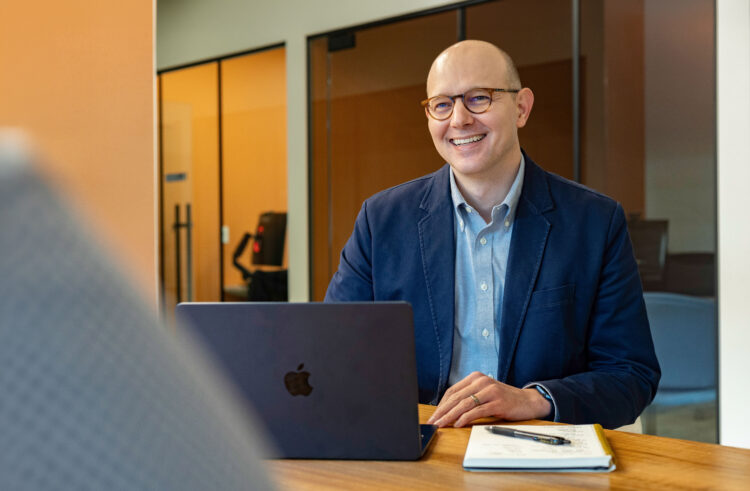
Gotsch, the Lincoln Party chair, said there’s no question Ballard will surpass 2% this year. “We’re likely to be above 10%,” he said, “which would be a very big deal, to establish a new major party in Indiana.”
Under Indiana law, political parties establish their own rules for how to operate. They typically conduct state conventions to ratify rules and nominate candidates for state office. They may also have county conventions to nominate candidates for local office.
Engling, the Republican candidate, told the Indiana Capital Chronicle the rules could let Gotsch and a few friends “sit in a dark, smoke-filled room at a steakhouse basement in Indianapolis and pick who they want to run in races all around the state.”
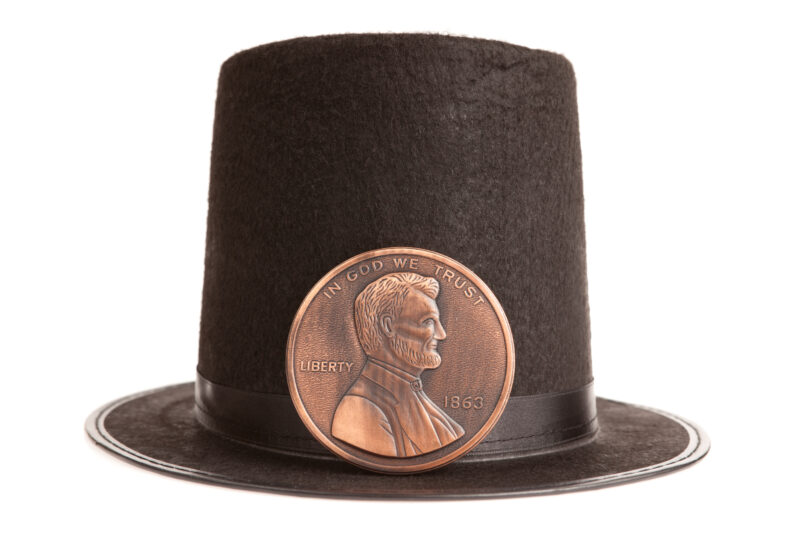
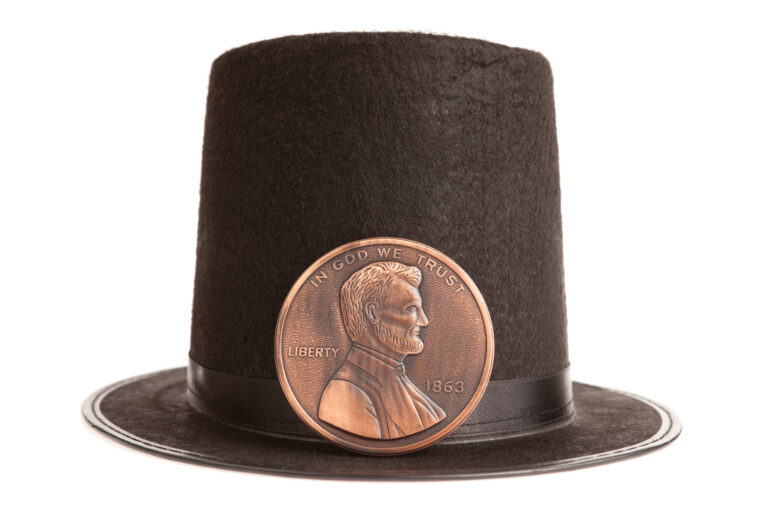
When Ballard announced the formation of the Lincoln Party in early March, within days of announcing his candidacy for secretary of state, he said he wanted the new party’s name to emulate the “values of unity, integrity and bringing people together” that the nation’s 16th president learned during his boyhood in Indiana.
Gotsch said the Lincoln Party will be formally established after the election, and party rules will be published at that time.
“In these early stages, we’ll need to be selective about which races we enter, focusing on opportunities where we believe we can bring meaningful competition and have the resources to compete effectively,” Gotsch said in an email response to questions about organizing the party. “We’re building a party that we hope will last for generations, and we want people who believe in what we’re doing to help shape it.”
Ballard said at a July news conference that the Lincoln Party will build deliberately, looking for “practical, problem-solving” candidates.
“The intent is not to put out a huge organization at the time,” he said. “Quality is way more important to us right now.”
Gotsch, the Lincoln Party chair, has an eclectic resume. A Fort Wayne native, he graduated from Concordia Lutheran High School in 2001. He studied film at the University of Southern California and worked in the film industry in Los Angeles. Eventually he returned to Indiana, taught for two years at Concordia and ran a news site called Fort Wayne Politics.
He is the founder of Centerton Group, a consulting firm. His personal website says he was a state director for Business for America, a national nonprofit. He got national media attention in 2023, when he produced an independent staging of an LGBTQ-themed play for students that a local high school banned.
Gotsch ran for Congress in Indiana’s Third District in 2022 as an independent, getting 4.7% of the vote. In 2025, he started Independent Indiana to help independents run for office. The organization’s website has lapsed or has been paused.
Independent Indiana said numerous independents had run and won in Indiana, including Huntington Mayor Richard Strick, former Bedford Mayor Shawna Girgis and Lewisville Town Council member Tom Saunders, a former Republican state legislator. But for state or regional offices, just getting on the ballot can be difficult.
Independents typically have to file petitions signed by at least 2% of as many people as voted in the previous secretary of state election. Ballard, for example, had to collect 36,943 petition signatures to get on the November ballot. He was able to get 41,299.
Hershey, the IU political scientist, said the difficult route to get on the ballot is by design. “Ballot access laws are passed by the state legislatures, which are composed almost entirely of Republicans and Democrats,” she said. “They obviously have no interest in adding to their competition.”
Gotsch said the rules forced the Ballard campaign to focus first on getting on the ballot, giving opponents a head start. “There’s a whole political industrial complex that is working against what we’re building,” he said. “And we have been able to succeed in spite of that.”
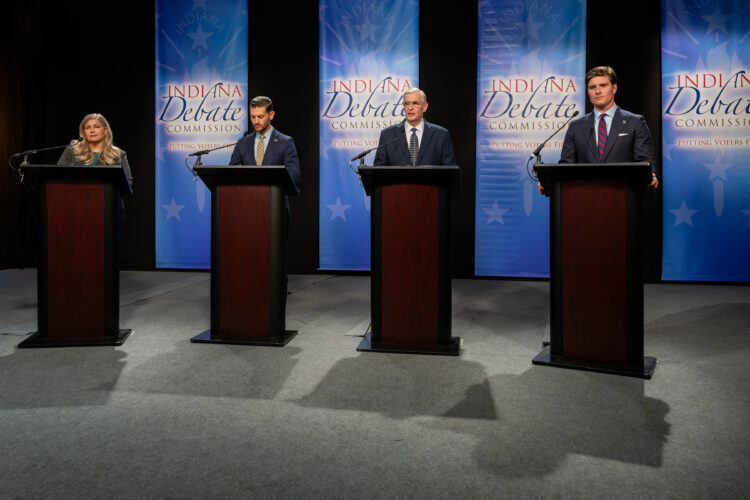
Separate polls released by the Bayh and Engling campaigns showed Ballard with only 5% of the vote, tied with Shillings, the Libertarian. That’s enough for ballot access but far short of what’s needed to have its own primaries. But Gotsch said the campaign’s polling shows an even race if prospective voters learn Ballard is a Marine and two-term Indianapolis mayor.
“It’s just a matter of, can we get that message out?” he said.
Louis Jacobson of the widely cited election site Sabato’s Crystal Ball called the race a toss-up and commented, “This could be the most interesting secretary of state contest this year.”
Gotsch said Ballard’s support comes from across the political spectrum, including disaffected Democrats and Republicans. “What people don’t realize is, their dissatisfaction with the status quo is actually shared by a large margin of Hoosiers,” he said.
But conventional wisdom suggests Ballard, as a former Republican mayor, could win over Republicans who are unhappy with the party’s direction under President Donald Trump. TV ads from Engling and his backers attack Ballard’s record as mayor, while Bayh has stuck with attacking Engling, treating the election as a Democrat-Republican contest.
Ballard “represents a different type of moderate conservative,” Merrifield Wilson, of the University of Indianapolis, said. “That’s a perspective that’s not sufficiently captured in today’s politics.”
Kevin Kellems, a former top aide to the late U.S. Sen. Richard Lugar and Vice President Dick Cheney, is an informal adviser to the Ballard campaign. “Ballard has a real shot at winning and will blow way past the 10 percent threshold to establish a viable third party that can eventually compete on a level playing field with the old parties,” he said by email.
“Our establishment, two-party system is broken,” he said, “producing toxicity and division rather than solutions to real problems. Greg Ballard is uniquely positioned to fix the toxicity, division and lack of solutions by introducing real competition and voter choice in general elections.”
But it takes more than one election to birth a party. In 1992, billionaire Ross Perot spent over $60 million and got nearly 20% of the vote running for president against George Bush and Bill Clinton. Four years later, he ran as the Reform Party candidate and fell short of 10%. The party produced one success, electing pro wrestler Jesse Ventura governor of Minnesota in 1998.
“And that Reform Party doesn’t exist now,” said Dion, the University of Evansville professor.
As for Indiana’s Lincoln Party, “it’s just Greg Ballard and the people who agree with Greg Ballard,” Dion said. There’s no infrastructure, there’s no organization behind this. You need a body of volunteers and activists and believers and voters and candidates.”
Robin Winston, a former Indiana Democratic Party chair, said the major parties’ structure, down to the precinct level, is an advantage. Local candidates and their supporters are going door to door, he said, sharing information about state races and issues.
“There are two phases of GOTV,” he said. “One is ‘get on television’ and the other is ‘get out the vote.’ We’re in the middle of both of them right now.”
Eventually, political scientists say, the Lincoln Party will need an identity in the way the Libertarian Party has become a home for dedicated believers in limited government.
“A party has a platform,” Merrifield Wilson said. “We’ve heard what Greg Ballard wants to do as secretary of state, but that’s specific to one candidate and one office. The real question is, does it continue to exist, and after the Ballard race, what does it look like?”
The party recently released a statement of principles focused on democratic ideals, standards for government and a commitment to integrity, which candidates will be expected to follow. Gotsch said in a news release that the party will be built on “principles, not a platform that tells candidates where they have to stand on every issue.”
He said the Republican and Democratic parties are built on a 19th-century model. “We are going to focus on what a 21st-century political system looks like,” he said. “It’s really exciting to think Indiana could be the place for this kind of innovation.”
Gotsch thinks the public is ready for a new party. But it will take time to know if it takes hold.
Dion, for one, won’t be holding his breath. “You’ve got to give them credit for trying,” he said. “But doggone it, the last time that happened was in the 1860s.”
Steve Hinnefeld is a freelance writer based in Bloomington. He formerly was an adjunct instructor at the Media School at Indiana University, a media specialist at Indiana University and reporter for the Bloomington Herald-Times. He has had no affiliation with the Media School since spring 2022.
Dwight Adams, an editor and writer based in Indianapolis, edited this article. He is a former content editor, copy editor and digital producer at The Indianapolis Star and IndyStar.com, and worked as a planner for other newspapers, including the Louisville Courier Journal.
The Indiana Citizen is a nonpartisan, nonprofit platform dedicated to increasing the number of informed and engaged Hoosier citizens. We are operated by the Indiana Citizen Education Foundation, Inc., a 501(c)(3) public charity. For questions about the story, contact Marilyn Odendahl at marilyn.odendahl@indianacitizen.org.