By Marilyn Odendahl
The Indiana Citizen
September 28, 2026
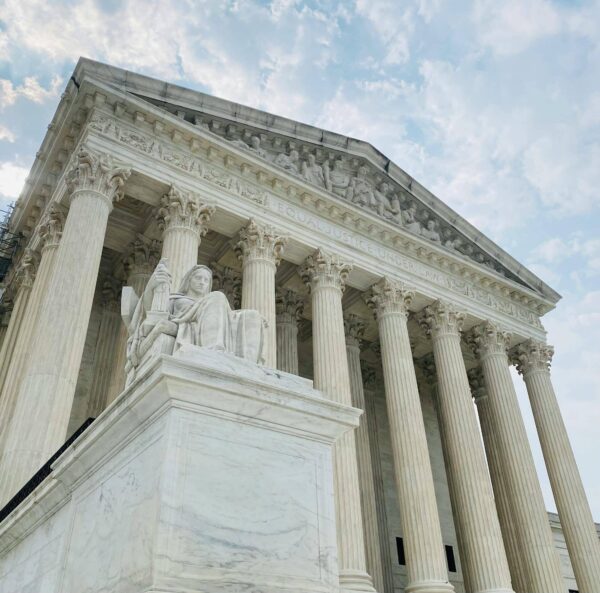
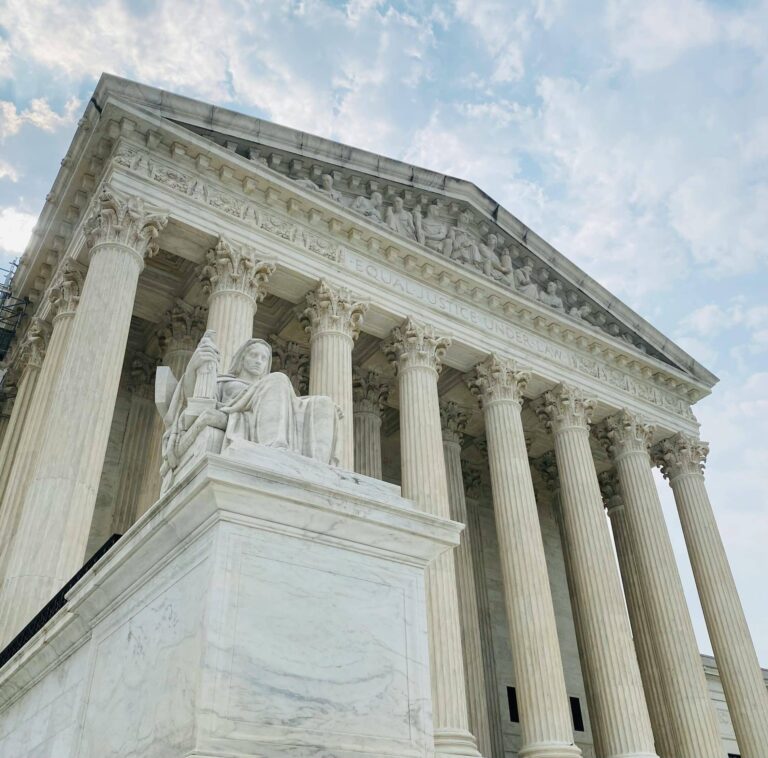
Indiana will again be able to use the federal SAVE system to check Hoosier voters’ citizenship status, following Friday’s ruling by the U.S. Supreme Court that allows all states to access the database that voter-rights groups and privacy advocates have described as error-laden and unreliable.
The Sept. 25 per curiam opinion from a majority on the Supreme Court enables the Trump administration to utilize the Systemic Alien Verification for Entitlements program that had been expanded into a tool that federal officials said can be used to prevent voter fraud by spotting noncitizens on voter rolls.

Indiana Attorney General Todd Rokita had joined Florida, Iowa and Ohio in an amici curiae brief supporting the administration’s position and asking the Supreme Court to lift a lower court’s order blocking access. The four states asserted that when “a court interferes with the States’ ability to maintain accurate and current voter registration records, election integrity – and confidence in elections – suffers.”
Officials in Indiana have apparently been accessing the SAVE program as part of a settlement Indiana reached with the U.S. Department of Homeland Security in November 2025. When the settlement was announced, Indiana Secretary of State Diego Morales’ office said it had submitted 488,030 voter registrations to be uploaded into the SAVE program and 165 individuals had been flagged as potential noncitizens.
Florida, Iowa and Ohio had reached similar settlements with DHS.
Designed in 1986, the SAVE program originally tapped into Homeland Security’s immigration records to identify the immigrant status of individuals applying for public benefits. The modified SAVE program at the center of this lawsuit incorporates Social Security numbers and enables bulk searches of the Social Security Administration’s data, so that states can verify the citizenship status of registered voters and individuals registering to vote.
The League of Women Voters, the Electronic Privacy Information Center and individual citizens challenged the modified SAVE program in a class-action lawsuit filed in September 2025, saying it violated federal privacy laws and federal prohibitions on developing a massive database containing information on U.S. citizens. “Disregarding these laws,” the plaintiffs asserted in its response brief submitted to the U.S. Supreme Court, “the government has recklessly created an error-laden master citizenship database that endangers millions of Americans’ privacy and voting rights.”
After the U.S. District Court for the District of Columbia and a split U.S. Court of Appeals for the District of Columbia found for the plaintiffs and blocked the use of the modified SAVE system, the Trump administration turned to the U.S. Supreme Court. The Department of Homeland Security contended the district court’s ruling “threatens the integrity of upcoming elections by vacating the federal government’s authority to internally use Social Security data when fulfilling its duty to respond to requests by States to verify the citizenship of individuals for voting and other purposes.”
In its per curiam opinion, the Supreme Court majority found the plaintiffs’ claims lacked merit. The majority echoed the arguments raised by Homeland Security by asserting the federal government has a duty under the Illegal Immigration Reform and Immigrant Responsibility Act of 1996 to respond to citizenship inquiries.
“Under section 1373(c) (of the IIRIRA), the Federal Government has an obligation to respond to requests from state and local election officials seeking to verify the citizenship of voters,” the majority said in its ruling. “The (order from the District Court) prevents the Federal Government from using the program it believes is best suited to the task.”
However, Justice Ketanji Brown Jackson in an 12-page dissent joined by Justices Elena Kagan and Sonia Sotomayor blasted the majority’s opinion, saying the Supreme Court was “rendering questionable interim rulings about two statutory provisions it has never before interpreted.”
Jackson pointed out that the modified SAVE system connected the master Social Security files with the Social Security Administration’s Numident records, which contains such personal identifying information as places of birth, citizenship indicators and death records about natural-born U.S. citizens as well as naturalized citizens and noncitizens. If a query is inconclusive, Jackson wrote, a state might ask a registered voter to provide proof of citizenship and could strike that voter from the rolls if he or she does not offer the proof in a timely manner.
Nodding to the calendar, Jackson noted the “bright side” of the majority opinion is that it “will likely have minimal short-term impact.” States will probably not have time to fully use the modified SAVE program ahead of the November midterm election. Still, she had cause for concern.
“The harm caused by burdening or disenfranchising even a few lawful voters outweighs the nonexistent harm that the Government experiences when it is prevented from taking an action that it likely lacks the authority to take,” Jackson wrote in her dissent.
Friday, the League of Women Voters, the Electronic Privacy Information Center and the other plaintiffs issued a statement noting the litigation is continuing, according to reporting by National Public Radio.
“Today’s decision is profoundly disappointing, as it puts millions of Americans at risk of being unlawfully targeted by the administration’s unreliable voter purge database weeks before the midterm elections,” the joint statement said. “However, this case is not over. The D.C. district court ruled that the expanded SAVE program violated multiple laws. We will be doing everything in our power to protect Americans’ voting and privacy rights by ensuring that the district court decision stands.”
Indiana’s use of the SAVE program is linked to the unfounded concerns about voter fraud Rokita and Morales began raising in the weeks before the 2024 November presidential election. The two Republican state officials announced in October of 2024 that they had sent a letter to U.S. Citizenship and Immigration Services, requesting that the agency verify the status of 585,774 registered Indiana voters.
The Indiana Citizen filed a lawsuit to get access to that voter list, a move that advocates applauded. Earlier this month, Marion County Superior Court Judge Kurt Eisgruber allowed Rokita and Morales to keep the list private but did not provide any explanation for his ruling.
When USCIS did not respond to their request, Rokita and Morales filed a lawsuit against the Department of Homeland Security in April 2025, asserting they needed the citizenship data in order to ensure the integrity of Indiana’s elections.
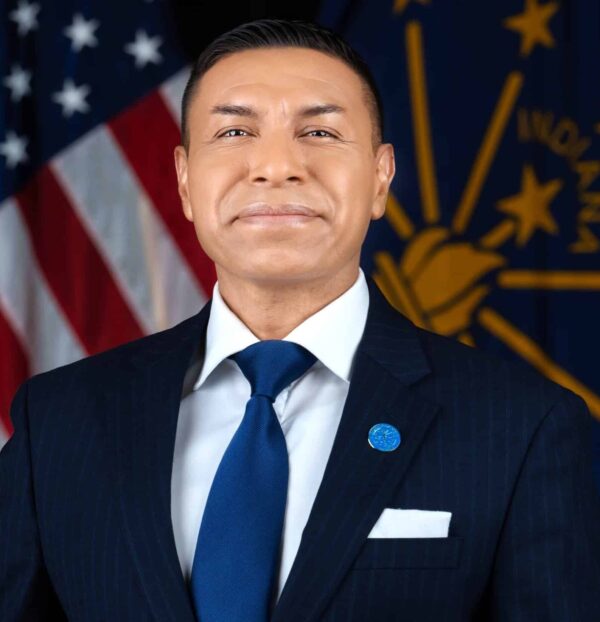
Morales then announced in July 2025 that his office had entered into a memorandum of agreement with the Department of Homeland Security, which allowed Indiana to use the SAVE program. Two months later in September, Morales said his office had turned over the state’s voter rolls to the Department of Justice after getting clearance from Rokita’s office.
The settlement that Rokita and Morales reached with DHS was subsequently criticized by the Electronic Privacy Information Center. John Davisson, director of litigation for EPIC, said the SAVE program was error-prone because it was not built for verifying the citizenship status of Indiana voters.
“It will result in people most likely having their voting rights burdened or denied,” Davisson told The Indiana Citizen.
The amici brief filed with the Supreme Court did not provide any specifics on how Indiana was utilizing SAVE, but it noted what the other states involved in the brief were doing before the district court prevented access. Florida had been seeking to affirm citizenship status of its voters by uploading bulk voter registration data into the SAVE program and searching by Social Security numbers. Similarly, Ohio had also been using SAVE to review citizenship records of its registered voters. Iowa indicated it had expanded beyond searching voter rolls and had been accessing SAVE to verify the citizenship of individuals applying for professional licenses.
The Chicago Lawyers’ Committee for Civil Rights noted the timing of the Supreme Court’s per curiam ruling might limit its impact. State participation in the SAVE program is voluntary and purges of voter rolls ae prohibited within 90 days of an election.
Even so, like Justice Jackson, CLCCR was concerned that giving the Trump administration the ability to use an “unreliable voter database” could disenfranchise many eligible voters. Moreover, the nonprofit civil-rights organization pointed out that voters are already under penalty of perjury if they falsely affirm their eligibility to vote and voter fraud is extremely rare.
“The Supreme Court’s decision allowing the Trump administration to move forward with this unreliable voter screening tool ahead of the midterm elections is deeply alarming and could disenfranchise eligible voters,” Aneel Chablani, vice president and legal director at CLCCR, said in a statement. “In a democracy, our federal government should be encouraging eligible voters to cast their ballots – not manipulating voting processes to control who can participate or sowing doubt about the security of our elections.”
The case is Department of Homeland Security, et al. v. League of Women Voters, et al., 26A308.
Dwight Adams, an editor and writer based in Indianapolis, edited this article. He is a former content editor, copy editor and digital producer at The Indianapolis Star and IndyStar.com, and worked as a planner for other newspapers, including the Louisville Courier Journal.
The Indiana Citizen is a nonpartisan, nonprofit platform dedicated to increasing the number of informed and engaged Hoosier citizens. We are operated by the Indiana Citizen Education Foundation, Inc., a 501(c)(3) public charity. For questions about the story, contact Marilyn Odendahl at marilyn.odendahl@indianacitizen.org.