By Marilyn Odendahl
The Indiana Citizen
September 25, 2026
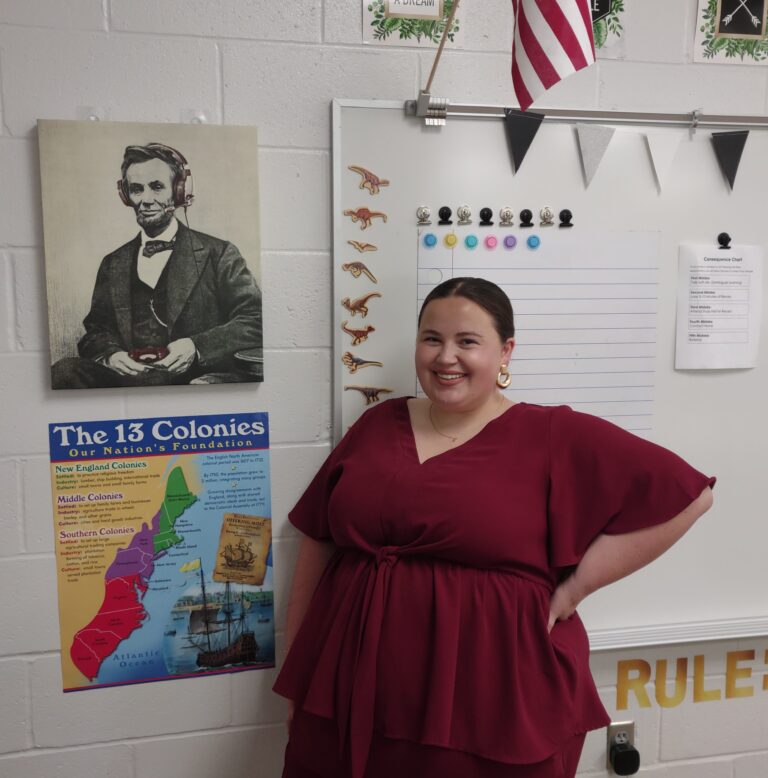
Watching her 10-year-old students craft legislation as part of a class exercise on how a bill becomes a law, Kaylea Dominguez, who had designated herself as “president,” began to get a feeling of unease, which undoubtedly many occupants of the White House have known.
Dominguez, a fifth grade science and social studies teacher at Kitley Intermediate School in Franklin Township in Indianapolis, had created a mock Congress in her classroom with five groups of students comprising the U.S. House of Representatives and two groups serving as the U.S. Senate. Every student had to write a bill and then each group chose one piece of legislation to introduce before sending the others to the trash can. Welcome to Capitol Hill.
From that point, those seven bills started the perilous journey to President Dominguez’s desk. The measures went through committee hearings, floor debates and votes, and, if they were lucky enough to survive, they moved to the other chamber and started the process all over again.
The lawmakers were elementary students, so their legislative initiatives focused on things like mandating an extra recess. However, the bill that stirred a growing sense of alarm for Dominguez would have required her to bring snacks every day for all the students in her class.
As more young lawmakers got behind the “Snack Bill,” Dominguez threatened a veto. Unfortunately, she had taught her students too well. They calmly rebuffed that they could muster the two-thirds majority needed to override her attempt to spike the legislation.
Some students eventually withdrew their support, which caused the bill to crumble in the Kitley Intermediate Congress and saved President Dominguez from having to squash chips and cookies. Although her administration came close to a food and fiscal crisis, Dominguez was happy her lesson plan worked and her students got actual hands-on experience in how laws are made.
“It was messy, it was chaotic, but it worked well because the kids learned from it,” Dominguez said. “They’re like, ‘Wow, so this is a very complicated process.’ Yeah, and that’s on purpose.”
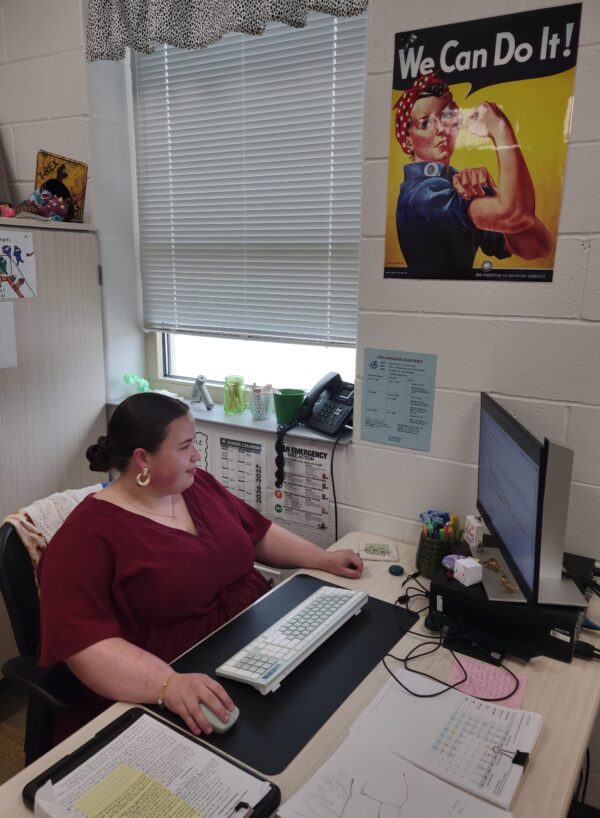
Never relying on the dry lecture, Dominguez teaches civics by engaging her students in an array of activities and projects. They hunt for gold coins hidden in their classroom, so they can feel some of the emotions the gold-crazed conquistadors experienced exploring the New World. Toward the end of the school year, the students encounter the thrill of politics through a mock election for class president that includes a nomination process, debates, making campaign posters and meeting voters, before the polls open, ballots are cast and the votes are counted.
“I think it’s important that we’re building these basic concepts before they go into the older grades, so (their knowledge) just grows and grows and grows, until they’re these amazing, active and engaged citizens,” Dominguez said.
Her infectious enthusiasm for her students and for civics education along with her inventive teaching methods have earned Dominguez national recognition for excellence in teaching the U.S. Constitution and foundations of American government. She is one of just three schoolteachers in the country – and the only teacher from Indiana – to receive the 2026 American Civic Education Teacher Award from the Center for Civic Education, a nonprofit, nonpartisan educational organization.
Partnering organizations for the award are the Center on Representative Government at Indiana University and the National Education Association.
In a nomination letter, one of Dominguez’s peers wrote that magic happens in her classroom and that she makes “our community better, one child and one class at a time.”
Dominguez, a 2022 graduate of Ball State University, knew she wanted to be an educator since she was 12 years old, but she did not have any interest in teaching U.S. history and civics until her senior year in high school. That changed when Dominguez enrolled in the required government class. Her “phenomenal teacher” made the lessons about democracy relatable to the lives of teenagers and helped define her career path.
“I just had a lot of fun in that class and it just kind of sparked this idea in my head,” Dominguez said.
Recently, Dominguez sat down with The Indiana Citizen to talk about teaching, the importance of civics education and being a national award winner. This conversation has been edited for clarity.
Question: Your class covers U.S. history from the arrival of the European explorers through the writing of the U.S. Constitution. What kinds of things do you do to teach civics?
Kaylea Dominguez: We take the time to do different simulations and role-playing activities and real-life activities that get them really excited. For example, their U.S. representative in this district is Jefferson Shreve. So, I teach them how to find the information of who their representative is and I give them a template of how they would write a letter to their representative. They introduce themselves in this letter and they describe the issue that they see in their community, they propose the solution and they sign off on it. Then, I teach them how to address the letter, how to put the stamp on the envelope and we mail them off. That is super exciting for them.
Q: What issues do the students want Rep. Shreve to address?
KD: So, a lot of times a big one is potholes. They’re just really concerned about potholes. Last year, I had a few that were worried about playgrounds in the area. Some of these issues are not going to be addressed at the national level, but I’m allowing them to express concerns that they do see at their age.
Q: Do they get a response from Rep. Shreve’s office?
KD: I tell them, you probably will get a letter back. It’s usually what happens and they get so excited about it. Sometimes their parents will email me pictures of the students with their response letters.
Q: What are some other activities you do?
KD: A big one we do is an interdisciplinary project with the English Language Arts teacher across the hall. We do a wax museum. The kids are randomly assigned a historical figure, whether that’s a European explorer or a Founding Father or anybody. They are responsible for researching and studying that person on a deeper level. I teach them how to do the research, how to use primary and secondary sources. In the ELA class, they practice writing biographies and speeches and then they memorize them. Also, they create posters with the information they find. Then for the presentation, they dress up as their historical figure and stand around like they are in a museum. We invite their families and members of the community, who can go (around the room), press a button and the students will say their speech. It’s getting the students to dive deep into these historical figures and also share what they learned with other students and their families, which is great.
Q: Where do you come up with these ideas?
KD: I truly don’t know. Sometimes I’ll see things on the internet, and I’m like, ‘How can I adjust this to make it work for me?’ But also, I’m a very creative person, and so that’s part of what I love about my job is that I can express this creativity and come up with these things that are fun for me and fun for the kids, and they’re learning.
Q: These activities and hands-on experiences in your classroom really link U.S. history with civics. Why is that important?
KD: If you think about it, really, civics and the way that our government is set up is all based on what has happened in the past. So, I personally think that it’s extremely important for students to understand how we got to the point that we are at today. Why is our government set up the way it is? So, going through time, they know, ‘Oh, this happened because of this.’ An example that I think of is when we’re studying the revolutionary era and they learn about the Quartering Act. Then we get to the Bill of Rights and the Third Amendment. Now, if they didn’t know that the Quartering Act existed, they would be like, ‘This is a really random right to have in the Bill of Rights.’ But it makes sense because they know about that British policy. It connects.
Q: You are one of just three schoolteachers in the country to receive the 2026 American Civic Education Teacher Award. What does this national recognition mean to you?
KD: I really was blown away. It feels really, really good to be recognized for the love and the effort that I put into my career, because it’s not an 8 a.m. to 3:30 p.m. kind of job. There’s a lot that goes into it, and it’s not just me. It’s every teacher. I wish that we could have this level of recognition for every teacher, because we wear so many hats, and we are very invested in these kids and their learning and their lives. I would just love to see a lot more positivity and gratitude towards our educators. I’m very grateful, very grateful for this award.
Dwight Adams, an editor and writer based in Indianapolis, edited this article. He is a former content editor, copy editor and digital producer at The Indianapolis Star and IndyStar.com, and worked as a planner for other newspapers, including the Louisville Courier Journal.
The Indiana Citizen is a nonpartisan, nonprofit platform dedicated to increasing the number of informed and engaged Hoosier citizens. We are operated by the Indiana Citizen Education Foundation, Inc., a 501(c)(3) public charity. For questions about the story, contact Marilyn Odendahl at marilyn.odendahl@indianacitizen.org.