By Marilyn Odendahl
The Indiana Citizen
September 16, 2026
Lt. Gov. Micah Beckwith rode into office partly on a wave of anger over property taxes and now he is optimistic that at least the taxes on family homes will be eliminated during the upcoming legislative session, which he described as a “huge, huge, win.”
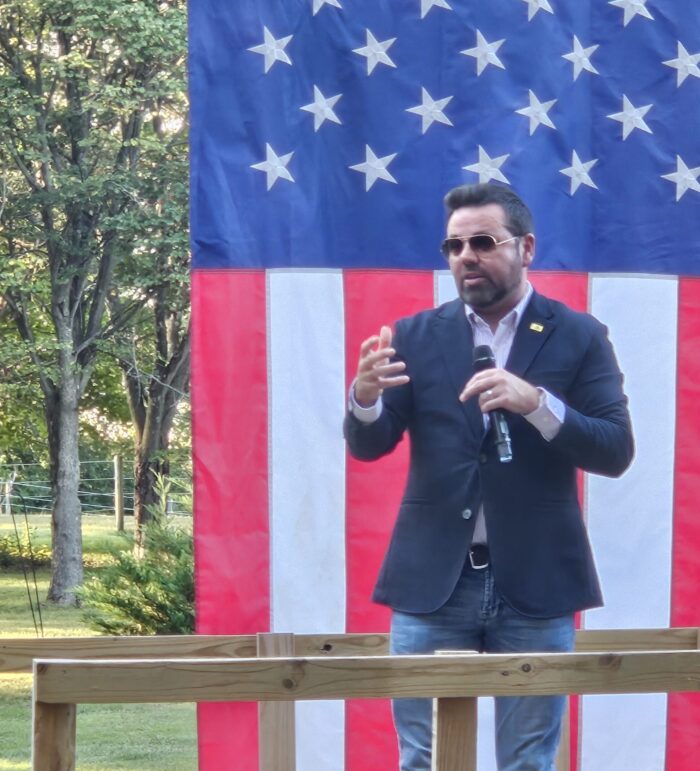
Speaking to a friendly crowd Tuesday evening during a town hall in Greenwood, Beckwith answered questions on a range of topics. He reiterated some of his inflammatory remarks about Islam – telling those who had come to hear him speak, “Islam is not just a religion. Islam is a political and military ideology that is hell bent on destroying Western civilization.” – and he said he would be calling for legislation to ban Sharia law.
However, he mostly talked about the need to support farmers and rural communities. Also, he encouraged people to get involved with their local political parties and to express their opinions to their state and local government officials when they are opposed to things such as data centers.
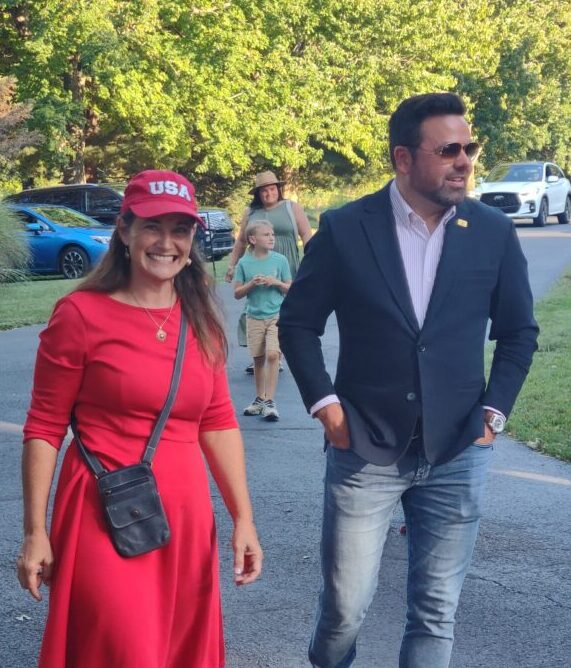
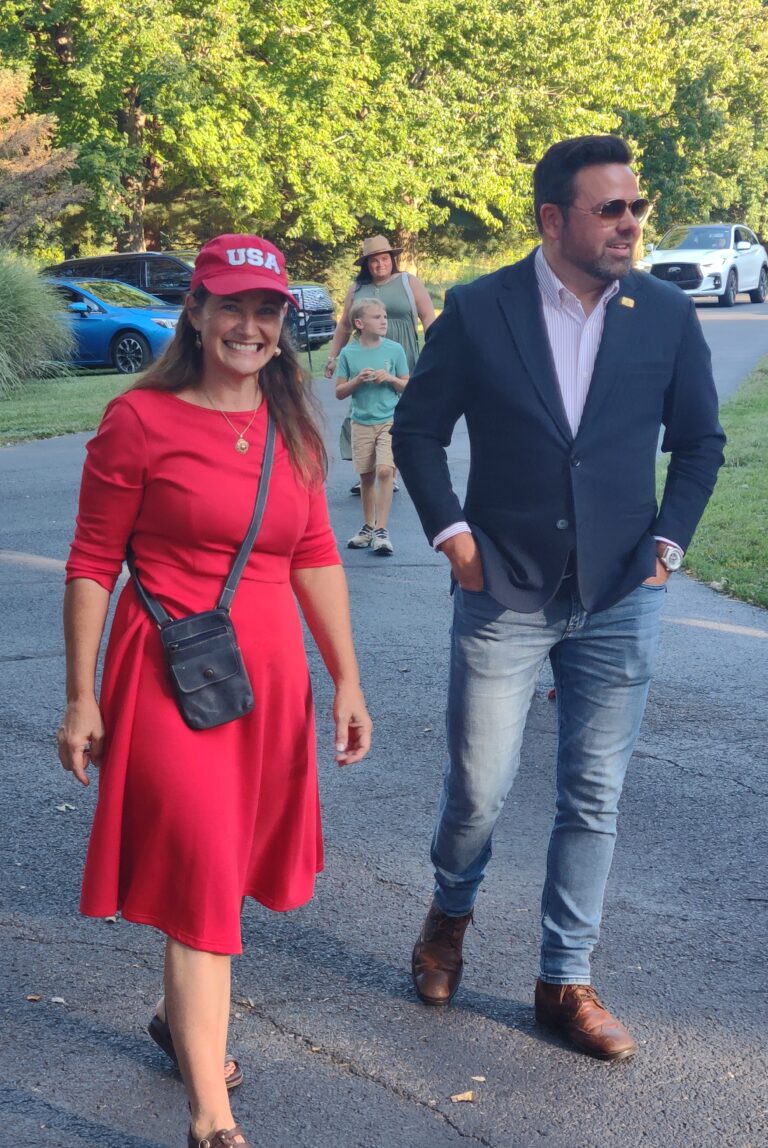
The town hall was held outdoors on Olive Branch Farm, owned by Sarah Janisse Brown, a friend and supporter of Beckwith’s. While the lieutenant governor stood on a flatbed trailer with an American flag draped behind him, many in the crowd sat at picnic tables and listened attentively, sometimes applauding his remarks. Two large white dogs meandered around and occasionally some children played on the quilts spread across the ground.
Beckwith’s comments on property taxes sparked some enthusiasm among the people.
He compared property taxes on private homes to paying rent to the government and said eliminating taxes on homesteads would alleviate homeowners’ fears of losing their houses because they could not pay the taxes.
“The sanctity of your house, you know, where you raised your kids, you paid off your mortgage, you worked hard, you retired, you’re on a fixed income – let people retire in peace for crying out loud,” Beckwith said as the crowd applauded.
State Rep. J.D. Prescott, R-Union City, has been traveling across Indiana, touting his plan to abolish all property taxes and replace the lost revenue by expanding the state’s 7% sales tax to cover services such as haircuts, oil changes and lawyer fees.
Former Ball State University economist Michael Hicks previously described Prescott’s plan “the worst tax proposal.” He calculated that the new tax on services would cost Hoosier families $3,743 each year which is equivalent to the property taxes on a home with an assessed value of about $450,000.
Although he liked Prescott’s proposal, Beckwith said a bill being crafted by state Sen. Ryan Mishler, R-Mishawaka, would end property taxes only on homesteads and, therefore, is more likely to gain traction in the Statehouse.
Beckwith said Mishler’s plan is based on a bill the lawmaker had introduced previously. The lieutenant governor could not remember the specific bill, but during the 2024 legislative Mishler authored Senate Bill 285, which exempted homesteads from property taxes.
Even though SB 285 sputtered in the General Assembly, failing to get a hearing before the Senate Appropriations Committee, Beckwith said Gov. Mike Braun was receptive to Mishler’s plan. Beckwith believes if Braun and Sen. Chris Garten, R-Charlestown, who is expected to be the new Senate president pro tempore, get behind Mishler’s proposal, the leaders in the Indiana House would warm to it as well.
“We actually have a legitimate chance to end property taxes for homeowners all over the state,” Beckwith said. “We’d be the first state to do it.”
A 2024 fiscal analysis of SB 285 estimated that the exemption would cost the state about $3.9 billion in 2027, eventually rising to $5.1 billion in 2032.

Beckwith said he is not aware of all the tweaking Mishler is doing to the bill, but he believes lawmakers working on the proposal would replace the revenue lost from homestead taxes by reinstating the business personal property tax that was removed in the 2025 Senate Enrolled Act 1. Moreover, while local municipalities will likely decry the loss of revenue, Beckwith said Mishler’s plan would probably be more palatable to city and county officials.
The 2025 bill has not provided homeowners will much relief. Beckwith blamed the Indiana Senate and attributed the stunning primary losses of five Republican incumbents to the public’s frustration with their votes on property tax reform bill.
“That’s why we had a butt kicking in the Senate this last primary, because we said, ‘You guys screwed over the people of Indiana big time with things like property taxes. We’re coming for you,’” Beckwith said.
However, the five GOP senators were not defeated because of their vote on property taxes. They were targeted because they had voted against redistricting, which thwarted President Donald Trump’s effort to keep Congress red after the 2026 midterm election. Trump subsequently endorsed the candidates challenging the incumbents and dark money flowed into the state races, which created a hurdle to reelection too high for five of the state senators.
Beckwith credited SEA 1 with starting the conversation over property taxes.
“Now we’re here in 2026 talking about potentially 2027 legislation that could end homestead property taxes for Hoosiers, which would be phenomenal,” Beckwith said after the town hall. “That would be a huge, huge win.”

In a related question about families’ economic well-being, a woman shared with Beckwith her concerns about the August jobs report. According to the federal statistics, women took 98% of the new jobs. “Why are men falling out of the workforce?” she asked.
Beckwith blamed the feminist movement for displacing men from their traditional role. God wired men to be the provider and protector of the family, but when women start filling those duties, the system is upended.
“I’m not against women going out and working, but when it’s all a workforce full of women, you’re going to have a huge disparity,” Beckwith said. “There’s going to be a whole lot of societal problems that come from that, and we’ve got to push back on this.”
Beckwith also said adult men were partly responsible. They had not taught young men how to love and respect and lay down their lives for their families. Men sacrificing their well-being for the well-being of others, he said, will ripple beyond the family and help build strong communities that will have lower crime, poverty and mental illness.
“It all starts with that male godly leadership at all levels,” Beckwith said. “And to say otherwise, you’re just wrong. You’re ignorant of how creation works.”
A man in the audience challenged Beckwith’s views. The man countered that possibly the job report is reflecting how the cost of food and rent is driving many stay-at-home moms into the workforce.
Beckwith agreed, saying some women are likely seeking employment because they are single mothers and have to care for their children. Still, he also contended that young men are struggling to find work not because of the wobbly economy. Rather, he said, immigrants are coming into the United States and gobbling up the jobs that would otherwise be filled by young men.
An April analysis by the Cato Institute found immigration has fallen sharply under Trump. The number of illegal entries into the country has declined by 50,000 per month since the end of 2024. Also, the number of legal entries has dropped by 132,000 per month since 2024.
The Indiana Citizen is a nonpartisan, nonprofit platform dedicated to increasing the number of informed and engaged Hoosier citizens. We are operated by the Indiana Citizen Education Foundation, Inc., a 501(c)(3) public charity. For questions about the story, contact Marilyn Odendahl at marilyn.odendahl@indianacitizen.org.