By Steve Hinnefeld
The Indiana Citizen
September 16, 2026
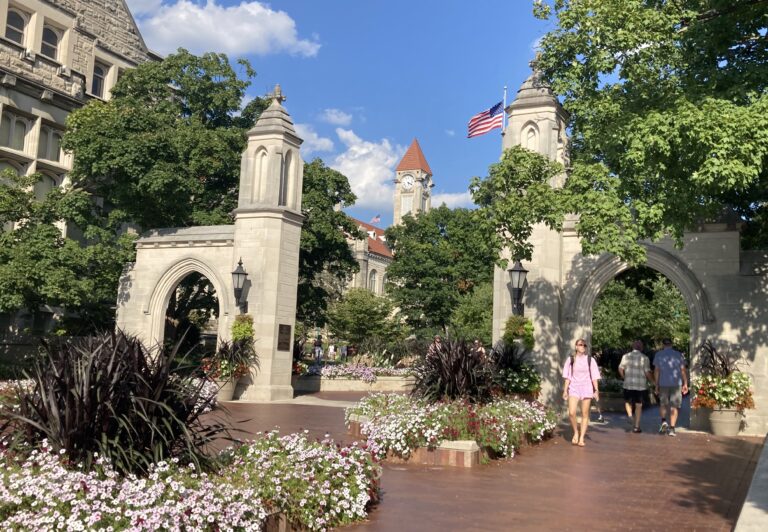
Indiana University accounted for well over half the complaints against faculty filed last year under Indiana’s “intellectual diversity” law, according to Commission for Higher Education data.
Statewide, 33 complaints were filed in calendar year 2025 under a process established by Senate Enrolled Act 202, which the legislature enacted the previous year, according to reports submitted by universities to the commission. Twenty complaints were about IU faculty.
That’s a slight overall increase from the rate of complaints in 2024, when the commission said 14 were filed in the six-month period after the law took effect on July 1.
The Commission for Higher Education provided the reports to The Indiana Citizen this week in response to a public records request that was submitted in April. IU provided its report in August, also in response to a records request filed in April. Ball State, Ivy Tech, Indiana State and the University of Southern Indiana provided the information within days of receiving public records requests. Purdue acknowledged receiving a request but did not directly provide records.
The IU report does not say which of its six campuses were included in the complaints. University spokesman Mark Bode did not immediately respond to a request for clarification. A faculty council report early this year said there were 10 complaints in 2025 at IU Bloomington.
Six SEA 202 complaints were filed with Ivy Tech Community College, four with Indiana State University and three with Ball State University. No complaints were reported by Purdue University, the University of Southern Indiana or Vincennes University.
The reports include only cursory information about the complaints and provide a murky picture of how universities are responding to speech issues. They don’t identify who filed the complaints or which faculty were the subjects of the complaints. They also don’t say anything about how many complaints were found to have merit or how the complaints were resolved.
SEA 202, authored by Sen. Spencer Deery, R-West Lafayette, says faculty at state colleges and universities must “foster a culture of free inquiry, free expression and intellectual diversity” and provide students with “a variety of political and ideological frameworks.” The schools must provide and promote a system for students and staff to file complaints about faculty if they believe violations of that law have occurred.
Colleges and universities are expected to report to the Commission for Higher Education on their compliance with the law and the number of complaints they receive by April 1 each year.
The 20 complaints that IU received in 2025 involved 17 incidents. Seventeen complaints were about political speech in the classroom and three were about professors not considering alternative viewpoints in nonpolitical subjects, the report says.
At Ball State, two complaints were about social-media posts and one was about course material. At Indiana State, one complaint said a faculty member didn’t foster a culture of free expression and three faculty members were accused of not performing their duties under the law. At Ivy Tech, five complaints were about class lectures or discussions and one was about course materials.
Ball State fired a staff member over a social-media post following the fatal shooting last year of conservative activist Charlie Kirk; she sued, and the university agreed to pay her $225,000. She was not a faculty member and was not subject to the requirements of SEA 202.
According to the reports, most institutions provide an online portal for complaints. At IU, complaints may be submitted anonymously, a feature that’s not required by SEA 202. Purdue, by contrast, asks for written complaints filed with the campus human resources office.
Some faculty have argued that SEA 202 infringes on academic freedom and restricts class discussions. Some say they have censored themselves to avoid student complaints and investigations. Several IU and Purdue professors, supported by the American Civil Liberties Union, challenged the law in federal court, but a judge ruled they hadn’t shown they had been harmed. An appeals court upheld the suit’s dismissal in August.
While most complaints don’t make the news, some do. At IU Bloomington, a social-work lecturer faced problems after a student complained about her class to U.S. Sen. Jim Banks, R-Indiana. Banks forwarded the complaint to IU, where administrators treated it as an SEA 202 violation. The university didn’t renew the lecturer’s contract, a decision she is fighting.
Ben Robinson, a professor of Germanic studies at IU Bloomington, has faced two complaints related to discussions of the Israeli-Palestinian conflict and his involvement in protests. The first complaint, from 2024, led to a formal reprimand that he is challenging. The second, in 2025, was dismissed for not being supported by the evidence, he said.
Robinson said SEA 202 complaints may not always make the headlines, but, combined with higher education funding cuts and the elimination of programs in the humanities, they continue to have an impact on teaching. “That chilling effect is still there,” he said.
He suggested the campus atmosphere may be chilling student speech as well, noting the absence of protests against the Iran war. A report last week from the Foundation for Individual Rights and Expression ranked IU Bloomington 256th out of 261 institutions on protecting campus speech. One factor in the low rating: A FIRE survey found fewer than 20% of students said it was very or extremely likely that campus administration protects free speech.
Steve Hinnefeld is a freelance writer based in Bloomington. He formerly was an adjunct instructor at the Media School at Indiana University, a media specialist at Indiana University and reporter for the Bloomington Herald-Times. He has had no affiliation with the Media School since spring 2022.
Dwight Adams, an editor and writer based in Indianapolis, edited this article. He is a former content editor, copy editor and digital producer at The Indianapolis Star and IndyStar.com, and worked as a planner for other newspapers, including the Louisville Courier Journal.
The Indiana Citizen is a nonpartisan, nonprofit platform dedicated to increasing the number of informed and engaged Hoosier citizens. We are operated by the Indiana Citizen Education Foundation, Inc., a 501(c)(3) public charity. For questions about the story, contact Marilyn Odendahl at marilyn.odendahl@indianacitizen.org.