By Sydney Byerly
The Indiana Citizen
August 13, 2026
Lt. Gov. Micah Beckwith is calling on state lawmakers to expand Indiana Attorney General Todd Rokita’s authority to bring criminal prosecutions, saying the change could allow Indiana to pursue charges against Dr. Anthony Fauci, the retired federal health official who was one of the most prominent faces of the United States’ response to the coronavirus pandemic.
Beckwith made the proposal Monday during the latest installment of his “Ask Micah Anything” video series, in response to a question about whether Indiana should follow the lead of Republican attorneys general in Florida, West Virginia and Louisiana in pursuing Fauci.
“The problem is the attorney general in Indiana does not have the same authority that the attorney general in Florida has,” Beckwith said. “I would love to see the state legislature here in Indiana give the attorney general that authority.”
Indiana’s system generally gives county prosecutors responsibility for bringing criminal cases, while the attorney general has limited authority to prosecute certain offenses and handles criminal appeals for the state. State law also gives the attorney general specialized criminal-enforcement authority in areas such as Medicaid fraud and allows the office to assist with human-trafficking investigations and prosecutions, although it specifically bars the attorney general from prosecuting trafficking offenses.
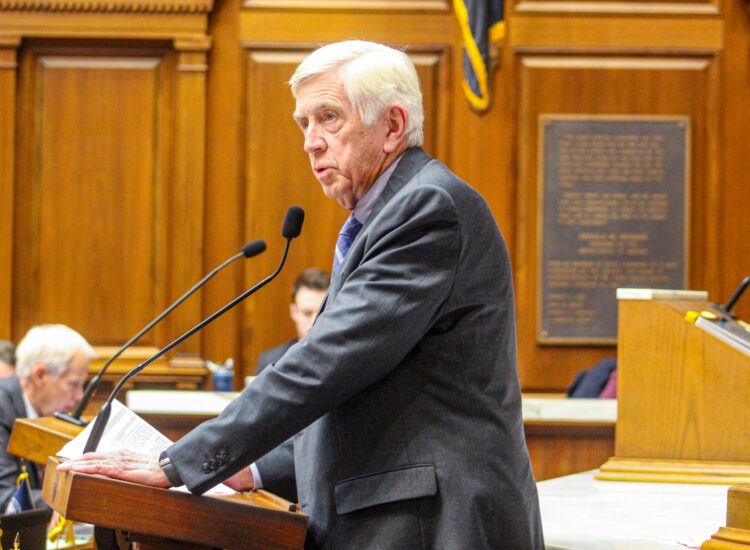
Rep. Ed DeLaney, D-Indianapolis, retired attorney, said the attorney general’s criminal authority is limited compared with that of county prosecutors.
“Our attorney general has very limited role – very limited,” DeLaney said, describing the office’s traditional criminal role as representing the state in appeals after a county prosecutor has secured a conviction.
DeLaney acknowledged there are some exceptions, but said Indiana’s system fundamentally relies on local prosecutors to bring criminal cases.
He said the Legislature’s reluctance to expand the attorney general’s authority is rooted partly in the office’s traditional role.
“Until the recent past, there was a tacit understanding in the General Assembly” that the attorney general’s powers would not be expanded, DeLaney said.
Historically, he said, the office has had a limited function that included advising state agencies, defending them in court, handling criminal appeals and enforcing certain laws and regulations.
“There’s the historic reason that that office has always been fairly limited in its function,” DeLaney said.
DeLaney said lawmakers also have been reluctant to expand the office’s authority because of concerns about how Rokita would use additional powers.
“The second reason, beyond the traditionally limited role of the office, is that people understood that Rokita will take any authority he’s given and stretch it beyond the outermost bounds,” DeLaney said.
DeLaney pointed to Indiana’s human-trafficking law as an example of the Legislature drawing a specific boundary around the attorney general’s authority. The law allows the attorney general to assist with investigations and prosecutions of trafficking offenses but specifically says the office does not have the power to arrest or criminally prosecute people for those offenses.
Beckwith has not said whether he envisions concurrent authority for the attorney general and county prosecutors or whether the attorney general would be able to take over certain cases from local prosecutors.
That distinction is at the center of Beckwith’s proposal. Beckwith said Indiana currently could not pursue criminal charges against Fauci through the attorney general’s office.
“We couldn’t do it as a state, but we are looking into that,” Beckwith said.
Beckwith has not specified an Indiana criminal statute he believes Fauci violated or explained what conduct would give Indiana prosecutors jurisdiction to bring a case against him.
DeLaney said a federal pardon like the one former President Joe Biden issued for Fauci just before leaving office would not necessarily prevent Indiana from prosecuting someone for a separate violation of Indiana law.
But he said that would be a matter for a local prosecutor under Indiana’s existing system, not a reason for the attorney general to prosecute Fauci.
“The attorney general of no state can charge somebody with a crime for contempt of Congress,” DeLaney said, referring to the allegation against Fauci currently before Congress. “That’s the power of the Congress.”
The proposal also raises questions about what authority Indiana’s attorney general already has to pursue conduct involving Fauci.
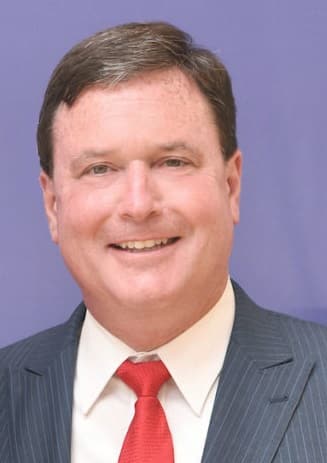
Rokita signed a 2025 letter with other Republican attorneys general arguing that Biden’s pardon of Fauci did not prevent states from pursuing violations of state law.
“As state attorneys general, we possess the authority to address violations of state law or breaches of public trust,” the attorneys general wrote in the letter to congressional leaders.
The letter did not specify whether that authority referred to criminal prosecutions, civil actions or both.
More recently, Rokita praised Kentucky Sen. Rand Paul’s efforts to investigate Fauci and said those efforts “pair perfectly” with work his office had done in Indiana.
In a social media post, Rokita pointed to a 2024 report from his office that questioned Indiana’s COVID-19 data and the policies based on it. He cited concerns including how COVID-19 deaths were counted, testing data and the effects of lockdowns and mandates.
The Republican Attorneys General Association has also highlighted efforts by GOP attorneys general to investigate COVID-19’s origins and pandemic shutdowns. In a recent statement, the group described the efforts as part of a broader push for accountability over the pandemic.
Florida Attorney General James Uthmeier said last week he issued a subpoena to probe whether Fauci “personally profited off of the ‘guidance’ he issued” during the pandemic.
Florida’s system, which Beckwith cited as a model, is also not a blanket grant of statewide prosecutorial authority. Florida’s Office of Statewide Prosecution can investigate and prosecute certain crimes that occur across multiple judicial circuits, including specified organized crime, drug and other offenses. The office operates within the attorney general’s Department of Legal Affairs.
Beckwith did not identify which Florida authority he wants Indiana lawmakers to replicate or what specific change to Indiana law he is seeking.
He also did not identify a specific bill or legislative sponsor for the proposal. He said the issue is something he plans to discuss with lawmakers ahead of the upcoming legislative session.
Beckwith’s office, Rokita’s office and Gov. Mike Braun’s office did not immediately respond to requests for clarification about the proposed expansion and whether the administration supports giving the attorney general broader criminal prosecution authority.
The proposal comes as Republican officials across the country have renewed efforts to target Fauci for his role in the federal government’s COVID-19 response.
Fauci, who led the National Institute of Allergy and Infectious Diseases for decades, has faced sustained criticism from Republicans over pandemic policies, public health guidance and questions surrounding COVID-19’s origins.
On Aug. 6, a U.S. Senate committee voted along party lines to hold Fauci in contempt of Congress after he repeatedly invoked his Fifth Amendment rights while being questioned about the pandemic. The matter was referred to the Justice Department.
Paul, the Kentucky Republican senator, has separately called for Fauci to face prosecution over the contempt allegation.
Beckwith has also called on Indiana’s county prosecutors to pursue Fauci under existing law.
“Instead of just letting things slide like conservatives do so many times in these repeated situations, I am calling on our county prosecutors to charge Fauci criminally, or for the General Assembly to give the attorney general additional criminal charging authority,” Beckwith said in a separate social media post.
“We owe this to the millions of people across our country and right here in Indiana who had their lives destroyed by Fauci’s mishandling of COVID,” he said.
Sydney Byerly is a political reporter who grew up in New Albany, Indiana. Before joining The Citizen, Sydney reported news for TheStatehouseFile.com and most recently managed and edited The Corydon Democrat & Clarion News in southern Indiana. She earned her bachelor’s in journalism at Franklin College’s Pulliam School of Journalism (‘Sco Griz!).
The Indiana Citizen is a nonpartisan, nonprofit platform dedicated to increasing the number of informed and engaged Hoosier citizens. We are operated by the Indiana Citizen Education Foundation, Inc., a 501(c)(3) public charity. For questions about the story, contact Marilyn Odendahl at marilyn.odendahl@indianacitizen.org.