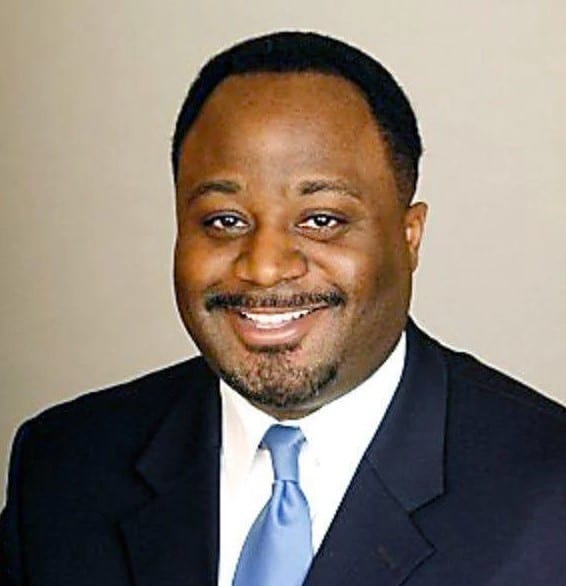
Young co-authored with Edward Blum of Students for Fair Admissions a column in The National Review. He and Blum argued that Congress should prod colleges and universities that receive federal funds from giving preference in the admissions process to legacy applicants or the children of major donors.
They contended that the practice was inherently unfair, particularly following U.S. Supreme Court decisions striking down Affirmative Action policies in the admissions process.
Before I go any further, I need to make something clear.
I disagreed with the Supreme Court’s about-face on Affirmative Action. The court’s reasoning regarding the U.S. Constitution and the law was, to be charitable, selective and its understanding of American history was almost willfully obtuse.
Because the conservative justices on the high bench wanted to pretend that U.S. history began with them, they put themselves and court in the position of arguing that it was fair to demand that some citizens should have to run a marathon before the start of a 100-yard dash while others get to rest, hydrate and have muscle-loosening massages before the gun sounds.
It made little sense.
Blum was an architect of the strategy that overturned the nearly half-century of Supreme Court precedents establishing and supporting Affirmative Action. His argument for doing so, I thought, was every bit as flawed as the court’s decision.
That said, the court’s decision is now the law of the land. Donald Trump and his followers may think that they only have to accept Supreme Court decisions—or election results, for that matter—when their side or their argument prevails, but the rest of us know that one of the pillars of a law-abiding society is a willingness to abide by outcomes we do not like or agree with.
Because I have been critical of Blum’s reasoning—and, by extension, Young’s—regarding Affirmative Action, I should grant that they are consistent and genuine in their beliefs.
If they do not support the use of preferences to redress—at least partially, anyway—even the greatest historic injustices, they also do not favor using preferences to benefit those who have been the most historically advantaged.
What they argue in their National Review column is that merit and merit alone should determine whether one gets into a college or university—or at least any college or university that accepts federal funds.
They don’t address, of course, the question regarding how struggling families should afford college. It does little good for a promising student from a poor family to be admitted to the school of her dreams if the family can’t pay the tuition.
If Young and Blum truly are interested in leveling the playing field in higher education, they’ll push their argument farther and confront the question of opportunities denied based on family income.
They also engage in a bit of sophistry when it comes to the historic reason colleges and universities have given preference to legacy applicants and the children of donors. Schools have done so because, the reasoning goes, alumni and other generous souls will provide support for the institution and thus lower costs for many other students.
Blum and Young put universities in the position of proving a negative. The schools must show they would lose donations if they were to reject legacies or donor applicants.
Because the colleges can’t demonstrate the practical effects of a hypothetical proposition, the senator and the activist argue that the schools won’t suffer any loss.
This is a bit like saying that, because I’m not willing to step off a cliff, I haven’t demonstrated that I can’t fly without the aid of an airplane.
Still, the overarching argument Young and Blum make is valid.
Now that we’re in an era in which we have said that history doesn’t count and past discrimination and oppression don’t matter, if we’re going to make access to higher education a footrace based on merit, then we also have to say that people with more money can’t buy their way to the finish line.
If giving preference to citizens of our country whose families have suffered far more than their share is wrong, then so is offering an edge to those who have known little but comfort and plenty in their lives.
We shouldn’t stack wrong on top of wrong.