The 20-page bill requires the secretary of the interior to begin a project collecting, cataloguing and sequencing the genomic information of the existing animals, plants, fungi and microbes found across U.S. public lands. That project would take place through an office created or designated within the U.S. Geological Survey, which today studies and monitors the Earth’s land and resources.
The Department of the Interior would also collaborate with the U.S. Department of Agriculture and the Smithsonian Institution to collect and store biological samples in accordance with the Department of the Interior’s and U.S. National Park Service’s standards.
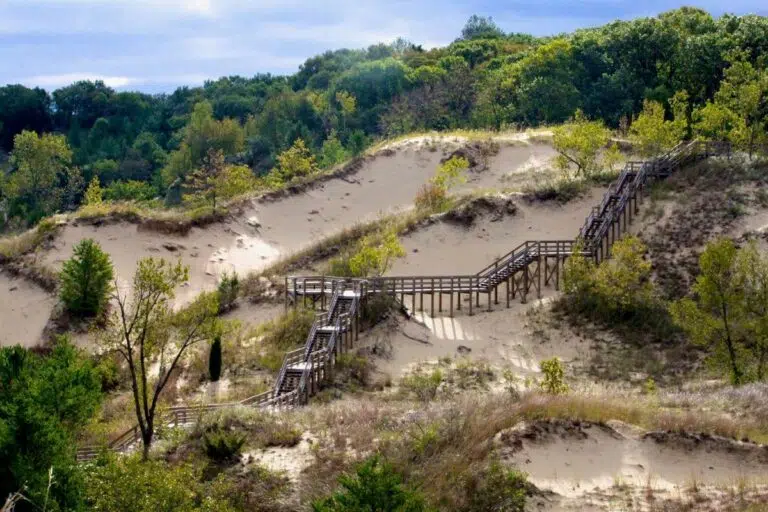
The “public lands” the bill cites would likely include the national parks system, of which the Indiana Dunes National Park is a part. The parks that participate in the act would have opportunities for education and public outreach on the data the project gathers within its parkland.
The completed, public database would include what a press release from Young’s office called “AI-ready datasets,” which he said is in line with the Trump administration’s America’s AI Action Plan, which looks to incorporates artificial intelligence further into the country’s infrastructure and research in order to push the U.S. to the forefront of AI innovation.
The bill’s authors are all commissioners on the National Security Commission on Emerging Biotechnology (NSCEB), which was established in 2022. Young first raised the idea when he asked his fellow commissioners to develop a “meaningful but creative legislative initiative.”
The act has garnered plenty of support—including from the Hoosier State, where Young said Indiana’s “deep biotech expertise” across medicine, agriculture and animal science has created deep interest. Indiana-based companies including Eli Lilly, Indiana University, Elanco and Indiana Life Sciences support the bill, according to the press release.
Young does not foresee any obstacles in collecting biological data or samples—entities within the federal government such as the Fish and Wildlife Service have already performed smaller-scale collections, he said. The greatest obstacle would be training enough individuals to carry out the task, and Young said the importance of the work could attract plenty of help.
He also expects little opposition. The bill has already gathered support on both sides of the aisle, including its Democratic authors and from Republicans with interests in national security like Arkansas’ Tom Cotton and Montana’s Tim Sheehy.
“We may have people who aren’t fully understanding of the value proposition because it does take some explanation as to how genetically sequencing fungi in a national park can actually further American commerce and national security,” Young said. “If I and the many stakeholders supporting this effort can make the arguments, then I believe there’ll be broad bipartisan support for the effort.”
More than anything, Young said education may be required to inform the public on the technological capabilities the nation now has and can use in the context of our biological resources.
“I haven’t heard any meaningful resistance to its advancement through the legislative process yet, and my hope is it could become part of a larger national security bill like the National Defense Authorization Act,” Young said. “I could imagine this legislation finding its way into that effort or some other national security-oriented legislation.”