This article was originally published on Andrew Whitehead’s Substack, American Idolatry.
History and social science demonstrate how racial equality is not considered a moral issue for many white American Christians.
I can still remember hearing Randall Balmer, a distinguished historian of American religion, share how it was race—not abortion, divorce, or homosexuality—that served as a catalyst for the Christian Right in the 1970s. Balmer was presenting at Baylor University in Waco, Texas. This was before Chip and Joanna Gaines and their Fixer Upper empire shiplapped Waco into the American cultural mainstream. I was just beginning my graduate studies and still trying to find my way in academia as a first-generation college student.
Growing up in the late 1980s and early 1990s, when the Christian Right had been a political and social force for the last decade or so, I assumed I knew the originating myth of this powerful voting bloc. Evangelicals like me were concerned with the moral direction of this country. We believed divorces were on the rise. We fretted about how sex permeated the culture. We felt disgust at how homosexuality was becoming more widely accepted. And, most important, we were horrified that abortion was legal.
Our pastors, echoing leaders of the Christian Right, told us how each of these was a stain on our country and its religious heritage. The United States was clearly a nation favored by God—how else does one explain its global dominance?—but this status was in jeopardy. If we continued to slide down this path of unrepentant sin, we would violate our covenant. God would then be forced to withdraw his blessing, his hand of protection, and our nation—this Christian nation—would collapse.
We had to enforce our moral vision on the country to ensure that our nation could and would flourish. The only way to do that was to enter the political sphere and “vote for our values.” Getting the “right” people in the “right” places of power to enact the “right” policies was paramount. The idols of self-interested power and fear were in full effect.
Much of white Christianity’s concern for morality—defined at that time as opposition to abortion, homosexuality, and divorce—demanded we become politically active. We cared about the United States. Its success was ours. When you got down to it, we really had no choice but to strive for positions of influence and power. We alone had the answers to what ailed the nation.
By the time I heard Balmer speak, I had already begun to jettison aspects of this framework. The “founding myth” of the Christian Right, however, was still firmly in place. While I no longer identified with the Christian Right’s interpretation of what was wrong with the United States or with the methods through which the Christian Right argued Christians were supposed to solve the country’s problems, I still believed these particular moral issues united and motived the Christian Right.
I was not aware of the racial context surrounding the formation of the Christian Right. Again, growing up in white evangelicalism, race wasn’t something I had to worry about. Throughout my elementary, middle, and high school years, the number of minority students in the schools I attended could likely be counted on one hand. Not just my grade—the entire school. In 2019, my community was around 90 percent white according to the United States Census, an almost identical figure for the county in 1990.
By the time I was old enough to hear and internalize the messages of my religious tradition, the centrality of race to our religio-political movement was hidden—purposefully or otherwise. It was as if there was a mist swirling around, obscuring and refracting what I could see. Balmer’s lecture was like piercing sunlight on a foggy morning—the surrounding landscape pops suddenly into clear view. I could now see what had always been there.
Absent among those “right” policies was any mention of continuing racial inequality. I just assumed the civil rights movement had fixed everything. Since slavery had been outlawed over a hundred years ago, the ongoing concerns of Black Americans were not given much, if any, thought. After spending my entire childhood, teenage years, and time as an undergraduate in the pew on Sunday mornings, I can’t remember a single message focused on racial inequality. Not one.
This was likely no accident. Jerry Falwell and other Christian Right leaders had previously opposed Christians engaging in politics, particularly in response to Black ministers taking an active role in the civil rights movement. Falwell himself proclaimed, “Preachers are not called to be politicians but soul winners.”
Equality for Black Americans (or any minority racial or ethnic group) was not a moral issue for most white American Christians. Rather, we regarded racial issues as political distractions. Christians like us focused solely on “preaching the pure saving gospel of Jesus Christ” and saving souls. Groups like the Moral Majority signaled their concern for the morality of America, but they ignored race. Congregations like those I grew up in followed suit. The moral issues threatening the country were abortion, homosexuality, and divorce, but not racial inequality. As historian Anthea Butler points out, this “color-blind conservatism” and specifically defined “morality politics” functioned as a shield, creating “new political alliances and creating organizations . . . that would promote their favored issues while continuing to embrace racist practices and strategies to consolidate economic and political power.”
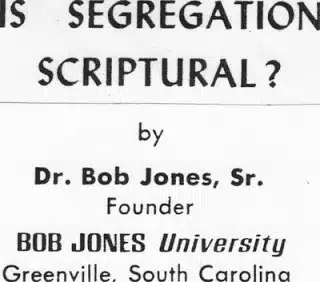
Recounting personal conversations with Paul Weyrich, one of the key political operatives intent on bringing white Christians into the Republican Party, Balmer reported how Weyrich claimed it was opposition to the IRS mandating desegregation of Christian schools, like Bob Jones University (founded by the same man whose quote began this chapter), that motivated the formation of the Christian Right. Weyrich confirmed that the Christian Right formed in opposition to a federal government mandate that organizations receiving federal funds must not endorse racially discriminatory policies. They wanted to be able legally to segregate their white children from Black children in schools.
During that time, Weyrich was looking for other issues around which he hoped to unify and motivate conservative voters. He had no success. Pornography, school prayer, the Equal Rights Amendment, and even abortion yielded no fruit. In Weyrich’s own words, “I was trying to get those people [evangelicals] interested in those issues and I utterly failed. What changed their mind was Jimmy Carter’s intervention against the Christian schools, trying to deny them tax-exempt status on the basis of so-called de facto segregation.” It was the IRS threat against segregated Christian academies, not abortion or some other issue, that Weyrich said “enraged the Christian community.”
Moreover, it isn’t just Weyrich who attests to the ways racial segregation animated the early Christian Right. Ed Dobson, Grover Norquist, Richard Viguerie, and even administrators at Bob Jones University corroborate it was “government intrusion into private education”—to ensure racial equality—that kicked the hornets’ nest and brought the Christian Right into politics.
To be sure, Balmer’s argument is not the whole story. Catholics and some Protestants had publicly opposed abortion for years. Grassroots activists had already built strong anti-abortion networks that were folded into the Christian Right’s mobilization into the political arena. Homosexuality, gender, school prayer—each of these was part of the constellation of “moral” issues the Christian Right wanted to highlight. However, these accounts and that of Balmer’s do align in that racism and racist ideas played an integral role in shaping a political realignment that brought conservative white Christians into the Republican Party fold. Therefore, the key is not that it was only racism that united the Christian Right, as Balmer argues. The key is that racism was rendered so consistently invisible alongside other “moral” issues the Christian Right highlighted. Balmer’s thesis, while oversimplified, does bring the importance of race into clear view.
As I sat listening to Balmer speak, I felt bewildered. How could a movement intent on ensuring that an entire nation represented their “pro-life” views share a commitment to such a despicable stance? It raised questions about the other “moral issues” that were deal breakers to being a good American Christian. How might these have directly and indirectly been shaped by racism and racist ideology?
As I was finally starting to learn, by then decades into my Christian journey, the sin and stain of racism within white Christian nationalism is but another piece of rotten fruit from a long-diseased tree. It is in this history that we see how white supremacy is—and always has been—intimately intertwined with idolizing power, fear, and violence in the calls to make the United States a Christian nation.
This is an excerpt from the introduction to Chapter 6 in American Idolatry that focuses on the relationship between Christian nationalism and America’s history of racism.
Andrew L. Whitehead is professor of sociology at Indiana University Indianapolis and a Charles F. Kettering Foundation Research Fellow. (This article represents the personal views of the author and does not necessarily represent the views of Americans United, Indiana University Indianapolis, or the Charles F. Kettering Foundation.)
The views and opinions expressed are those of the author only and do not necessarily reflect the views of The Indiana Citizen or any other affiliated organization.