By Marilyn Odendahl
The Indiana Citizen
October 28, 2026
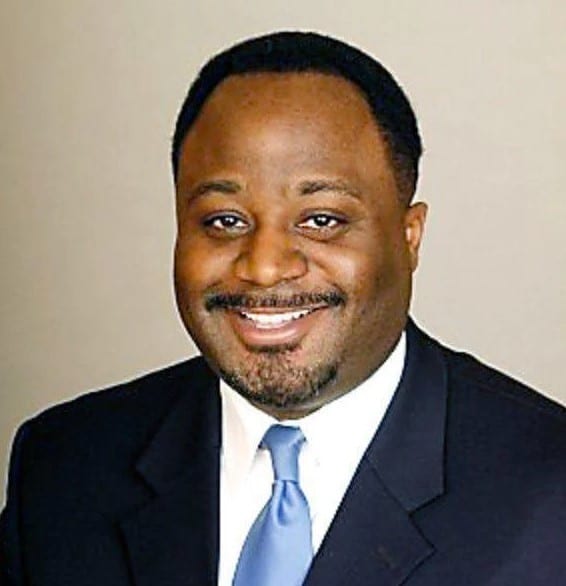
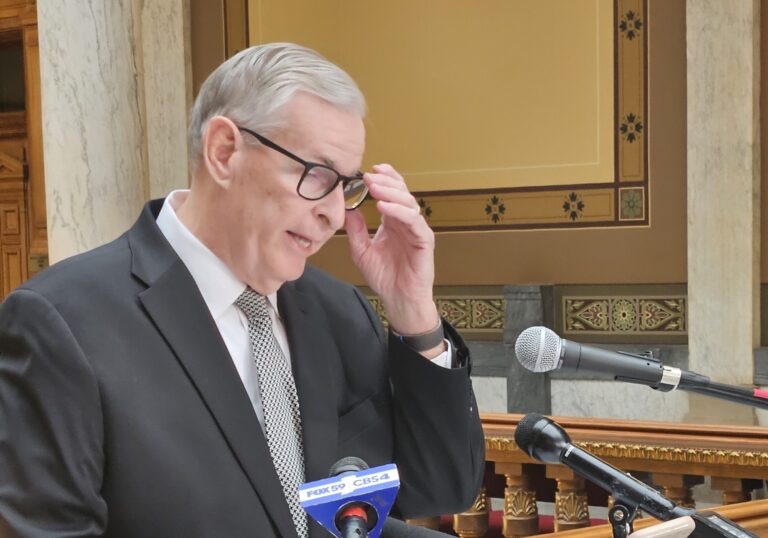
Gov. Mike Braun has turned down Greg Ballard’s request to order the Indiana Election Commission convene, likely derailing any chance for a public review of pending campaign finance complaints prior to the Nov. 3 general election.
In a letter dated Oct. 27, Braun thanked Ballard, who is running for Indiana secretary of state under the Lincoln Party label, for sharing concerns about the Election Commission, but the governor said he had to “respectively decline” the request to call the commission members into a meeting.
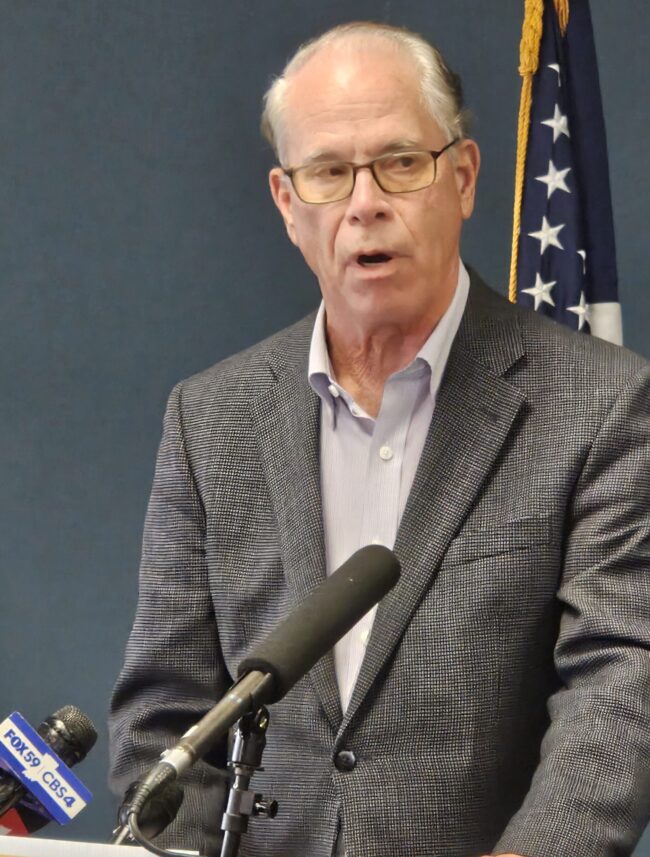
Braun praised the Republicans he appointed to the commission, attorney John Westercamp and chair of the Johnson County GOP Beth Boyce. He wrote in his letter that following their appointment, the commission has met six times September 2025, the commission has “substantially reduced the backlog of several years’ worth of complaints.”
“Notably, in the last year, Indiana courts have not overturned a single decision of the Election Commission,” Braun wrote. “While no process is ever perfect, I am satisfied that the Commission has managed the business of election law competently and efficiently.”
As part of his campaign for office, Ballard has been calling for changes to the state’s governmental bodies overseeing elections. After the Indiana Recount Commission tried unsuccessfully to throw out six votes in an exceptionally tight Republican race in Indiana Senate District 23, Ballard proposed replacing the political appointees on that commission with senior judges.
Ballard has given particular attention to the Election Commission.
Along with advocating that administrative law judges take the place of the politically appointed commission members, Ballard has been pushing the group to meet before the Nov. 3 election to review the four allegations of campaign finance violations filed against the two major party candidates in the secretary of state race, Republican Max Engling and Democrat Beau Bayh. He said the commission has met in September in previous years to examine campaign finance complaints, but this year, it has not convened since July.
Ballard subsequently sued the Election Commission and sought a preliminary injunction to force the commission members to meet before Election Day. In a ruling on Monday, the Marion County Superior Court denied his preliminary injunction motion, saying Ballard failed to show how he, personally, had been harmed by the commission not meeting and how such a meeting would prevent a “concrete, actual harm.”
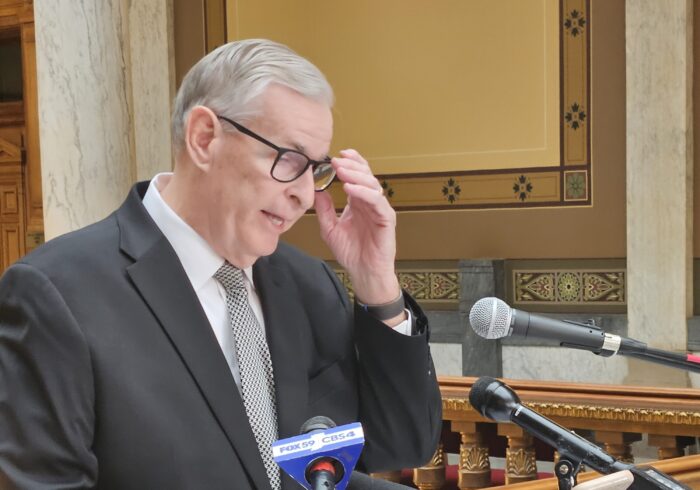
At a news conference announcing he had appealed to the governor, Ballard asserted that the commission was not taking any action in order to protect the Republican and Democratic parties and the respective parties’ nominees for secretary of state.
“Based on yesterday’s disappointing ruling, the Election Commission got away with it. They got away with it,” Ballard said Tuesday at his news conference. “They simply wanted to run out the clock.”
Braun acknowledged in his letter that as governor, state statute gives him the power to call the commission members together in certain circumstances. However, he said the conditions outlined in state statute under which a governor may intervene had not been reached.
Also, Braun pointed out the commission has a meeting scheduled in November.
“As the Marion County Superior Court noted in its decision denying your motion for preliminary injunction, you have offered no evidence that the meeting scheduled for November 20 is insufficient to address any pending allegations of campaign finance violations,” Braun wrote in his letter.
Ballard said he was considering appealing the trial court’s ruling to the Court of Appeals of Indiana.
In his letter, Ballard said the commission’s decision not to meet in September, as it had previously done, causes “a further erosions of trust in our electoral system.”
At his news conference Ballard pushed back on trial court’s assertion that requiring the commission to meet so close to the election could damage election integrity. Ballard said the commission was challenging election integrity by not convening.
“That’s unconscionable that they did (not meet) because they’d always met in September the past five years and they chose obviously for political reasons to not meet,” Ballard said. “That was the challenge to election integrity. Not what I did. I just reacted to it.”
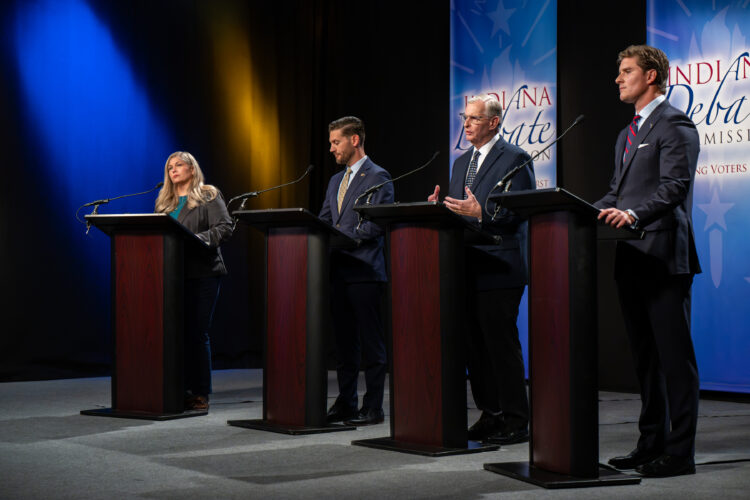
Engling, Bayh and Lauri Shillings, the Libertarian candidate for secretary of state, were in favor of the Election Commission meeting before Election Day.
However, while Ballard has accused the commission of partisanship, Engling alleged Ballard is the one motivated by politics.
“Greg Ballard’s attempt to tell the Election Commission what to do shows why he is unfit to serve as secretary of state,” Engling told WTHR. “He is putting his desired outcome ahead of allowing the commission to operate independently. That is insider politics at its worst.”
Knox County Circuit Court Clerk Dave Shelton, a Republican, has also been supportive of Ballard’s effort to push the commission to meet before the election.
Shelton filed a campaign finance complaint against Engling in July, alleging the Republifilcan candidate accepted a $60,000 illegal contribution from Hoosier Leadership for America Inc., and misreported the source of the donation. Also, he filed an amicus brief, joining Ballard in trying to convince the trial court to order the Election Commission to meet.
Still, Shelton said on Monday that the judge’s ruling denying Ballard’s motion was what he expected.
Looking ahead, Shelton said he plans to attend whenever the Election Commission meets again. His reason for filing the complaint, he said, was to shine a light on the “dark money coming in and affecting our elections.”
Elections, he said have been “classified as critical infrastructure and campaign finance laws are a part of that infrastructure.” Consequently, enforcing those laws is important, he said.
“It shows that other entities would not be allowed to get away with making illegal contributions to candidates and potentially affecting Indiana elections,” Shelton said of the Election Commission meeting and reviewing campaign finance complaints. “(It) keeps people honest and that’s the point.”
Dwight Adams, an editor and writer based in Indianapolis, edited this article. He is a former content editor, copy editor and digital producer at The Indianapolis Star and IndyStar.com, and worked as a planner for other newspapers, including the Louisville Courier Journal.
The Indiana Citizen is a nonpartisan, nonprofit platform dedicated to increasing the number of informed and engaged Hoosier citizens. We are operated by the Indiana Citizen Education Foundation, Inc., a 501(c)(3) public charity. For questions about the story, contact Marilyn Odendahl at marilyn.odendahl@indianacitizen.org.