By Marilyn Odendahl
The Indiana Citizen
October 26, 2026
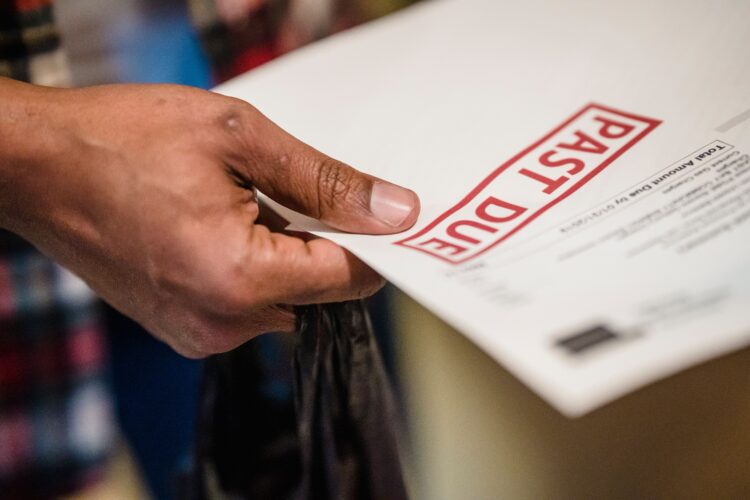
Describing the cycle of evictions in Marion County’s small claims courts, Rabbi Aaron Spiegel compared the process to doing laundry: wash, rinse, repeat.
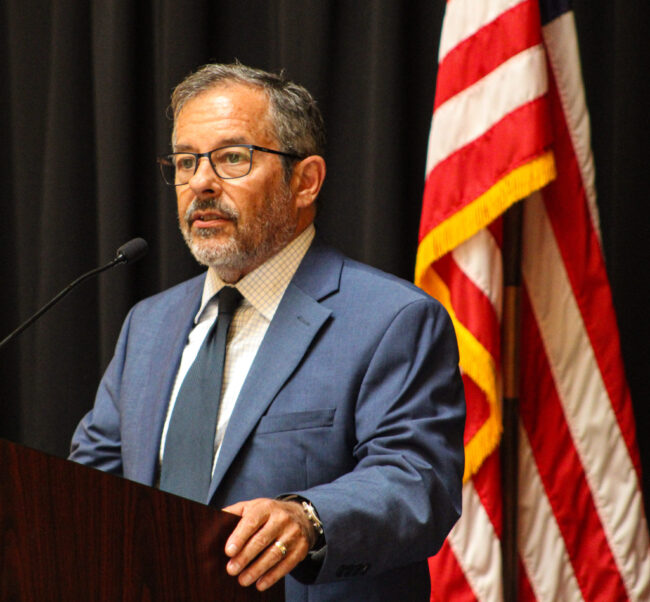
Spiegel, executive director of the Greater Indianapolis Multifaith Alliance, said Marion County families and individuals who get served an eviction notice, typically for falling behind in rent payments and sometimes for complaining about habitability issues, will lose their home if they do not settle their overdue account. Once the tenants are removed, the landlord will rent to another family or individual who may soon struggle to keep up with the monthly rent payments and the eviction cycle starts again.
A majority of the eviction cases in Marion County are handled in one of the nine small claims courts. However, pointing to a 2023 investigation by The Indianapolis Star, Spiegel noted the eviction process varies widely between thosd courts with some judges giving tenants a couple of weeks to either collect the back rent or find a new place to live, and other judges ordering the residents to vacate in three days.
“They are the final stopgap between people staying in their homes or being on the road to homelessness,” Spiegel said of small claims court judges. “So, it’s time to hold these folks accountable for things like these huge (eviction) dockets (run) for half a day, where the only way they’re going to get through it is to spend two minutes on each case.”
All nine small claims court judges are on the 2026 general election ballot.
To enable community members to learn more about small claims courts and the judges who are on their ballots, the Greater Indianapolis Multifaith Alliance is hosting a Township Judge Candidate Forum to introduce the small claims court judges to the public. All the judges have been invited and will have the opportunity to explain how they handle evictions and other types of cases in their courts.
Where and when is the forum?
The Township Judge Candidate Forum will be held from 6 to 8 p.m. Wednesday, Oct. 28, at Castleton United Methodist church, 7101 Shadeland Ave.
The event is free and open to the public.
What is the format for the public forum?
Retired Marion County Superior Court Judge Mark Jones will be the moderator, asking a series of questions and allowing each judge to respond. Spiegel said in general the judges will be asked about the practices and procedures they follow in their courts and why they implemented those processes.
The audience members will not be allowed to ask any questions during the forum.
Spiegel acknowledged the only contested race is for Perry Township Small Claims Court with Judge Cheryl Rivera, a Republican, facing challenger Jami Sayeed, a Democrat. The other eight judges are unopposed.
Even so, he believes the forum will help inform the public about the small claims courts and possibly build some collaboration between the judges to bring uniformity to the judicial process across the nine townships.
“Maybe it will, at the very least, bring evictions into the public conversation, because we have an eviction crisis,” Spiegel said. “I think it’s an important thing, bringing public awareness not only to the eviction crisis, but there are the people who are in control of how people are treated.”
Who will be at the forum?
All nine small claims court judges have been invited, but only four judges, so far, have confirmed they will attend.
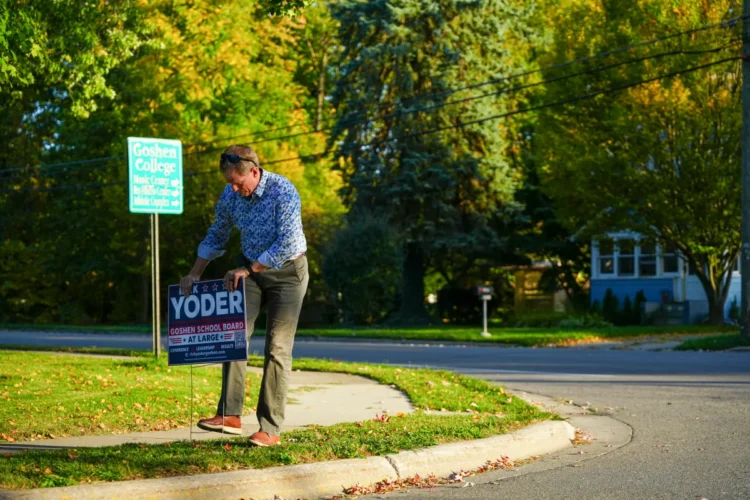
Those judges who have said they will attend are:
Sayeed, running for the Pike Township Small Claims Court, is expected to attend as well.
Spiegel said all Marion County residents should know who the small claims court judges are, regardless of whether they ever file a small claim or not.
“If you consider yourself civically engaged and you’re only focusing on state legislators or even Superior Court judges, you’re missing a group of people who have a direct impact on your neighborhood,” Spiegel said. “I think that we need to know these folks.”
What do small claims courts do?
Small claims courts were created to provide a speedy, reasonably inexpensive and uncomplicated means to resolve civil matters. The proceedings are informal but orderly and the parties do not have to hire attorneys.
While 85% of evictions are filed in small claims courts, the docket can include other kinds of cases, including personal injury, damage to property, return of wrongfully taken property and return of money paid for faulty work, landlord and tenant disputes, and emergency possessory actions between a landlord and tenant.
Small claims courts have a cap of $10,000. Cases with higher amounts at stake have to go to a county superior or circuit court.
What is happening with evictions?
Spiegel hopes the forum will bring wider awareness to the problem of evictions in Indianapolis. He said evictions are a “direct pipeline to homelessness” and when families and individuals become homeless, the entire community pays the price. Homelessness affects everything, he said, such as health care and public safety.
Over the past 12 months, Indiana has recorded 70,554 evictions filed with about one-third of those filed in Indianapolis, according to data compiled by the Eviction Lab at Princeton University. The 23,917 evictions filed in Indianapolis during the previous 12 months tops the number of evictions filed during the same period in the entire states of Arkansas (10,507), Connecticut (16,562), Delaware (10,718), and New Mexico (13,104).
“Maybe it will, at the very least, bring evictions into the public conversation because we have an eviction crisis,” Spiegel said of the forum.
Dwight Adams, an editor and writer based in Indianapolis, edited this article. He is a former content editor, copy editor and digital producer at The Indianapolis Star and IndyStar.com, and worked as a planner for other newspapers, including the Louisville Courier Journal.
The Indiana Citizen is a nonpartisan, nonprofit platform dedicated to increasing the number of informed and engaged Hoosier citizens. We are operated by the Indiana Citizen Education Foundation, Inc., a 501(c)(3) public charity. For questions about the story, contact Marilyn Odendahl at marilyn.odendahl@indianacitizen.org.