This story was originally published by Mirror Indy.
By Carley Lanich
Mirror Indy
March 19, 2026
Adjanie Joseph and Brittany Ballesteros aren’t old enough to vote. But they want to do everything they can to help people who are.
That’s why the two Warren Central High School juniors applied to be voting advocates. They’re now two of 20 voting advocates serving in 10 high schools across Indianapolis.
Joseph, who’s 17, and Ballesteros, who’s 16, will miss out on this year’s primary and general elections. But, the teens said, they want to help their older classmates — mostly seniors — learn how to use their voices at the polls.
Through posters, class visits and school announcements, the teens have helped dozens of their classmates register to vote. They have their sights set next on helping during this May’s primary election as student poll workers.
“I like being an extension for people to contact and talk to about it,” Ballesteros said. “Just knowing that I can’t vote yet, but that I have the knowledge to be able to vote in the future is reassuring.”
The teens learned about the League of Women Voters’ advocates program from their U.S. history teacher.
The league, along with the Marion County Election Board, has been touring high schools this month to teach students about elections and register those who are old enough to vote.
It comes as part of the groups’ longstanding Youth Vote program. The effort encourages voting among young people — a demographic with historically low turnout.
Nationally, older Americans have outpaced 18-24 year-olds in both registration and voting percentages for decades, according to data from the U.S. Census Bureau. In Indiana, 46% of Hoosiers ages 18-29 voted in 2024 compared to 64% of adults over 30, according to the Indiana Bar Foundation’s 2025 Civic Health Index.
Election officials say reaching Hoosiers early can have positive effects on Indiana’s voter turnout for years to come.
“If younger people vote, then they’re more likely to be regular voters,” Marion County Clerk Kate Sweeney Bell said.
Joseph and Ballesteros are paid for their work as voting advocates — but that’s not what inspires their work. The teens said they’re driven by a desire to help their classmates understand that their voices matter.
At each opportunity, the students inform their peers about the voter registration process and important dates for upcoming elections.
Joseph said the most common questions she hears are “What are we voting for?” and “Why does it matter?”
She and Ballesteros said they use relatable examples — such as recent legislation restricting students’ cell phone use in schools — to help classmates understand why they should care about local elections.
“It’s better for people to hear it from people in their age group,” Joseph added. “We’ll probably resonate with them better.”
The League of Women Voters supplements the advocates’ efforts with Youth Vote school visits.
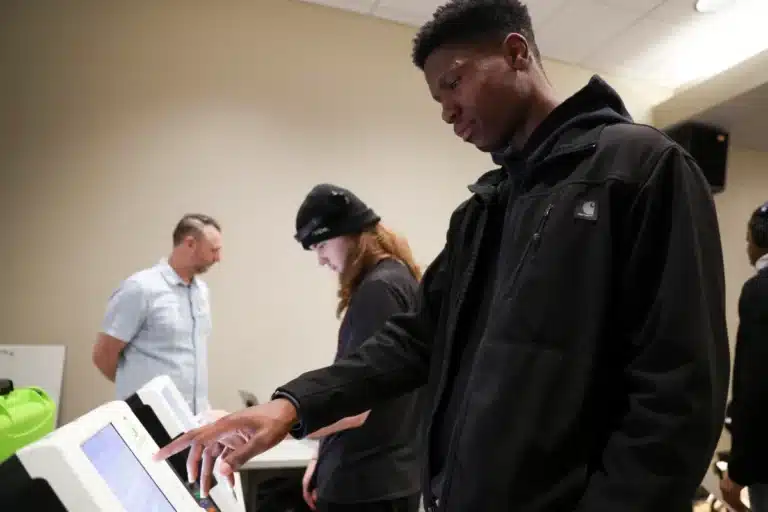
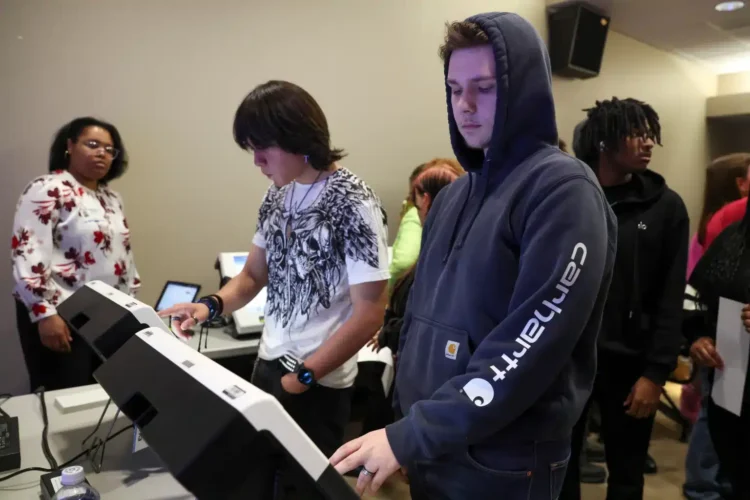
During a recent stop at Warren Central, the league and county election officials taught students about how to register and where to find who’s on the ballot before voting.
Students also got to practice voting on machines supplied by the county election board.
In one late morning class, ice cream took the lead over pizza and sandwiches, while winter break eked out a narrow win over spring break.
The questions — “What is your favorite school lunch item?” and “Which school break is best?” — were fake. But the machines were real.
It comes as part of an effort to demystify the voting process and encourage students to share what they learned with their peers.
“If you decide that voting is something you want to do and you talk to them about it, you might inspire someone else,” Sweeney Bell told the students. “It’s the one time in life that your gender, your race, your religion, your gender identity — none of that comes into play because everyone gets the same weight.”
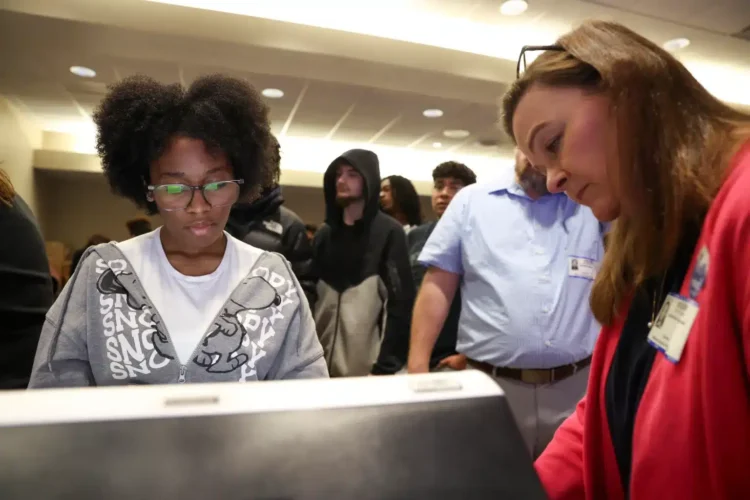
The school visitors also encouraged students to sign up for the county’s student poll worker program.
Anyone ages 16 and older with a 3.0 GPA or higher can participate. To sign up, students must fill out an application online and get permission from their parent or guardian and school principal.
The two forms are available on the county election board’s website.
Approved students will receive primary election day off of school and get paid up to $180 for their work assisting voters at the polls. Students can earn an additional $30 for attending poll worker training.
County election workers will try to place students in a polling location closest to their home or school. There’s no deadline to sign up, but county officials encourage students to submit their applications by the end of March to attend training in April.
Student poll workers are especially valuable, said Brent Stinson, deputy director with the county election board. That’s because the teens are typically quick to pick up the technology used in polling booths.
“You’re comfortable with the technology, you understand how it works, and you can help us move things along smoother,” Stinson told students at Warren Central.
It’s something the two Warren voting advocates look forward to. Both Joseph and Ballesteros say they plan to train as student poll workers. It will be among their first experiences in a live polling location — even if they’re not old enough yet to cast a ballot.
“I think that’s what I’m most excited about, to basically have a perspective of how it’s going to be when we do vote,” Ballesteros said. “We’ll be on the sidelines, but we’ll still be helping people vote.”
Mirror Indy, a nonprofit newsroom, is funded through grants and donations from individuals, foundations and organizations.
Mirror Indy reporter Carley Lanich covers early childhood and K-12 education. Contact her at carley.lanich@mirrorindy.org or follow her on X @carleylanich.