By Tracey Compton
Indianapolis Public Editor
October 28, 2026
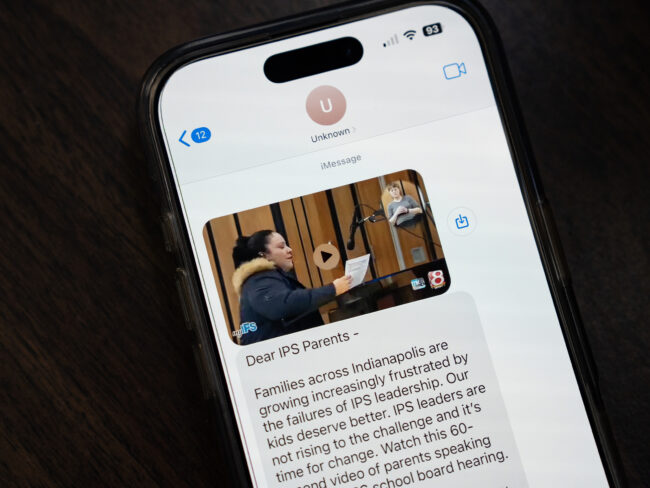
Last year, Indianapolis parents were bombarded with text messages sharing a video that was critical of the superintendent. An unknown source had deceptively edited videos of public comments at school board meetings to criticize school leadership at a time when IPS was making its case for more funding at the state legislature.
That raised red flags for Mirror Indy K-12 education reporter Carley Lanich. She set out to hunt down the source of the text messages and debunk what appeared to be a disinformation campaign aimed at undermining the superintendent.
At the end of her reporting, Lanich was unable to expose who sent the deceptive messages. But she was able to knock down that bad information and provide accurate insight into public opinion.
“We wound up with a story that tried to provide context for what was seen in the video texted to Indy residents, but also show that we at least attempted to run down where this had come from and express that we still don’t quite know,” she said. “But we do know what is true and accurate about what people’s opinions are of the school district superintendent.”

Lanich has been a reporter for more than eight years, and she says Mirror Indy staff discuss debunking viral information much more often recently. The newsroom actively monitors misinformation and disinformation in the community and staff determines when they should step in to clarify and correct the public record.
“Media and information is around us everywhere we turn,” Lanich said. “If we want to be an informed democracy, we need to know where our information is coming from, what the source of that information is and if those sources are trusted.”
News media play a big role in bridging trust with the public and providing information for people to act on. But so does everyone else. There are a number of ways you can become a more savvy news consumer, including by learning to identify misleading information and manipulation online. Media Literacy Week, Oct. 26-30, focuses our attention on this problem. Keep reading for tools to help you discern the truth and find trustworthy sources of information.
Reporters today have the added responsibility of wading into the fray to set the record straight.
Lanich’s work both competes in, and serves as a fact-check for, the vast and murky digital universe where anyone can say just about anything.
“I feel like it has always been a part of our job to pay attention to social media, to pay attention to, in this case text messages, but to pay attention to what’s being communicated in our community,” Lanich said. “I think it’s always been important for us to use our news judgment about when to elevate rumors and when to step in and correct things, versus when to just let a rumor be a rumor.”
That news judgment drives reporters to be more transparent about their own journalistic process as they report their stories. Providing more transparency helps readers establish trust and view the news outlet as a credible source.
Mirror Indy often explains at the top of its stories why it is investigating a topic. Reporters also post videos on social media explaining how many sources they interviewed or what developments prompted their story.
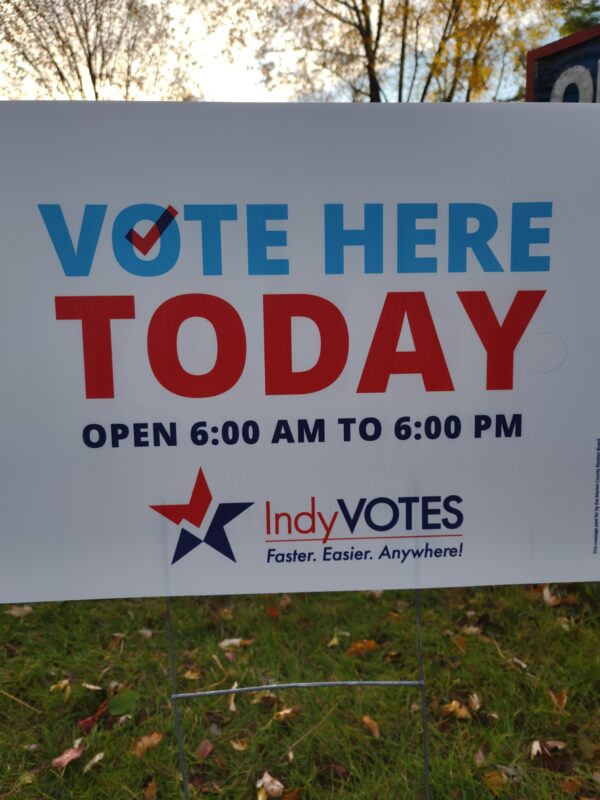
Just last week, Mirror Indy service reporter Sophie Young posted a public service announcement on Instagram debunking a viral Facebook post that misinformed Indy residents about voting in the upcoming midterm elections.
“A reader sent us this meme floating around on Facebook that says if a poll worker marks your ballot, it won’t count,” Young said. “That’s not true, and the Election Board shared a press release that explains poll workers have to initial your ballot.”
In addition to getting tips from readers, Mirror Indy’s reporters also actively watch the comment sections of the stories they post to social media for signs readers may be misinformed about a subject.
“If we see people that are commenting on stories, either with questions or maybe misinformation that could be based on good or bad intent — it could just be someone who doesn’t understand something — we have been encouraged as reporters to respond in the comments with what we know to be true from the reporting we’ve done on a story,” Lanich said.
By providing this extra insight, reporters add more context to stories and quash misinformation and disinformation before they spread throughout our community.
Indianapolis residents have a number of tools at their disposal to aid media literacy. One is using primary sources to judge the credibility of information.
The city of Indianapolis and Marion County have numerous public records, including meeting transcripts and videos, that anyone can search to verify whether information is true.
If you see questionable social media posts or other online content pertaining to government agencies, go straight to Channel 16’ssearchable archive of Indianapolis and Marion County government meetings that occurred within the last 60 days. It includes records from numerous public meetings such as the City-County Council, the election board, as well as the hospital, library, and airport boards. After 60 days, the content moves to a searchable historical database.
Next, see what Indianapolis media are saying about your question. Looking up different sources and comparing them is called lateral reading. It’s a media literacy skill that usually involves searching for keywords and pulling up different sources. Be wary of the first entries a search engine displays. Typically, these are ads—someone has paid to have their links appear before the real search results. AI-generated answers are also tricky. They may be true. But AI answers may be repeating the same questionable information that you saw somewhere else. As you scroll through search results, look for the Indy news media sources that you know are legitimate because they’ve served you good information in the past.
To research photos or images, use Google Lens or go straight to Google’s reverse image search (Google it.). Copy the image link or paste a screengrab into Google Lens to learn where the image first appeared.
Finally, if you have a question or concern, ask an Indy reporter. Contact details for reporters at all city newsrooms are usually posted in the website’s About section or staff directory. Mirror Indy has text lines for neighborhood and beat reporters to interact directly with the public. And, keep those social media comments coming on stories you’re curious about.
“That’s just one other small way that we’re trying to engage people and meet them where they’re at rather than just letting even a simple misunderstanding of something go unanswered,” said Lanich.
Did a friend forward you this email? Sign up for the newsletter here.
The Indy Public Editor is a grant-funded pilot project run by the Poynter Institute. This column is edited by Kelly McBride and copy edited by Lauren Klinger. The project is managed by Nicole Slaughter Graham with support from Amaris Castillo.