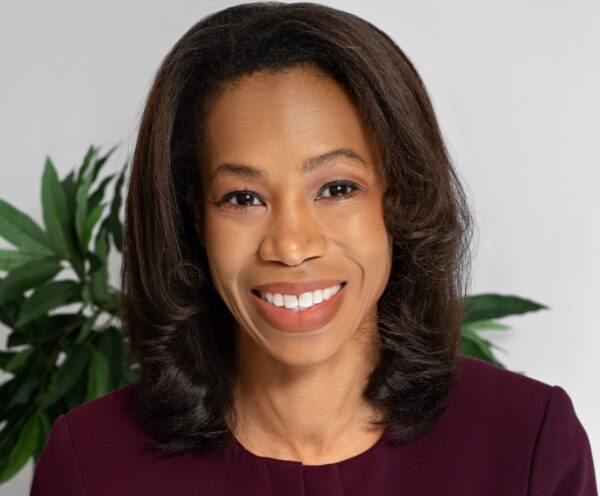
By Tracey Compton
Indianapolis Public Editor
October 14, 2026
Love it or hate it, digital news outlet Black Indy LIVE has more social media followers than the city’s 131-year-old Black press. The outlet, which focuses on Indianapolis’ Black community, is hard to ignore given its popularity, which is why I’ve decided to take a closer look.
The platform has significant influence, with 186,000 followers on Facebook and nearly 60,000 followers on Instagram. Laron Anderson, the man responsible for the content, does not call himself a journalist, though he often acts like one. However, the site breaks many journalistic norms. That comes at a cost to news consumers.
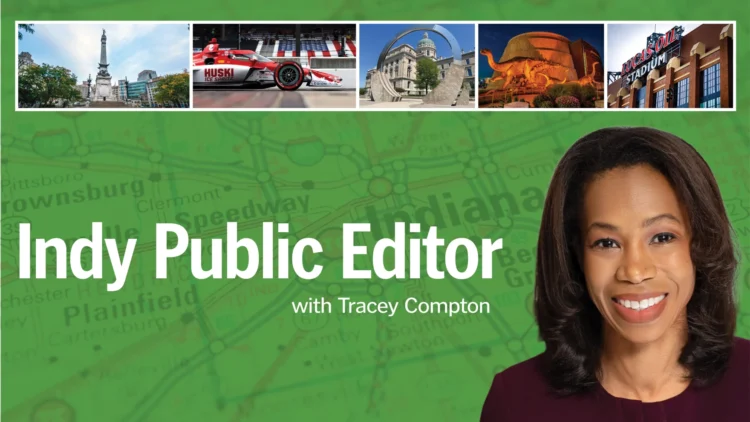
Black Indy LIVE bills itself as “a viral news source for the state of Indiana” and its creator calls the platform a “statewide news aggregator,” meaning it repurposes news stories reported by other news outlets. In other words, Black Indy LIVE doesn’t do original reporting. Instead, it relies on the work of professional newsrooms throughout the state. Yet, the site doesn’t consistently credit those professional newsrooms or journalists. Nor does Black Indy LIVE tell its audience which posts are paid sponsorships. And finally, Black Indy LIVE doesn’t have a robust method for verifying the information it posts or making corrections when errors happen.
All these shortcomings mean more work for consumers.
Black Indy LIVE may be the most read local news source in Indianapolis’ Black community. Here’s what community members told me about the content.
Josh Riddick is a community organizer. He thinks the news outlet has resonance because it is filling a media gap in the Black community, which has a “real interest and hunger for culturally relevant commentary and information.” But he also has concerns. He is the state director for LiveFree Indiana, which encompasses the Black Church Coalition, the Indy Action Coalition and the Validus Movement. Riddick described Black Indy LIVE as “functionally reactive,” and moving so fast that it misses key context, critical commentary and analysis.
Riddick wrote to me:
Political stories are framed as “gotcha” stories, designed to implicate elected officials and sell storylines to keep engagement. These stories often are cited from local journalists who have no input or involvement in the viral posts that are created from their stories. Because of the fast pace and limited analysis, our community’s primary local information delivery platform isn’t interested in developing readers or engaging with real critical analysis or political imagination. A bar fight will get as much attention as a major divestment in the state budget. This editorial choice has formative impacts. Viewers are expecting a constant stream of news, bite-sized and with no real context…It is an open secret that you can pay for access or posts. This explains why rappers or artists not connected to the local community end up with so much content from the page. Again, another editorial choice that influences our community in more harmful ways than beneficial ones.
Indy resident Destany Long’s impression is that Black Indy LIVE traffics in content to provoke an emotional reaction. She’s concerned about older community members taking it at face value.
“Honestly, I think it’s one of those pages that is, and I don’t know who’s behind the page, maybe they’re trying to share a story, but I feel like every image looks the same, like it’s something that’s supposed to grab someone’s attention, but not keep them,” Long said in an interview.
My family text thread is often filled with viral posts from Black Indy LIVE, with my mother, cousins and aunt weighing in with incredulous reactions to the latest news. One of my cousins, Johnathan Harris, 34, told me he’s followed the content for about three years and uses it to find out what entertainment is available in the city. Beyond that, he wonders if Black Indy LIVE is deliberately trying to enrage viewers. He criticizes the account for “never posting anything positive for our communities. And if they do, it’s very, very small victories,” he said. “It’s more like doomscrolling.”
Provoking an emotional reaction is very much the point of Black Indy LIVE, the founder told me.
Laron Anderson, 38, said he started the brand as an event page in 2017. But in 2020, Anderson live-streamed protests after Kyle Rittenhouse shot and killed two men and wounded another, during community unrest in the wake of the murder of George Floyd. Anderson converted some of those viewers to a podcast he co-hosted with Whitley Yates, a former director for the Indiana Republican Party. Suddenly he had an active and engaged social media following for Black Indy LIVE.
Anderson is basically a one-man-shop. He has volunteers who help with Black Indy LIVE: two advisors, one page administrator, an events photographer and a reviewer, but he says he is the sole content creator.
An Indianapolis native, who now lives and posts content from Phoenix, Arizona, Anderson told me his educational background is in elementary education. He also has some training in editing audio and video. But he has no formal journalism training. He’s navigated journalism ethics the hard way, often running afoul of reporters and members of Indy’s mainstream news media. He’s been accused of taking the work of other journalists without crediting them, including pasting chunks of news stories and using copyrighted photos taken by local news photographers.
He said he’s trying to be more careful, working to add a consistent way to identify sources and give credit. But make no mistake, Black Indy LIVE’s goal, Anderson says, is to pique interest and stir debate.
I asked Eric Deggans for his take on the news platform. He is the Knight professor of Journalism and Media Ethics at Washington Lee University in Virginia and a critic-at-large for NPR.
“This could be a really cool information source if he tweaks some things about it,” Deggans said.
Transparency is Deggans’ most pressing concern. He had to do some detective work to figure out that Anderson was the owner and editor of the platform, jumping through multiple websites and eventually landing on Anderson’s LinkedIn page. He noted the lack of citations of sources and photo credits.
News providers typically make it very easy for consumers to see who is behind the information and how they can contact the newsroom. This is important for building credibility and trust with news consumers.
Hiding ownership of a publication or news outlet is a red flag that brings into question whether the outlet’s true intentions are purely journalistic. Deggans also could not figure out how Black Indy LIVE makes money. That’s a clear problem.
Because of the high volume of daily stories posted, Deggans suspects that Anderson uses AI to scrape traditional news outlets’ for stories, instead of employing on-the-ground reporters to do the work. These techniques raise the specter of plagiarism, Deggans said.
“There seem to be a lot of people out there who don’t necessarily think of themselves as journalists, who are committing acts of journalism,” Deggans said and described what he saw on Black Indy LIVE’s Facebook page as an “awful lot” of journalism without proper credit.
But just because Anderson’s work has some shortcomings, Deggans said, that isn’t a reason to completely dismiss it. Deggans reminded me that Black Indy LIVE’s content, which often blurs the line between commentary and objective news with punchy headlines, reflects a convention in the Black press—it delivers information with a satirical perspective and explains why the news matters to the Black community.
“There’s a long tradition in the Black press of people operating Black newspapers who weren’t necessarily professional journalists, either, and they just knew that the community needed information that wasn’t from the perspective of the majority that was running whatever community they lived in,” he said.
When I sat down with Anderson to discuss these concerns, I had already noticed a change in his content. Earlier this year, I saw Black Indy LIVE post videos of Black people fighting and lurid stories, including stories about people committing acts of bestiality, which had nothing to do with the Black community in Indy. I asked him how these stories fit with Black Indy LIVE’s mission.
He told me the story, “Clapping Cheeks, Doggy Style”: “Disturbed Indiana Man Faces Child Exploitation Charges and Multiple Counts of Bestiality,” would have been picked up by almost any news source in Indiana, and therefore it was newsworthy for his platform.
“We’re a social-media-first publication, so that means getting attention is important,” Anderson said. “Being able to stop somebody from scrolling.”
I disagree. That’s only true for newsrooms with a tabloid approach to journalism. Most newsrooms wouldn’t run those stories unless there was a direct impact to the community. And many of his most sensational stories don’t have anything to do with Black people in Indiana.
However, Black Indy LIVE does share other content that is relevant. Posts about Gary’s recent flood-afflicted power outage and the prevalence of Black Hoosiers facing eviction notices are real issues that disproportionately impact Black people in our state.
But there’s more posts that seem created just to alarm and even mislead people. One particularly crass post about people suing Eli Lilly, claiming GLP-1 drugs made them blind, featured a picture of Stevie Wonder superimposed over the pharmaceutical company’s headquarters. Another post about a Hindu temple coming to Whiteland asked, “IS THE GOD OF DESTRUCTION COMING TO INDIANA?”
Anderson told me he intentionally uses what he calls “Gen Z, millennial language” within the headline because that’s what garners the most views on a post. About the videos of Black people brawling, he said those are guaranteed to go viral and attract attention. But he said he no longer needs posts like those to go viral anymore, because his audience has grown so large and he finds plenty of controversy in other topics.
Anderson declined to say how much revenue the platform makes.
“So because I’m monetized through Facebook, I would say your point is to go viral, but my science to going viral is I present a good issue with a good question,” Anderson said. “My formula is finding what’s not already been brought to the forefront because that’s how I go viral.”
He said he’s not completely beyond posting a fight video, but says these days he is scouring the comments on X, Reddit, and Facebook to see what Black folks are talking about. He uses those discussions as fodder for stories about everything from Indiana Gov. Mike Braun and data centers to the minimum wage and Caitlin Clark.
Anderson said he does use generative AI. In a past interview he described AI as an “equalizer,” helping his content compete with traditional news outlets. He said he uses tools in Canva and ChatGPT the most. He works backwards from an original headline idea he comes up with first. Then, he described to me, he pulls up at least three news sources for reference to get the facts right. Then, using a dictation tool, he talks out the frame for the story.
“Those are never final drafts because I ramble a lot; I forget stuff,” Anderson said. “But I think that’s giving it a more natural presentation with the words. I feel like people are engaging with it better.”
He’s fought with reporters and photographers, who have accused him of pasting their work into his social media captions, which is where he reports more details.
Anderson dismissed these concerns, saying that, lately, when he copies a significant portion of text from a source, he puts it in parentheses. He told me he’s always cited sources in some form throughout Black Indy LIVE’s content. But when I compared many of his posts to original new sources, it’s clear that the quotes, and in some cases full paragraphs, first appeared elsewhere and were not attributed.
Recently, two local reporters accused Anderson of plagiarism. “Now, as an adult and as someone who tries to understand journalism, I understand where both people came from,” he said. “I understand how something that was small to me–because I do it a lot–I can understand how it’s a bigger deal.”
However, Anderson rejects the idea that he’s plagiarized. “I realize that, over the years, some journalists or people in local media have disagreed with the way I’ve run Black Indy LIVE, how I’ve credited certain material, how stories have been packaged, or other decisions I’ve made,” he said. “I also understand that some of those disagreements have created strong feelings about me personally or about the platform. But disagreements over attribution practices, photo credits, sourcing style or how a media business operates are not the same thing as plagiarism.”
Even when it’s not plagiarism (and sometimes it actually is) it is intellectually dishonest to take the work of another person and make a profit by repurposing it, and without crediting the original source. Just this week, Anderson began adding a credit line to his captions, citing sources.
Reporters at FOX59 and CBS4, as well as a former IndyStar reporter, have had issues with Anderson reporting news and not giving them proper credit.
CJ Hoyt, news director for FOX59 and CBS4, shared this statement about misuse of the stations’ content in general:
“The FOX59/CBS4 newsroom works exceptionally hard to develop original reporting and it is frustrating whenever we see our material repurposed without appropriate attribution by anyone. In the age of AI, it is very easy to take information from our website and have it re-written to appear different. That is still stealing content, especially if images or video are also lifted from our reporters. It is important that outlets provide clear attribution and should provide a link back to the original content.”
I asked Jade Jackson, a former IndyStar public safety reporter, about Black Indy LIVE. “Management and newsroom leaders rightfully had an issue with me writing news articles that would be put behind a paywall, and having his platform take the information to post on social media for free,” she said.
Jackson told me that she would sometimes preview stories on her social media accounts only to see that Anderson had copied them directly to Black Indy LIVE posts. Over time, she reached a mutual understanding with Anderson to give her credit for her stories after she published them, much like Yahoo republishes stories, she said.
Addressing the “pay-for-play or access” accusation, Anderson told me that Black Indy LIVE does accept paid advertising and accepts only promotional opportunities. He said he’s worked with businesses, artists, political campaigns, event organizers and community organizations that want to advertise a product, service or project to his audience.
He does not label his paid content as paid, something that the Federal Trade Commission requires.
Anderson is very clear about his intentions with Black Indy LIVE. Going viral is built into the business model. It’s how he makes money, through Meta’s monetization of ads on his pages. If he could, he said, he would provide links to original sources, but that would cut into his profits because Facebook charges for links to content that take users away from Facebook. That rule wouldn’t apply to him if Facebook considered him a news site.
Black Indy LIVE’s content is a mix of tabloid entertainment and hard-hitting news. The “LIVE” implies that you’re sometimes going to get a raw look at humanity’s distasteful side.
Yes, the majority of the posts accomplish their mission of piquing interest and sparking discussion. But, they don’t create much value for anyone other than Anderson. They provoke, but Anderson doesn’t use that captured attention to educate or deliver deeper contextual analysis.
We all live in an online world that includes gossip and entertainment sites like TMZ and the sensational tabloid New York Post, alongside The New York Times and NPR. I’m not going to judge someone who chooses Black Indy LIVE as a source of information. Just be forewarned, Black Indy LIVE is trying to irk you. If you care about the topic, in most cases, you’ll want to go elsewhere to verify the facts and get the complete story.
Please write to me at indypubliceditor@poynter.org.
Did a friend forward you this email? Sign up for the newsletter here.
The Indy Public Editor is a grant-funded pilot project run by the Poynter Institute. This column is edited by Kelly McBride and copy edited by Lauren Klinger. The project is managed by Nicole Slaughter Graham with support from Amaris Castillo.