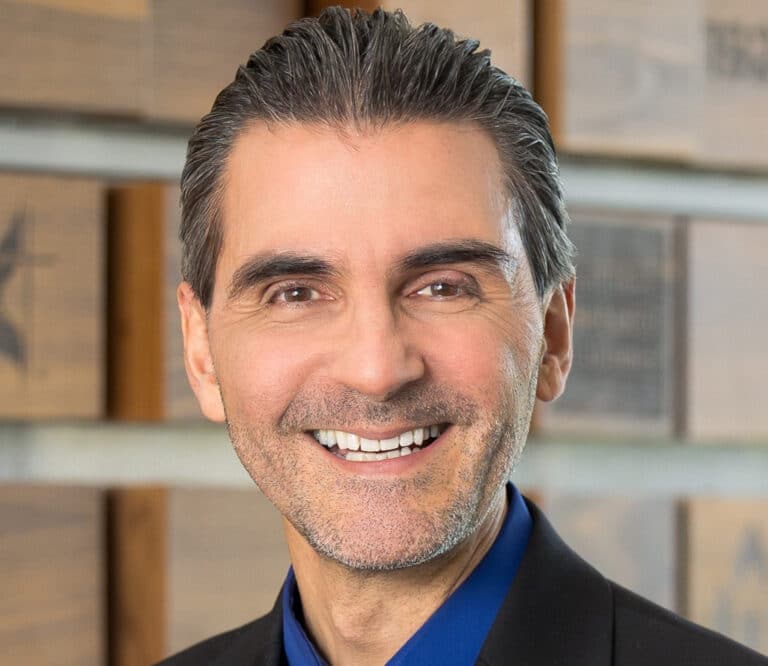
By Matthias Beier
November 15, 2026
Voters resoundingly rebuked Christian nationalists during the Nov. 3 midterm elections. A majority of voters seem to have expressed the sentiment in Leonard Cohen’s song Anthem: “I can’t run no more / With that lawless crowd / While the killers in high places / Say their prayers out loud / But they’ve summoned, they’ve summoned up / A thundercloud / They’re going to hear from me.” The midterms were such a thundercloud.
People are tired of bigotry clad in religion. They voted against the religious rationalization of ICE killings. They voted against the religious sanctification of the sloppy Iran War by Secretary of Defense Pete Hegseth. And they voted against continued U.S. support for Israel’s war in Gaza, which a UN commission chaired by 2026 Nobel Peace Prize laureate Navi Pillay concluded amounted to genocide.
They voted for compassion and religious liberty instead. While the economic hardship of millions of Americans and the simultaneous, out-of-touch grift of President Donald Trump and his associates were clearly decisive factors in the election across party lines, the victories of progressive Christian, Muslim and Jewish candidates signal a significant turning point in the relationship between religion and politics: the rise of a religious left that effectively counters the religious right and Christian nationalism.
Some who are critical of any use of religion in politics may ask how the rise of a religious political left is different when it comes to the separation of church and state.
Before I get to that, I think the significance of the midterm elections for the mental and social health of the country cannot be overstated. I believe that this election marks the beginning of a reversal of the dangerous and, frankly, psychotic-like Trump tide toward a new McCarthy era, in which fascist-style fear, suspicion, and persecution have again dominated American public life.
Part of this turnaround can be seen in the election of candidates motivated by psychologically and socially saner forms of religion. Among the most prominent religious candidates who won were Presbyterian seminarian James Talarico, who defeated Ken Paxton in the Texas Senate race; Lutheran minister Sarah Trone Garriott and Presbyterian minister Lindsay James, who won congressional seats in Iowa; and United Methodist pastor Adam Hamilton, who defeated Trump-backed Sen. Roger Marshall in Kansas. Talarico, Garriott and James all defeated Republicans endorsed by Turning Point Action, the political arm of the Christian nationalist movement founded by Charlie Kirk. In Texas, Baptist pastor Frederick Douglass Haynes III, a 2025 doctoral graduate of Indianapolis-based Christian Theological Seminary, also won a congressional seat. Haynes devoted his doctoral dissertation, “Unashamedly Black,” to defending the prophetic Black tradition of “woke preaching” as a Christian response to social injustice, the very concept the religious right has turned into a political insult.
Other winners, many of whom are religiously progressive, who defeated Turning Point-backed Republicans included Muslim progressive Abdul El-Sayed, who defeated Mike Rogers in Michigan and became the first Muslim elected to the U.S. Senate; Catholic Gina Hinojosa, who defeated Texas Gov. Greg Abbott; Lutheran Vikki Goodwin, who defeated Lt. Gov. Dan Patrick; and Jewish Sen. Jon Ossoff, who defeated Mike Collins in Georgia. Another Muslim, physician Adam Hamawy, won a congressional seat in New Jersey after treating wounded Palestinians in Gaza. In New York, progressive Jewish Democrat Brad Lander, an outspoken critic of Israel’s war in Gaza, won a congressional seat after defeating incumbent Dan Goldman in the Democratic primary. And in Indiana, Beau Bayh defeated Secretary of State candidate Max Engling, the Turning Point favorite whom Indiana’s Christian nationalist Lt. Gov. Micah Beckwith had endorsed as a “solid Christian conservative.” Less than half of Beckwith’s endorsed candidates won.
What is different between progressive religious candidates and Christian nationalist candidates? Politically, the difference is that religious progressives respect the separation of church and state while Christian nationalists want to tear it down – contrary to the founders’ vision of religious liberty. There is also an important psychological difference, with Christian nationalism basically promoting the imposition of exclusivist narcissistic forms of religion while religious progressives tend to promote freedom of conscience and mutually inclusive, relational forms of religion.
I suggest we can learn something very important about the different uses of religion from the psychological study of religion, my field of expertise. This suggestion alone would make one of the key architects of Christian nationalism, Rousas Rushdoony, turn in his grave. He is the master mind behind loony ideas that sometimes get seriously suggested by preachers and Christian nationalist politicians in state legislatures today. In his influential book Institutes of Biblical Law, Rushdoony called for the reinstatement of “biblical laws” that prescribe the death penalty for adultery, homosexual acts, blasphemy, witchcraft, incorrigible children, and propagating false religious doctrines. He also called for revoking the 19th Amendment, which gave women the right to vote.
Why should you care about this? Because Rushdoony’s ideas influenced David Barton, the founder of WallBuilders, who in his books recasts American history as that of a Christian nation and challenges church-state separation. And guess who has twice hosted Barton at his church in Noblesville, including an event advertised just one week before the midterms? Indiana Lt. Governor Micah Beckwith.
What’s more, Rushdoony wrote an entire book against Sigmund Freud, the founder of psychoanalysis and modern psychotherapy, because he believed that psychology that analyzes religious bigotry is the devil’s work. See, Christian nationalists do not like people to think critically. Freud used psychology to show that harmful religion is basically based on uncritical groupthink.
James Fowler, a pioneer in the psychology of religion, in his influential book Stages of Faith described stages of religious or spiritual development that humans typically go through. In the early stage of mythic-literal faith, religious stories are understood concretely; in synthetic-conventional faith, belonging to one’s group and conforming to its authorities become central. These are normal developmental stages children go through. But when adults get stuck or arrested in these early stages, faith can become rigid, fearful, and dependent on unquestioned authority. This can make people dangerously susceptible to a follower mentality that sociologists have called an “authoritarian personality,” which is characterized by authoritarian submission, authoritarian aggression, and conventionalism, and makes people easily susceptible to fascism. We have seen elements of this in the MAGA movement that voters turned away from in the midterms.
With further development come critical thinking, where faith becomes individuative-reflective, and symbolic understanding and an appreciation of other traditions, something that Fowler called conjunctive faith. The most expansive stage, universalizing faith, extends love and justice to all of humanity and sentient beings.
I see individuative-reflective, conjunctive, or universalizing visions of faith reflected in the religious progressive candidates who won. They put caring for the least of these while also valuing healthy self-esteem at the center. Their faith allows you and me to coexist. God, or, if we use the Arabic word, Allah, does not have to love one of us less to love the other. It is religion shaped by an abundance of love rather than a scarcity of it. Contrast this with the exclusivist, mythic-literal faith Trump expressed in his “60 Minutes” interview after the midterms. Asked what will happen to him when he dies, he said: “Well, I’m a religious person, so in theory I go to heaven. … I hope so. I don’t want to go to hell.” Would he forgive his political enemies? “The answer is no. I want to be honest, no….I probably cannot do that, no, because I do hate some of my enemies and I always will.”
I believe the founders’ idea of religious liberty, which shaped the Declaration of Independence, the Constitution and its amendments, was guided primarily by conjunctive faith, with a hint of universalizing faith. This stands in stark contrast to the mythic-literal faith or even earlier intuitive-projective faith that is primarily narcissistic.
I started with a song and want to close with two apt lines from two other popular songs that make the points I have been making. In her new song “Patient Zero”, Taylor Swift describes a man who claims to love his partner but really loves the admiration he receives through her. He is merely “bathing in your reflected light.” That is how I see Trump’s relationship with his followers and the country. They and we are simply mirrors for his own omnipotent grandiosity rather than people he genuinely cares about.
But perhaps the midterms are the clearest sign that we the people are catching on to this. In a previous column, I wrote how Trump’s court prophets are basically treating him like in Hans Christian Andersen’s fairy tale “The Emperor’s New Clothes”. They and he are trying to fool everyone. The midterms have busted the myth of Trump’s omnipotence and exposed that people no longer buy his “great again” fantasy. As Bob Marley sang in “Get Up, Stand Up”: “You can fool some people sometimes, but you can’t fool all the people all the time.”
Matthias Beier is a scholar of religion, psychoanalyst, and associate professor of counselor education at Christian Theological Seminary. He is a Contributing Columnist for The Indianapolis Star and the author of “A Violent God-Image.” Contact him at mbeierphd@gmail.com. Follow him on Substack, X, Instagram, Facebook, and TikTok.
The views and opinions expressed are those of the author only and do not necessarily reflect the views of The Indiana Citizen or any other affiliated organization.