By Sydney Byerly
The Indiana Citizen
November 10, 2026
At 42, Matthew King was driving home from work one evening when he had a thought that stopped him.
“Nothing’s wrong,” he said to himself.
“There’s literally nothing wrong, and it’s been so long since I had that thought,” King said. “It brought a smile to my face. It really did.”
For years, King had managed to hold down jobs and build a career while struggling with trauma and alcoholism after serving in the Army. But a cancer diagnosis, a difficult recovery and the end of his marriage set off a series of setbacks. He eventually lost his job, apartment, driver’s license and became homeless.
After staying at a shelter in Kokomo, King was connected with the Department of Veterans Affairs, which referred him to Helping Veterans and Families of Indiana. The Indianapolis-based nonprofit provides housing and other support to veterans experiencing homelessness.
King was reluctant to leave his family in Kokomo for Indianapolis. But he knew he needed a fresh start. He moved into transitional housing through HVAF in early 2026.
“That fresh start turned out to be the best decision that I ever made,” he said.
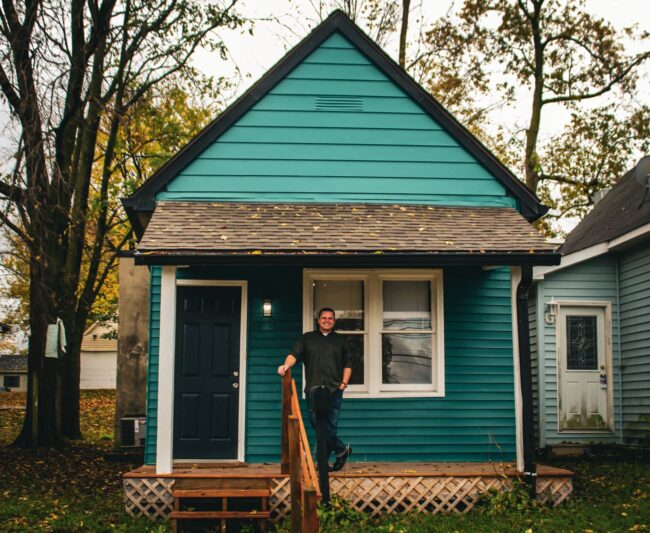
Today, King has a job, a stable place to live and a car that has allowed him to begin seeing his children again every other weekend. He has also found a church community and wants to help others facing some of the same struggles he experienced.
“The man that sits here today is not just living, but I’m thriving,” King said. “And it’s because of the programs that they offer. It’s because of what they did for me.”
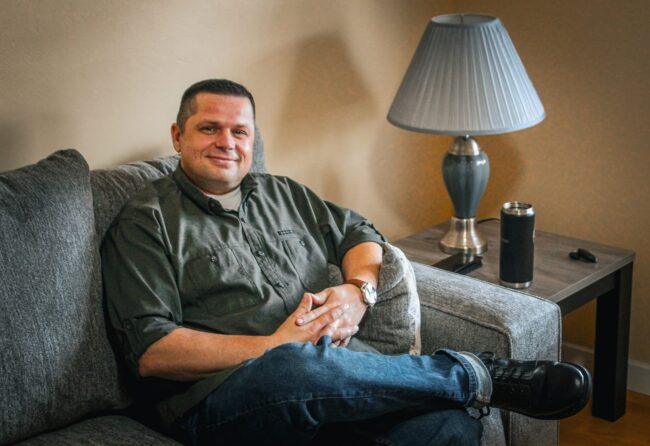
Military service was part of King’s family long before he joined the Army.
His great-grandfather served in World War II and fought in the Battle of the Bulge. His grandfather served in Army artillery, and his father spent 22 years in the U.S. Marine Corps.
King remembers his father pulling him aside after the Sept. 11, 2001, terrorist attacks and showing him the news.
“He told me that I was going to have to do something about that,” King said.
King enlisted in 2002. He served six years in the Army, including a 12-month deployment to Iraq with the 4th Infantry Division. He was stationed at Fort Carson in Colorado and served as a machine gunner on a tank.
During his deployment, King went about three months without being able to contact his family. His mother eventually called the Red Cross because she was worried about him.
King was on guard duty when a Red Cross Humvee arrived looking for him.
“They said, ‘PFC King, we need you to come with us to the Air Force base,’” he recalled. “I said, ‘Why? You know, I’m fine. I’m healthy. I’m in combat.’”
His mother had asked the Red Cross to help her get in touch with him.
“They came and got me off the front lines to call my mommy,” he said, laughing. “I still joke with my mother about that.”
King’s six years of service ended in 2007, when his time in the Army was up. He returned home proud of his service, perhaps more overconfident than he realized.
“I felt kind of invincible,” he said. “Of all the things I lived through, how could I come home and worry about a traffic accident or something silly like that?”
But the transition to civilian life brought challenges he had not anticipated. He began having dreams that took him back to firefights and other experiences in Iraq. He relied on alcohol to push away emotions and memories he had not fully processed.
He was able to keep working. After leaving the Army, he started at a grain elevator in Frankfort, where he eventually became superintendent of outside operations. He was responsible for millions of dollars’ worth of corn and soybeans and earned a certification in pesticide application for grain silos.
He also reconnected with a woman he had known since he was 4, and they married. At the time, she lived in Kokomo while he worked in Frankfort. After about two years of commuting back and forth, he found a job in Kokomo and moved there.
He worked as a steelworker for eight years, including as a shearman handling sheets and plates of steel. The work required precise measurements, he said.
From the outside, his life looked stable.
“I was a functioning alcoholic, so to speak,” King said. “I was able to hold a job, and I actually thrived in the workplace.”
He made good money, bought a house and a car. But he described the drinking as a “monkey” he carried with him.
“When you’re high functioning and you make a lot of money and you get the new house, you get the new car, but you’ve got this monkey on your back, you don’t see anything wrong with the monkey because my life is OK, my life is fine,” he said. “So everything was OK until it wasn’t.”

In April 2018, King appeared on “American Ninja Warrior”, a television competition in which contestants attempt demanding obstacle courses. When the competition came to Indianapolis, he completed the course and placed 34th out of 125 contestants.
His daughter still talks about the appearance, he said, and calls him a ninja.
That October, however, King was diagnosed with Stage 4 Hodgkin’s lymphoma. The cancer had spread to his liver and spleen, and a tumor on his back was restricting blood flow to his legs. He was 34.
His first chemotherapy treatment was on Halloween, and he underwent intensive treatment for about eight months.
Near the end of chemotherapy, an infection and fever sent him to the hospital. He remembers lying in a hospital bed feeling as though he might die.
“My heart was just so light,” he said. “I felt like if something does happen to me, it’s going to be OK.”
He survived, but the recovery was difficult. Even after chemotherapy ended, he dealt with brain fog and struggled to return to normal. Two weeks after treatment, his employer tried to put him back to work full time. King said he was physically unable to return to the demands of the steelworking job and had to resign.
“One of the worst parts about cancer wasn’t the chemo,” he said. “It was not being able to work. It was being bedridden for eight months, and that just had a mental toll on me.”
King said he began drinking more heavily as he struggled with the loss of his job and the effects of cancer treatment. He said he became increasingly difficult to live with, and his marriage eventually ended.
He later found work in plumbing, but his drinking continued. After getting a DUI, he said, he lost his job, apartment, driver’s license and became homeless.
He went to a homeless shelter in Kokomo, where staff connected him with the VA, who referred him to HVAF in Indianapolis.
By then, King said, he recognized that trying to handle everything on his own had not worked.
“I realized that me doing it on my own led me to homelessness,” he said. “So obviously, I need to maybe less of me, more of, ‘Hey, let me start listening to other people’s advice.’”
HVAF works exclusively with veterans and their families who are facing homelessness or housing instability. Its services include housing, case management, mental health care, employment assistance and access to basic needs such as food, clothing and hygiene supplies.
For King, the help came through a series of practical steps—and relationships with people who took the time to understand what he needed.
His case manager, Angela Jenkins, helped him navigate the program. HVAF also connected him with mental health support and helped him obtain a bus pass so he could get around Indianapolis without a car.
King found a church nearby, Living Faith Church, where he said people welcomed him “with open arms.” He became one of the church’s elders, plays guitar with the worship team and participates in outreach to people in the community.
HVAF also connected him with an employment specialist who helped him build a résumé and prepare for work. He found his current job through an HVAF job fair.
The organization helped him get work clothes, boots and provided an Uber card to help him get to and from work. Those practical forms of assistance made the process of starting over less overwhelming, he said.
“They found a way to reach me where I was at and alleviate 90% of that, as far as starting over,” King said.
He also began addressing the mental health challenges he had left untreated for years. King said HVAF helped him get a mental health evaluation and connect with a counselor. He had struggled with PTSD and anxiety, and he came to understand that he could not simply push those experiences aside or drink them away.
“You have to actually process it with a sober mind and realize, ‘Hey, this thing I went through was kind of crappy, and I’m safe now. I don’t have to worry about [those things],’” he said.
For King, sobriety has meant facing memories and emotions he once tried to avoid. He said even a smell or the sound of fireworks can bring back memories of the war but he has learned to recognize those moments without dwelling on them.
He also described recovery as a series of everyday choices rather than a single turning point. Waking up without a hangover, being clear-headed and able to take a job-related drug test without worrying about alcohol are among the small milestones he now appreciates.
“It’s time to make some better decisions with your life,” he said. “You can’t just drink away all your problems. It’s time to do this. I did it. Here I am.”
King said the people at HVAF made a difference not only through the services they provided but also through the way they treated him.
“There’s not one person that was rude to me, or even looked down on me,” he said. “You know, like, for having to go to a food pantry. They did it all with open arms and unjudgmental.”
One person he really connected with, King said, was HVAF’s maintenance facilities director, Randen. The pair bonded over their shared interest in maintenance work and music.
According to Nolan Anderson, HVAF’s marketing and communications manager, Randen went beyond his job to help King find a car. The maintenance facilities director worked with a local American Legion to locate an unused vehicle in a Legion member’s neighborhood. They tracked down the owner, found a mechanic to repair the car and gave it to King for free.
“He really went to bat for him,” Anderson said.
King said having reliable transportation made it possible for him to resume seeing his 13-year-old daughter and an 8-year-old son who live in Kokomo with their mother, every other weekend.
The relationships he has built through HVAF, his church and work have also given him opportunities to help others—something he said has become an important part of his recovery.
“I found one of the easiest ways to do that was basically telling my story, helping people and going to church,” he said.
At work, King said, his happiness was sometimes so apparent that coworkers teased him for being “too jolly.” One young coworker later sent him a message saying King had made the workplace brighter and thanking him for his joy.
“He called me a happy little elf,” King said. “But I definitely try to be a voice of thankfulness, gratitude and a proponent for change.”
For HVAF CEO Emmy Hildebrand, King’s experience reflects the challenges some veterans face when transitioning from military service to civilian life.
Veterans tend to have higher levels of education and earn higher wages than the general population, Hildebrand said. But they also face greater risks of homelessness, suicide and food insecurity.
“I think that’s a really hard transition for most people to make,” she said. “Imagine you leave your parents’ house at 18 and you go to a place where people tell you what to wear and where to be and how to be and what to do, and then after four years or 20 years, all those decisions fall to you.
“And additionally, I think people are losing their sense of identity and purpose. You know, they join the military to be part of something bigger than themselves, and then one day they’re in the military, and the next day they’re a civilian, and that’s on them to figure out: What am I supposed to do? What is my purpose in life?”
Those challenges are reflected in national data. According to the U.S. Department of Housing and Urban Development’s 2025 Annual Homelessness Assessment Report, an estimated 32,495 veterans were experiencing homelessness on a single night in January 2025. The figure, based on the annual point-in-time count, was down 56.1% from 2010.
The Department of Veterans Affairs’ 2026 National Veteran Suicide Prevention Annual Report found that 6,488 veterans died by suicide in 2024, an average of 17.7 deaths a day. The report also found that age-adjusted suicide rates were 56.5% higher among male veterans and 99.9% higher among female veterans than among their nonveteran counterparts.
Substance use is another concern. An estimated 12.3% of veterans who had served in a combat zone had an alcohol use disorder in the past year, compared with 8.9% of veterans who had not served in a combat zone, according to pooled 2022–2024 data from the Substance Abuse and Mental Health Services Administration’s National Survey on Drug Use and Health.
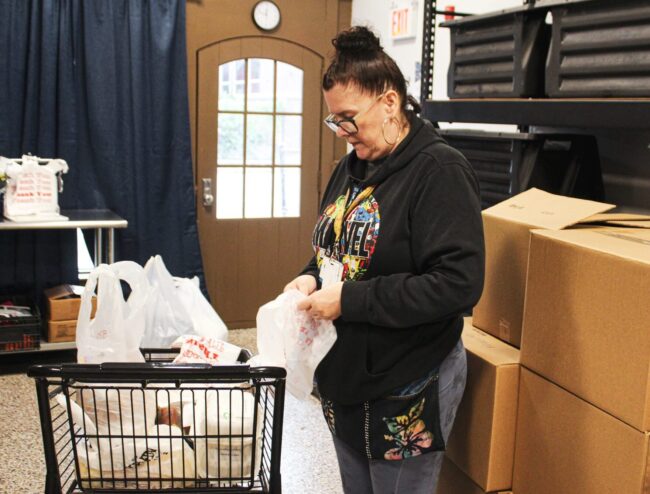
Veterans also must navigate relocation, find new jobs and sometimes enter civilian careers they have never worked in before, Hildebrand said.
Hildebrand began her career in her home county’s Veterans Affairs office, helping veterans navigate disability claims and connect with health care. A colleague encouraged her to pursue an internship with U.S. Sen. Richard Lugar, R-Indiana. She was hired after graduating from college and spent 10 years handling Lugar’s military and veterans issues.
She joined HVAF in 2012, when the organization wanted to expand its public policy and advocacy work. After serving in several roles, she became CEO in 2021.
HVAF was founded in 1993 and has grown to provide housing alongside what Hildebrand describes as “wraparound services.” Its team of about 80 employees includes case managers, mental health professionals and employment specialists. The organization also operates food, clothing and hygiene pantries.
“Housing isn’t enough,” Hildebrand said. “We really try to evaluate everyone’s unique situation and help them be able to address that, and then exit our programs into permanent housing.”
The goal is to help veterans address the barriers that make it difficult to maintain stable housing—whether that means finding work, accessing health care, applying for disability benefits or getting help with basic needs.
By the time many veterans seek help, Hildebrand said, they are experiencing some of the hardest moments of their lives.
“It takes a lot for a veteran to ask for help,” she said. “So by the time they show up at our door, things are usually pretty bad.”
She said staff members work to meet veterans where they are and treat them with dignity and respect.
For the people who work at HVAF, the results are often measured in individual milestones.
“It is a collage of all of those tiny successes or big successes for veterans who come through our doors,” Hildebrand said. “It’s not uncommon for people to know each other by first name and share these stories of success.”
The need remains significant. Indiana is home to roughly 330,000 veterans, Hildebrand said, and HVAF has seen increased use of its food pantry. Before opening a new pantry space in August, the organization typically served 40 to 50 veterans a week during its open hours. Since then, there have been days when more than 70 veterans came through.
About 15% of the 1,300+ veterans HVAF served last year were women, Hildebrand said. The organization is also seeing more veterans with children, although she did not have specific figures on that increase.
Hildebrand hopes Veterans Day serves as more than a moment to thank people for their military service.
“I would describe it as heroes in plain sight,” she said. “People who went and did what they were asked to do, and then they came back to Indiana and have been focused on making our state a great place to live.”
But some veterans return and struggle, she said. Communities should be prepared to help.
“I think it’s really important to turn gratitude into action,” Hildebrand said.
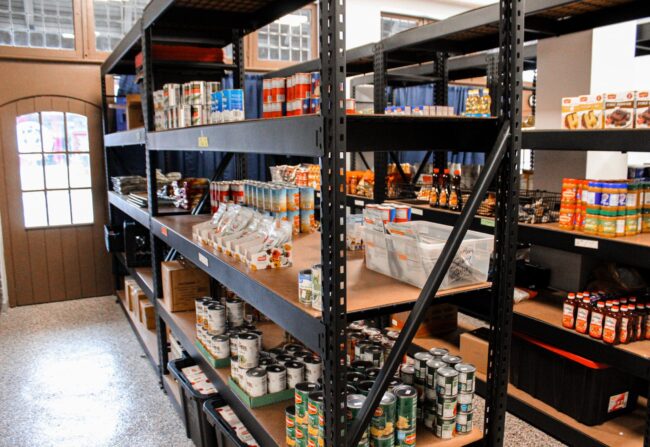
That can mean donating nonperishable food and other supplies, volunteering at the pantry or making a financial contribution to organizations that work with veterans.
For King, the support he received has made him want to offer the same help to others. He has already talked with his employer about ways to connect with HVAF and contribute.
He knows starting over is not easy.
“Starting over sucks. Don’t get me wrong; it sucks,” he said. “But I did it, and now I feel like it’s only going to get better from here.”
He described the future as a snowball moving in the opposite direction from the one that once pulled his life downward.
“I feel like it’s going to snowball in a good way, not a downward spiral, an upward one,” he said.
And sometimes, he said, progress is as simple as making it home from work and realizing there is nothing wrong.
“Nothing’s wrong,” King said. “And that’s a good feeling. That’s a really good feeling.”
Sydney Byerly is a political reporter who grew up in New Albany, Indiana. Before joining The Citizen, Sydney reported news for TheStatehouseFile.com and most recently managed and edited The Corydon Democrat & Clarion News in southern Indiana. She earned her bachelor’s in journalism at Franklin College’s Pulliam School of Journalism (‘Sco Griz!).
The Indiana Citizen is a nonpartisan, nonprofit platform dedicated to increasing the number of informed and engaged Hoosier citizens. We are operated by the Indiana Citizen Education Foundation, Inc., a 501(c)(3) public charity. For questions about the story, contact Marilyn Odendahl at marilyn.odendahl@indianacitizen.org.