By Sydney Byerly
The Indiana Citizen
November 3, 2026
As election results began to come in Tuesday night, Laura Merrifield Wilson, a professor of political science at Indiana University Indianapolis, said some of Indiana’s traditionally Republican districts were showing signs of increased competition, potentially reflecting a broader shift in Democratic momentum.
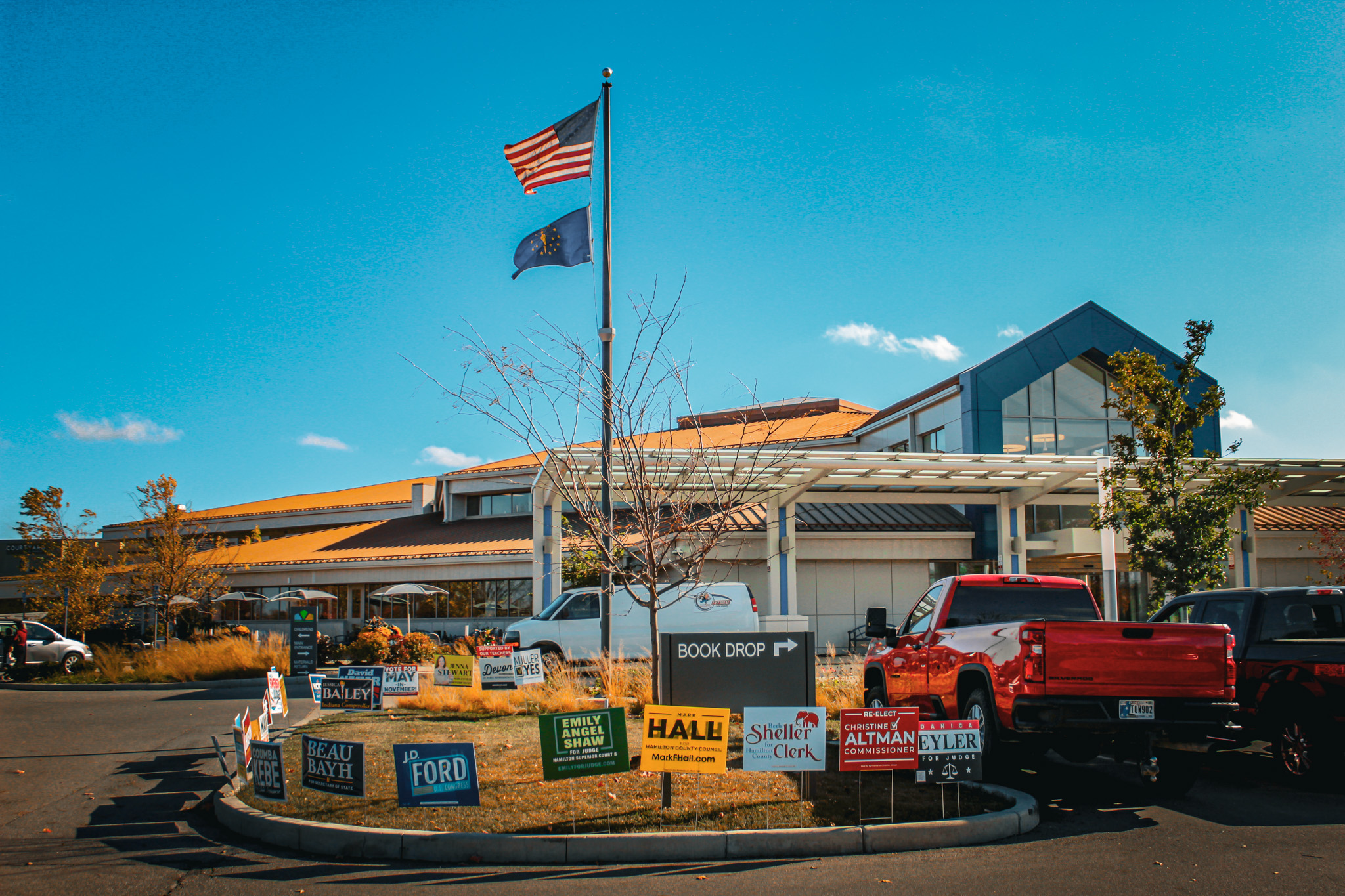
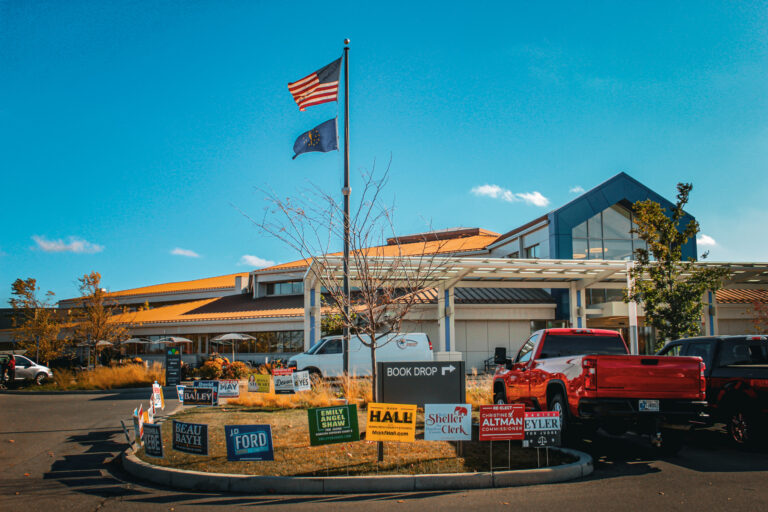
One of the biggest potential surprises to watch, she said, was Indiana’s 5th Congressional District, where Democratic challenger J.D. Ford was narrowing the gap with Republican incumbent Victoria Spartz.
The race had drawn increasing national attention in the weeks before Election Day. The Cook Political Report initially rated the district solid Republican before shifting its rating to likely Republican in October and then lean Republican on Oct. 30. Its latest analysis cited private polling showing a close race between Spartz and Ford.
“If this district were to flip Democrat, to me, that would be the mark that this was a truly blue wave,” Merrifield Wilson said.
The district favored President Donald Trump by 16 percentage points in 2020 and nearly 17 percentage points in 2024. Spartz, who was first elected in 2020, is seeking a fourth term in Congress.
Indiana currently has only two Democratic congressional districts, Wilson noted. A Democratic victory in the 5th District would be an expansion of the party’s influence in a state that has consistently favored Republicans in recent election cycles.
“That wasn’t anticipated in Indiana,” she said. “The fifth was not supposed to be the third.”
Merrifield Wilson also was watching the secretary of state race and particularly the numbers between Democrat Beau Bayh and Republican Max Engling, which had shown signs of favoring the Democratic candidate in polling but remained difficult to assess as counties continued reporting results.
At the time of the interview, Marion County, the state’s largest county and a Democratic stronghold, had not yet reported its results. Merrifield Wilson said results from surrounding counties also were worth watching.
“That’s not only the largest county in the state. Obviously, that’s a Democratic stronghold, so we would expect that would heavily favor Bayh,” she said.
Merrifield Wilson said both major-party candidates were strong contenders and predicted the losing candidate could run again in another election.
“Whichever candidate loses, I bet they run in two years,” she said. “They’re both top of ticket, two primary parties, very strong candidates.”
She also pointed to the Libertarian and Independent candidates’ performances. Libertarian candidate Laura Shillings was seeking at least 2% of the vote for secretary of state. That threshold would allow the Libertarian Party to continue nominating candidates for future general elections through a party convention, rather than requiring candidates to gather petition signatures to get on the ballot.
Merrifield Wilson said the Libertarians had an opportunity to meet that mark, though Independent Lincoln Party candidate Greg Ballard could draw some of the same voters.
“For the Libertarians, it’s theirs to lose. For the Lincoln Party, it’s a great opportunity, and I think that would mark the Ballard candidacy and this third-party race a success for him,” she said.
Beyond the statewide and congressional races, Merrifield Wilson said Hamilton County had emerged as an interesting area for competition between Republicans and Democrats.
“Generally, Hamilton County feels like the breeding ground for party competition,” she said. “The Democrats and Republicans seem to have very strong messaging, recruiting really high quality candidates, having really competitive races.”
She pointed to Democratic challenger Lindsey Gramlich’s race against Republican incumbent Danny Lopez, as well as the race involving Republican John Ruckelshaus in the Indianapolis area.
Merrifield Wilson also highlighted the state Senate District 22 race, where Republican Sen. Ron Alting had announced he would not campaign or serve another term. Because the announcement came after early voting had begun, voters who selected Alting on their ballots effectively were giving the Republican Party the opportunity to determine his replacement, she said.
Alting’s district lines were drawn to favor Republican candidates, Merrifield Wilson said, and his announcement came early enough in the voting period that voters had to consider what their vote for him would mean.
“I think that happened early enough in early voting that you as a voter are basically saying, ‘I’ll give the party power’ because that’s who’s going to figure out the replacement for Alting if you cast your vote for him on the ballot,'” she said.
School referendums and ballot questions also draw attention
Merrifield Wilson also was watching the results of 38 school referendums across Indiana, particularly as districts weigh requests for additional funding against concerns about property taxes.
Recent property tax changes have put pressure on some school districts’ budgets, Wilson said, leaving schools facing difficult choices about maintaining current programs and services or making cuts.
She said the results could reveal whether voters in wealthier districts were convinced that additional funding was necessary or whether taxpayers believed their schools already had sufficient resources.
“What I’m interested in there is kind of looking through, like, do the affluent schools convince their voters, ‘We really need this?'” Merrifield Wilson said. “Or I could see the argument where taxpayers in those districts are like, ‘No, you’ve already got everything.'”
Merrifield Wilson said she had not seen enough polling or other data to predict how the referendums would fare.
The state’s two constitutional ballot questions also presented an interesting test of voter understanding, Wilson said.
She said she had not seen much campaigning around either question and wondered how many voters knew the measures were on the ballot or understood their implications.
Public Question 1 would expand judges’ authority to deny bail in certain cases beyond the existing constitutional exceptions for murder and treason. Public Question 2 would allow qualifying city and town judges to live in neighboring counties to the municipalities where they serve.
Merrifield Wilson said both questions could sound appealing to voters at face value, even though they involve more complicated debates about judicial authority, accountability and access to qualified judges.
For the first question, she said, the conservative argument generally centers on giving judges more authority to keep potentially dangerous defendants in custody. For the second, she said, voters might recognize the need for flexibility in communities that struggle to find qualified judicial candidates.
But she said the questions received less attention than the secretary of state race and national political issues.
“Generally, when we talk about constitutional amendments, especially on what people see as low-information issues, people will vote yes because they think they should support the Constitution,” Merrifield Wilson said.
Merrifield Wilson said she understood arguments on both sides of the questions, even as she found them difficult to evaluate.
“I understand the arguments on both sides for both of them,” she said. “I want to be so situational where I’m like, well, in these cases, like I recognize judicial subjectivity, and I don’t think that’s a good thing. And then on the same hand, I’m like, well, yeah, but what if they did all this awful stuff?”
She said the same tension applied to the judicial residency question, balancing the importance of judges coming from the communities they serve against the difficulty some communities face finding qualified candidates.
Merrifield Wilson said she was not surprised that both questions appeared headed toward passage based on the preliminary results she had seen.
Even with signs of increased Democratic momentum in Indiana, she said, the ballot questions presented a different political calculation, with opposition to both measures generally aligning more closely with liberal ideology.
Sydney Byerly is a political reporter who grew up in New Albany, Indiana. Before joining The Citizen, Sydney reported news for TheStatehouseFile.com and most recently managed and edited The Corydon Democrat & Clarion News in southern Indiana. She earned her bachelor’s in journalism at Franklin College’s Pulliam School of Journalism (‘Sco Griz!).
The Indiana Citizen is a nonpartisan, nonprofit platform dedicated to increasing the number of informed and engaged Hoosier citizens. We are operated by the Indiana Citizen Education Foundation, Inc., a 501(c)(3) public charity. For questions about the story, contact Marilyn Odendahl at marilyn.odendahl@indianacitizen.org.