This story about the impact of a massive data center building project in New Carlisle is the final installment in a three-part series by TheStatehouseFile.com. The first story focused on the use of water by data centers and the second story examined data centers’ encroachment on historic areas around Indiana.
By Arianna Hunt
TheStatehouseFile.com
July 10, 2026
NEW CARLISLE, Indiana—Back behind the walnuts and the rough bark of hickory trees, Riley Thompson and much of his extended family inhabit 120 acres of woods on the outskirts of New Carlisle. The old growth and chirping birds hide what is just around the corner—one of the world’s largest operational AI data centers.
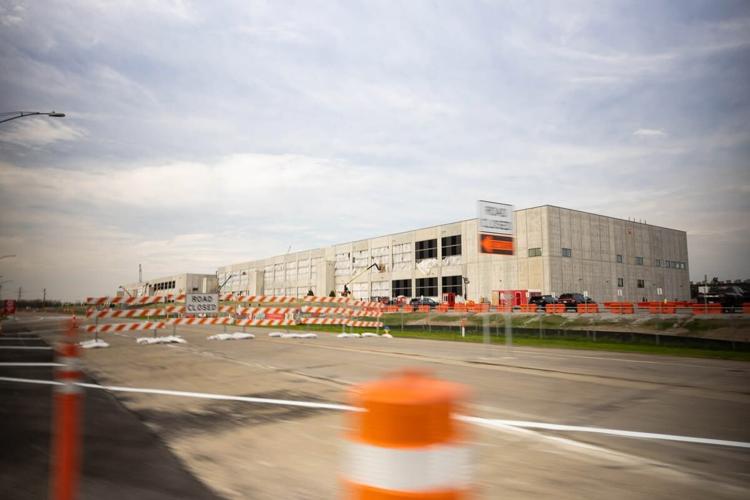
The first thing Thompson noticed about the project was the bumper-to-bumper traffic going down the once-quiet, tree-shrouded roads. Thirty minutes south of Lake Michigan, with less than 2,000 people and a downtown lined with antique shops and not a single stoplight, more than double the population of workers passed through daily at the height of construction.
“I don’t mean to be cliché, but we literally have kids riding their bikes, playing in their front yards, and then we’ve got all these … workers that are just flying through,” Thompson said. “I go for walks every day. Every walk, I’m having to pick up fresh litter that’s left from gas station food they’re eating before their shift.”
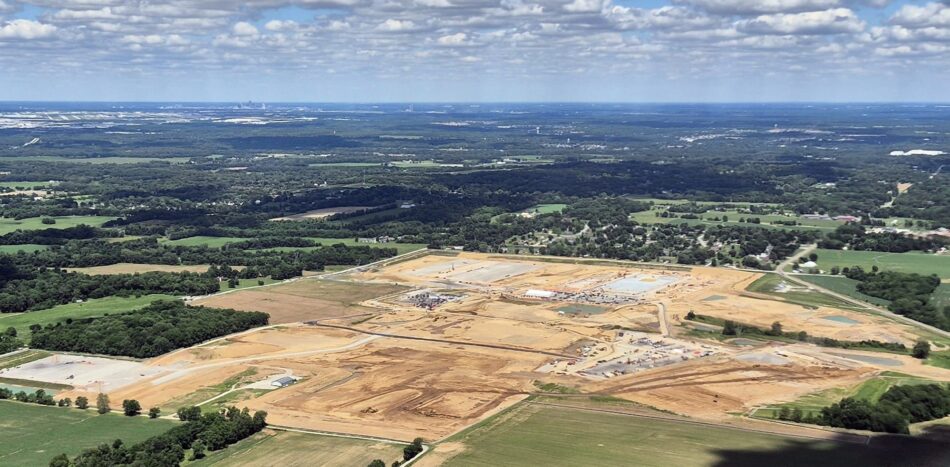
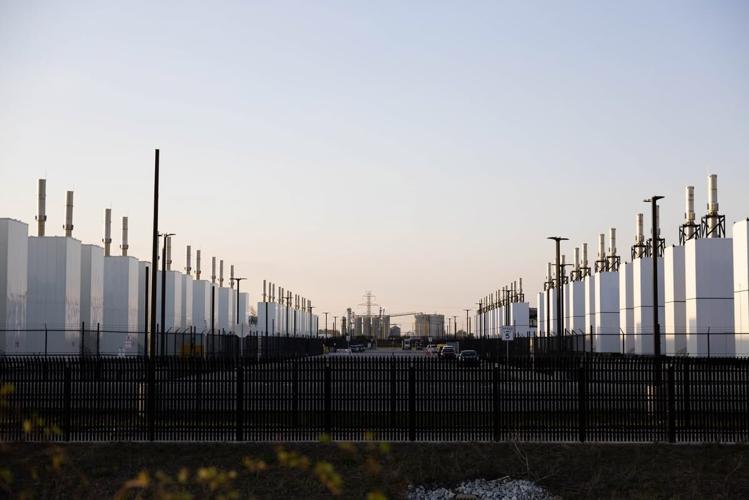
In 18 months, empty fields just outside the township started to take shape into Amazon Web Services’ (AWS) Project Rainier, a 1,200-acre data center cluster used to train artificial intelligence models. The project adds to the 123 data centers in Indiana, according to datacentermap.com.
As the name suggests, data centers provide the physical infrastructure to handle the huge amounts of information required to carry out many—especially online—functions of technology, such as cloud file storage, social media, online gaming and generative AI chatbots.
In Indiana and around the nation, these facilities are sparking controversy as proponents cite economic development and expansion and opponents worry about the disruption to daily life, water and electricity usage, utility rates, and job creation, among other things.
Traveling in and out of New Carlisle, Daniel Caruso could drive to his former job as a mailman holding his coffee in one hand and The South Bend Tribune newspaper in the other, but when construction began on the nearby data centers, that quickly changed.
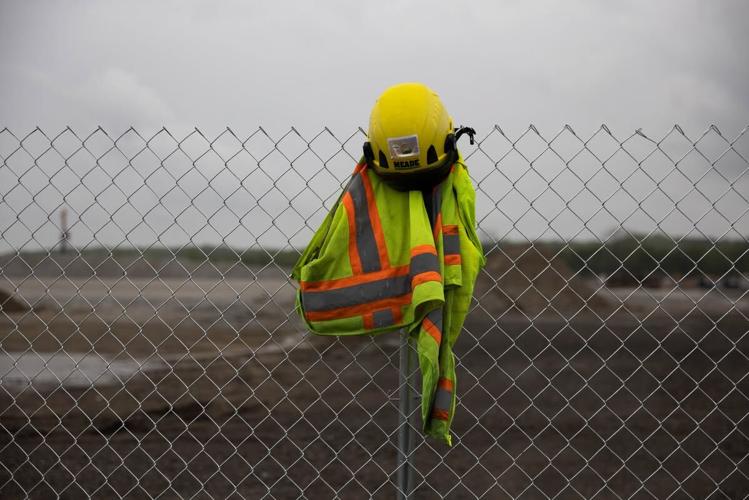
“[During construction], you just don’t let go of the wheel with either hand. You’re afraid to look in your mirrors because you might miss something coming at you,” Caruso said. “It was just a nightmare to get through there.”
In New Carlisle’s case, because there are so many structures to build, the process may take longer than expected. Construction began in 2024 and is now operational with additional centers being built in further waves on the campus.
“Everyone complains about construction. It’s temporary,” Thompson said. “But I’m starting to reject that because it’s like even as much as construction might be temporary, it’s still years of quality of life, enjoyment that you’re taking from people,”
When fully operational, Project Rainier expects to use up to 2.2 gigawatts of energy per year, enough to power 1 million homes. This large amount of power leads some to ask who’s footing the bill.
During Gov. Mike Braun’s State of the State address this January, he said he wants Indiana to lead in the country’s “AI race” without raising Hoosiers’ electricity bills by encouraging companies to “pay their own way.”
“Amazon, for example, they’re building a $15 billion data center in northwest Indiana,” Braun said during the event, referring to another AWS endeavour in the area. “They’re going to pay for every cent of their new power. They’re willing to do it and then some.”
However, critics say that so far, there isn’t any legislation to enforce that.
“Indiana has very few safeguards in place when it comes to protecting consumers and protecting our environment, so we would need considerably beefed up regulations and policy to protect folks from big tech data centers before we can be confident that they wouldn’t have a very large negative impact on folks,” said Bryce Gustafson, an organizer for Citizens Action Coalition, Indiana’s oldest and largest consumer and environmental advocacy organization.
Other energy concerns include clean power. Coal centers around the country have been reopened in part to support data center growth—including two in Indiana.
“When it comes to our energy, we have no policies that promote clean or renewable energy in Indiana,” Gustafson said. “So right now, a lot of the data center growth is being met by a massive expansion of new fossil fuels.”
Gustafson said he is also concerned that the costs of infrastructure could potentially shift to users as well.
“If we don’t have those protections in place, we could see astronomical bill increases under that scenario where a data center comes to Indiana, has all these billions of dollars of investment made on its behalf in order to serve it, but then it closes early and those costs shift to other users,” Gustafson said.
Brad Tietz, director of state policy for the Data Center Coalition, says it’s important to distinguish the different types of data centers and that not all of them are for artificial intelligence—which can consume more resources than their non-AI counterparts.
According to a study by American real estate company Jones Lang LaSalle, around 25% of data center power is used for artificial intelligence globally, but by 2030, it could account for 50% of usage. In 2023, data centers accounted for 4.4% of U.S. electricity usage, with some projections indicating that number could double or triple for 2028.
Closed-loop, liquid-chip immersion, adiabatic cooling, indirect evaporative cooling—in simple terms, many data centers use some type of liquid, usually water, to beat the heat. Cooling measures using water vary by system, including how much water is needed, if the water needs to be potable or if it’s reusable, and these uncertainties drive pushback from communities.
Dr. Keith Cherkauer is aprofessor in the Department of Agricultural and Biological Engineering at Purdue University, director of the Indiana Water Resources Research Center, and director of the Natural Resources and Environmental Science program at Purdue.
Cherkauer said it’s hard to pin down the water issue because of a lack of confirmed information.
“Companies don’t share a lot of information, certainly not a lot of hard data. They will argue in the literature that there’s a very wide range of how much water they use, and they will argue that they’re never near the top. But again, they don’t release a whole lot of information to really confirm that,” Cherkauer said.
Data centers like Project Rainier have their water usage protected under a nondisclosure agreement because it is considered a trade secret, said Bill Schalliol, executive director of economic development in St. Joseph County and supporter of Project Rainier.
Schalliol said that there is a lot of misinformation surrounding data centers that may polarize people if they don’t have the full story. Additionally, the privacy around some companies’ projects might not be paying them any favors either.
“The companies don’t help themselves sometimes when they talk about water usage, because they are so protective of trade secrets and things like that,” Schalliol said. “So the companies sometimes make the issues worse on themselves.”
Some community members find the hidden details unnerving.
“What is so secret about how much water you use to cool your servers?” Caruso asked. “This isn’t Colonel Sanders’ 11 secret herbs and spices.”
Although some methods of cooling use far less water than others, Cherkauer believes it’s still hard to see the true amount used because less water in cooling tends to mean more electricity in production, which also uses water.
In 2021, Indiana’s biggest use of water was energy production, which accounted for around 1 trillion gallons of water, out of the over 2 trillion gallons used in the state throughout that year.
“The industry, from a cooling perspective, is evolving by the day to reduce water consumption if it is using water. Not every data center uses water, which people are often surprised to learn, ” Tietz said.
“There are data centers, too, that will leverage the outside air temperature for much of the year. But then, you know, for a few weeks during the summer, when it’s hotter there, they’ll utilize some kind of liquid or water cooling method.”
In New Carlisle, although the amount of water is not disclosed, Schalliol wrote in an email response to TheStatehouseFile.com that the AWS center intends to use cooling water for around seven days a year.
Another issue opponents take with data centers is the cost-benefit of jobs created and whether the number of permanent jobs is on par with tax exemptions and other incentives given to the companies building data centers.
In New Carlisle, as of December 2025, the AWS data center has 935 full-time employees in a mix of professional, managerial, technical, clerical and semi-skilled jobs, with around 80% already residents of Indiana, Schalliol said.
The Enterprise Technology Exemption, which provides a sales and use tax exemption, requires that the company pay 125% of the average county wage. In St. Joseph County, the average county wage is $28.78 an hour, which makes the adjusted wage $35.97 an hour, but the average employee earns $40.99, or a little over $77,070 a year, Schalliol said.
AWS was granted an Enterprise Technology Exemption for 35 years. “As long as the company continues to meet the wage requirement, they will maintain the exemption,” Schalliol said.
For Michael Hicks, distinguished professor of economics at Ball State University and director of the Center for Business and Economic Research, the big issue with data centers are those exemptions.
“I’m not opposed to data centers,” he said. “I’m opposed to commerce not paying for itself, and that’s the problem with data centers.”
Across Indiana, communities have pushed back on the construction of data centers, with almost a third of counties issuing restrictions against them.
“Generally speaking, [I am] very happy with the tremendous outpouring from the general public on this issue; folks have been very engaged, have been showing up in droves to public meetings, have been reaching out to their local elected officials, trying to make their voices heard and let them know their opinions,” Gustafson said.

Last December, after a 10-hour meeting and hours of testimony, the St. Joseph County Council rejected a $13 billion data center proposal to rezone more farmland near New Carlisle.
“It was tense. You just weren’t sure how people were going to vote. But it also … really gave me a sense of satisfaction that we were listened to,” said Marcy Kauffman, president of the New Carlisle Town Council, who stressed that she was representing her own opinions and not necessarily those of the council). “The county council listened to us, the vast majority, and that was heartwarming,”
Thompson said his trust in his local government was stronger than that of other people he knows.
“When these projects are first talked about, the common phrase that I hear around here, that I despise, is, ‘It’s a done deal.’ People will just say, ‘It’s a done deal. You can’t stop it.’ And I’m like, that is absolutely not true,” Thompson said.
“We have representatives. If you let them know what you want, and if there are enough people that do that, as we saw last year, they will listen to you.”
Arianna Hunt is a graduate of Franklin College.