By Steve Hinnefeld
The Indiana Citizen
July 15, 2026
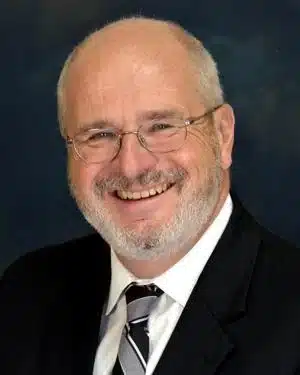
State Sen. Gary Byrne is a self-described Christian conservative who promotes legislation based on a fundamentalist interpretation of Christianity. Does that make him a Christian nationalist? It’s probably the wrong question, according to experts on the topic.
Labeling politicians as Christian nationalist opens the door to tricky questions about their motives, they say. And it ignores the fact that Christian nationalism isn’t just one thing.
Matthew Taylor, a visiting scholar at the Center on Faith + Justice at Georgetown University, says Christian nationalism exists on a spectrum. At one end are religious ideologues like Indiana Lt. Gov. Micah Beckwith. At the other are the “God Bless America crowd” who think references to God and faith belong in the public sphere.
“People want to act as though Christian nationalism is a massive, coherent ideology,” he said. “The reality on the ground is, it’s much more likely to be sentimental, nostalgic, a sense of cultural belonging. People are reiterating narratives they’ve heard all their lives.”
Taylor said it’s not unusual for people on the Christian nationalism spectrum to not be especially religious. Byrne said he’s not involved with a particular church.
“It’s pretty common to have people involved in a Christian nationalist narrative, a Christian nationalist agenda, a Christian nationalist philosophy but not be very deep Christians themselves,” Taylor said. “If they’re a regular Fox News person, if they hang out in right-wing circles, it’s the media they consume, the cultural tribe they belong to.”
Taylor defines religious nationalism as “organized efforts by religious actors to exert influence over the government and sacralize the state through enacting their agenda.”

Andrew Whitehead, a sociology professor at Indiana University Indianapolis and lead author of the influential book “Taking America Back for God: Christian Nationalism in the United States,” offers a more detailed definition. He says Christian nationalism combines elements of traditional social hierarchy, racialized national identity, free-market capitalism, authoritarian social control and populist thinking or conspiracy theories.
He said much of the legislation and ideas that Byrne has championed – restrictions on LGBTQ+ rights, diversity programs and sexuality education, for example – and the view that America is and has always been a Christian nation – are “examples of the ‘cultural baggage’ of the Christianity of Christian nationalism.”
As for Byrne himself? “I do not try to label folks as ‘Christian nationalist’ or not,” Whitehead said by email. “Rather, keeping the focus on Christian nationalism helps focus on the elements that these folks are interested in privileging in the public sphere.”
Matthias Beier, a professor of clinical mental health counseling and pastoral theology at Christian Theological Seminary in Indianapolis, said the values advanced in some of Byrne’s legislation are “very much at the heart of Christian nationalism today.”
He said, “If it walks like a duck and it quacks like a duck, then it is a duck.”
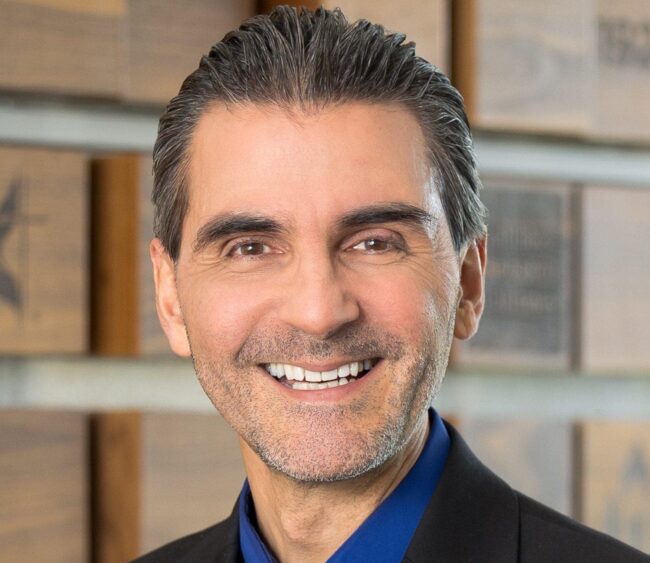
Beier, who has debated Beckwith on Christianity and Christian nationalism, sees the senator and lieutenant governor as aligned in trying to impose their ideological values through government action.
“Beckwith is very outspoken about infusing his understanding of Christianity into legislation, where I think Byrne is more quiet,” he said. “Byrne seems to think these are bread-and-butter traditional American values.”
As a theologian, Beier argues that Christian nationalists promote policies that are at odds with the teachings of Jesus. “They preach punitive morality. He preached forgiveness,” he said.
Taylor, the Georgetown scholar, distinguishes between figures like Beckwith – “activists for whom this is very deep and very ideological” – and public officials like Byrne, who may be responding to cultural and Republican party expectations. But both types matter.
“In order for Christian nationalism to flourish in the country, it doesn’t require every one of its political allies to be ideological,” he said. “It can just create the right pressure and the right incentives for politicians to be in line.”
Steve Hinnefeld is a freelance writer based in Bloomington. He formerly was an adjunct instructor at the Media School at Indiana University, a media specialist at Indiana University and reporter for the Bloomington Herald-Times. He has had no affiliation with the Media School since spring 2022.
Dwight Adams, an editor and writer based in Indianapolis, edited this article. He is a former content editor, copy editor and digital producer at The Indianapolis Star and IndyStar.com, and worked as a planner for other newspapers, including the Louisville Courier Journal.
The Indiana Citizen is a nonpartisan, nonprofit platform dedicated to increasing the number of informed and engaged Hoosier citizens. We are operated by the Indiana Citizen Education Foundation, Inc., a 501(c)(3) public charity. For questions about the story, contact Marilyn Odendahl at marilyn.odendahl@indianacitizen.org.