By Marilyn Odendahl
The Indiana Citizen
April 24, 2026
During Tuesday’s ceremonial signing of Senate Enrolled Act 285, which has been described by critics as criminalizing homelessness, Gov. Mike Braun talked about what he saw when he was a state legislator, which illuminated the issue public officials and nonprofit advocates have long grappled with: What is the best way to help people living on the street?
Braun, elected to the Indiana House in 2014, recalled walking around Indianapolis and seeing an increase in the number of homeless people in 2017.
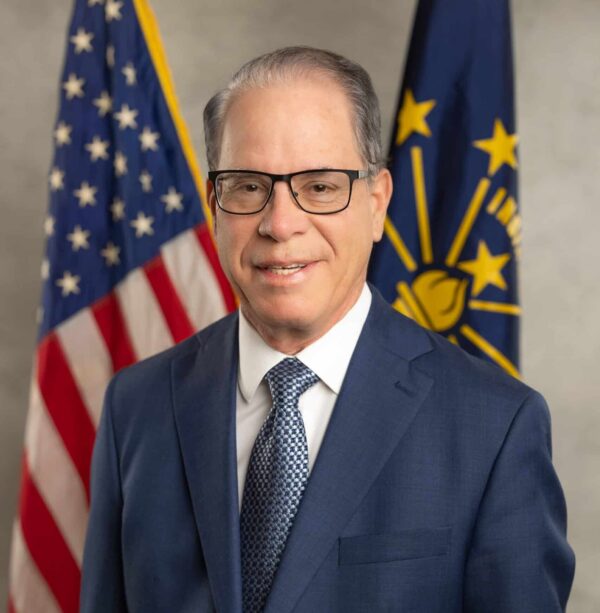
“I distinctly remember just between (the Statehouse) and the Circle that we had an issue,” Braun said after he signed the bill. “I think it’s been off and on and gotten generally worse over time.”
Part of the answer to helping the unhoused, Braun and other Republicans said, is SEA 285.
This bill, which was opposed in the Statehouse by Democrats and some Republicans, includes provisions that require law enforcement to issue a warning to anyone camping or sleeping on public property. If the individual has not moved within 48 hours, he or she could be arrested and charged with a Class C misdemeanor.
In previous legislative sessions, similar homelessness bills also included the provision that made street camping a crime. That language has been promoted by the Cicero Institute, a conservative think tank based in Texas.
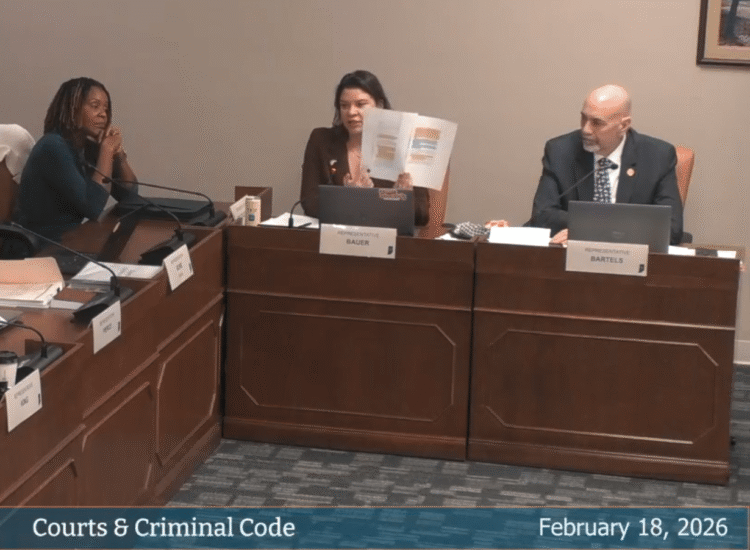
While SEA 285’s author Sen. Cyndi Carrasco, R-Indianapolis, said throughout the 2026 session that the measure was not a Cicero Institute measure and that she had “poured hours into writing every single word in this bill,” Paul Webster, senior fellow at the Cicero Institute, told The Indiana Citizen in January that the think tank had helped the senator with some of the language in the bill. Also, during the House Courts and Criminal Code Committee hearing on SEA 285 in February, Rep. Maureen Bauer, D-South Bend, held up a copy of the legislation with several passages highlighted, which, she said, matched the language from the institute.
Braun signed the legislation on March 5. The ceremonial signing took place in the governor’s office with Carrasco, SEA 205 co-author Sen. Eric Koch, R-Bedford, and House sponsor, Rep. Alex Zimmerman, R-North Vernon, watching. Afterward each lawmaker was presented with one of the pens used to sign the bill.
The law will take effect July 1.
In his remarks after the ceremony, Braun echoed the Cicero Institute’s criticism of the Housing First approach to homelessness. That policy is based on the belief that unhoused people need a permanent place to live before they can address other issues that can affect homelessness, such as unemployment and substance abuse. However, the Cicero Institute maintains the millions of dollars the federal government has invested in Housing First programs have done little to get people off the streets.
“Today, we’re highlighting a new approach, and I’m happy to sign this bill,” Braun said. “This law establishes a statewide prohibition on unauthorized camping on public land, and connects homeless Hoosiers to shelter, diversion and, most importantly, mental health services. Just like we all deserve safe streets, homeless Hoosiers deserve a clear path to shelter, treatment and health services.”
SEA 285 also establishes reporting requirements to receive funding under the federal continuum-of-care program, and mandates that law enforcement record the number of arrests made for street camping.
As the bill worked its way through the legislative session, two significant changes were made. First, the length of time a homeless person has to move from public property after receiving a warning from police was doubled from 24 hours to 48 hours. Second, a right of action that allowed a business owner, private citizen or the state’s attorney general to bring a civil lawsuit against a municipality that is not enforcing the prohibition against street camping was inserted – but later removed – from the bill before final passage.
SEA 285 drew a lot of opposition. A diverse group of nonprofits, such as Prosperity Indiana, Helping Veterans and Families of Indiana, the Greater Indianapolis Multifaith Alliance, and Indiana Coalition Against Domestic Violence, testified at the Statehouse against the bill, saying it would add more obstacles for homeless individuals and families to overcome.
The organizations’ leaders said the shelters, services and diversion programs that SEA 285 is counting on to serve the homeless who are taken off the streets are either at capacity or not available everywhere. Plus, they said, the bill does not include any funding to enhance or grow those services and programs. As a result, they worry that people will be thrown into the criminal justice system, accumulating charges and fines, simply because they have no place to live.
Carrasco and supporters of SEA 285 downplayed the prospect that homeless individuals would be put into jail. They said law enforcement and the courts would help these people get the treatment and assistance they need.
Yet, the Indiana Sheriffs’ Association remained opposed to SEA 285 as it progressed through the General Assembly.
Porter Count Sheriff Jeffrey Balon, president of the ISA, noted in his testimony to legislators that the arrest and charges come if homeless individuals do not move at least 300 feet from the spot where they received the warning from police. He foresaw people just relocating from one spot to the next to avoid being arrested, which would wear on business owners and private citizens, until they eventually demanded that homeless individuals be locked up.
Balon said incarcerating homeless Hoosiers would put additional stress on county jails. Unhoused individuals, he said, often have mental health issues, substance abuse issues and medical issues that the jails and staff would need to handle.
“I understand what the frustrations are, but us in the county jail becoming a homeless shelter, is not the answer, because it’s an added expense to our taxpayers,” Balon told the lawmakers.
Carrasco said her bill was intended to provide a compassionate response to homelessness. Also, she said, it rejected the notion that chronic homelessness can be addressed by only one means.

“Homelessness is a very complex issue with a wide spectrum of causes, and chronic homelessness often involves serious mental health and substance abuse challenges that require intervention and treatment,” Carrasco said during the House committee hearing. “It is not our role to judge the life choices people have made or the circumstances they have found themselves in. But we also cannot simply ignore a growing issue that impacts public safety, qualify of life and the well-being of individuals experiencing chronic homelessness in our communities.”
However, homeless advocates said their programs and services are already helping people get into permanent housing and become self-sufficient.
Chelsea Haring-Cozzi, CEO for the Coalition for Homelessness Intervention and Prevention, told lawmakers that the Streets to Home program in Indianapolis has helped transition more than 100 individuals from encampments into stable housing. The program is moving some people into permanent residences in 30 days or less and is working with “complex-needs care teams” to connect other unhoused people with severe mental health issues and substance use disorders to services.
Also, Mark Stewart, president of the United Way of Bartholomew County, testified that in Columbus in the past year, his organization had rehoused 144 homeless individuals and had prevented another 199 from becoming homeless. Of those, 94% remain stably housed today.
“We all know that overcoming homelessness involves real challenges, mental health needs, addiction, lack of transportation, limited job opportunities,” Stewart said. “Adding misdemeanors and fines does not remove those barriers. It adds new ones.”
Like Braun, some lawmakers expressed frustration over what they were personally seeing regarding homelessness.
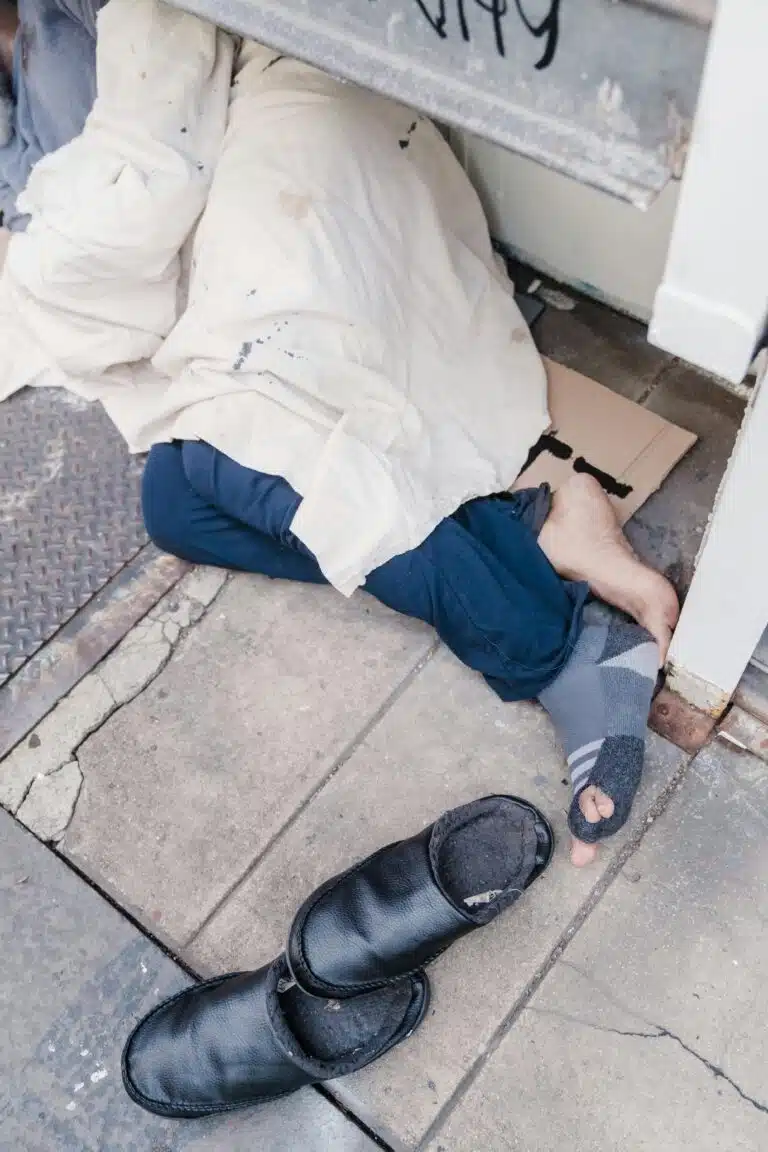
Rep. Wendy McNarama, R-Evansville, said she worked with then-Gov. Mike Pence and carried some of the first homelessness legislation in 2014. Yet, when she comes to Indianapolis for the legislative session, she said, she is having to step over feces and urine, and still seeing homeless people lying on the ground outside of downtown businesses.
“We’re 12 years later, still having the same conversations, and I don’t know what it’s going to take to resolve the issue and I’m perplexed and frustrated,” McNamara, chair of the House Courts and Criminal Code Committee, said during the hearing on SEA 285. “We never move forward.”
Rep. Renee Pack, D-Indianapolis, was frustrated by the support lawmakers were giving SEA 285.
Speaking on the House floor during the debate over Carrasco’s bill, Pack recounted her own experience as a homeless U.S. Army veteran. She was a single working mother with two children but was unable to afford a place to live until a police officer connected her to the township trustee. From there, Pack said she got enough money for four nights in a hotel, which gave her time to regroup and get a second job.
If SEA 285 had been on the books at that time, Pack said, she would have been taken to jail – and her children would have been placed in foster care.
“We’re creating problem on top of problem on top of problem for these individuals,” Pack said of the Hoosiers who are homeless, “and we do it here in our nice cozy, warm chamber.”
Dwight Adams, an editor and writer based in Indianapolis, edited this article. He is a former content editor, copy editor and digital producer at The Indianapolis Star and IndyStar.com, and worked as a planner for other newspapers, including the Louisville Courier Journal.
The Indiana Citizen is a nonpartisan, nonprofit platform dedicated to increasing the number of informed and engaged Hoosier citizens. We are operated by the Indiana Citizen Education Foundation, Inc., a 501(c)(3) public charity. For questions about the story, contact Marilyn Odendahl at marilyn.odendahl@indianacitizen.org