By Sydney Byerly
The Indiana Citizen
March 9, 2026
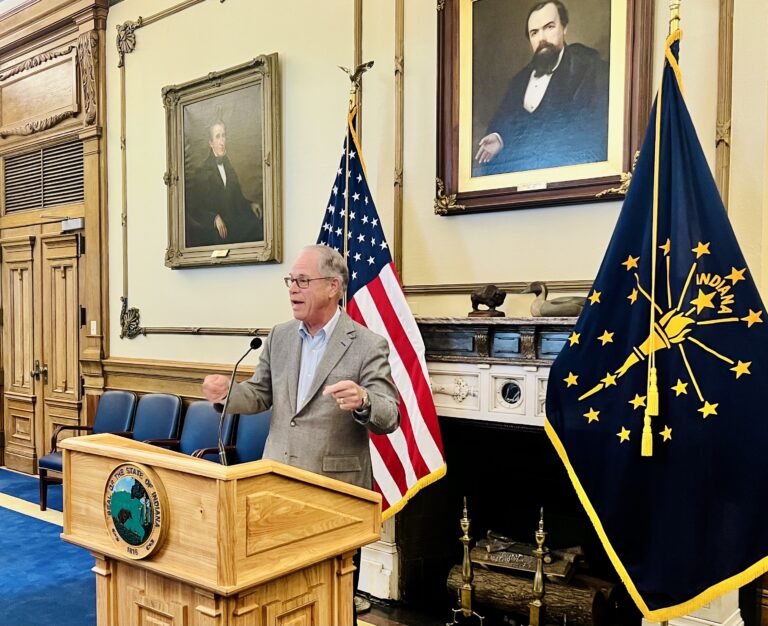
Gov. Mike Braun said Monday that he will allow a bill extending Indiana’s syringe services programs to become law without his signature, even as he warned against using such exchanges as “a crutch going forward” in addressing drug addiction.
“I’m not going to sign it, but I’m not going to veto it,” Braun, a Republican, told reporters at a Statehouse news conference when asked about Senate Enrolled Act 91.
Indiana first authorized syringe exchange programs in 2015 following an HIV outbreak in Scott County linked to shared needles among people injecting drugs. At the time, Braun — then a member of the state House — voted against the legislation creating the programs.
The bill extends the state’s legal framework for the syringe services programs currently in place in six counties while adding new restrictions. Indiana Senate Enrolled Act 91 extends the programs for five years. Without legislative action, Indiana’s authorization for the exchanges would have expired on July 1.
The governor said his administration worked closely with members of the Republican-dominated legislature to add provisions he considered necessary before allowing the bill to move forward. Among the changes he highlighted:
Braun said those additions made the bill acceptable enough for him to allow it to take effect. Under Indiana law, a bill approved by both the House and Senate becomes law if the governor takes no action within eight days.
Still, Braun said he views syringe exchange programs as addressing a symptom of addiction rather than its underlying causes.
“I think that’s treating a symptom, and we need to get at the underlying issue of what it was done for in the first place, to where you don’t use that as a crutch going forward,” the governor said.
Rep. Ed Clere, the House sponsor of Indiana Senate Bill 91, said he appreciated Braun’s decision to allow the measure to take effect.
“I understand that it’s a difficult issue for a lot of people, including the governor, and I appreciate his willingness to allow these life-changing — and in many cases lifesaving — programs to continue,” Clere, R-New Albany, said.
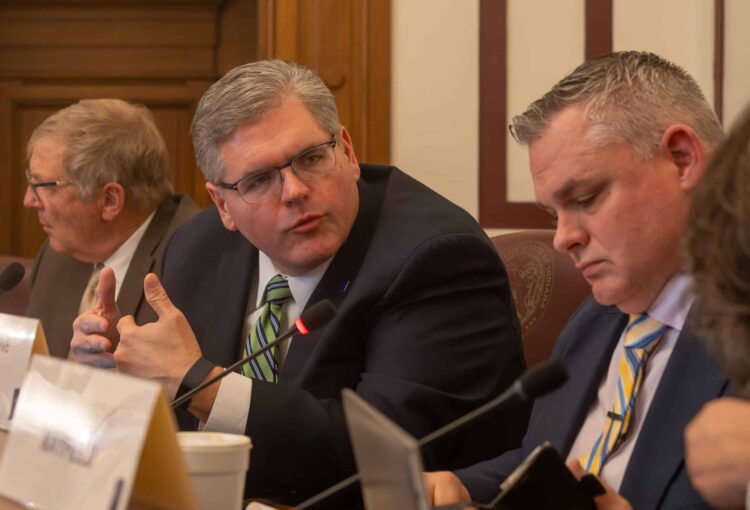
Clere authored Indiana’s original syringe exchange law in 2015 following a major HIV outbreak in Scott County linked to shared needles among people who inject drugs.
“For more than a decade, syringe programs have provided a lifeline for vulnerable individuals and communities throughout Indiana,” Clere said. “Although the new requirements will present challenges, they will also create opportunities for important stakeholder conversations and engagement, which should lead to greater understanding and support.”
Syringe services programs allow participants to safely dispose of used needles and receive sterile ones, while also offering testing for diseases such as HIV and hepatitis C, overdose prevention supplies and referrals to addiction treatment.
The programs have drawn sharp debate among lawmakers, public health experts and prosecutors. Supporters say syringe exchange programs reduce the spread of infectious disease and connect people with treatment services. Critics argue they risk enabling illegal drug use and contributing to the quantity of discarded needles in communities.
Sydney Byerly is a political reporter who grew up in New Albany, Indiana. Before joining The Citizen, Sydney reported news for TheStatehouseFile.com and most recently managed and edited The Corydon Democrat & Clarion News in southern Indiana. She earned her bachelor’s in journalism at Franklin College’s Pulliam School of Journalism (‘Sco Griz!).
The Indiana Citizen is a nonpartisan, nonprofit platform dedicated to increasing the number of informed and engaged Hoosier citizens. We are operated by the Indiana Citizen Education Foundation, Inc., a 501(c)(3) public charity. For questions about the story, contact Marilyn Odendahl at marilyn.odendahl@indianacitizen.org.