This story was originally published by Public News Service.
By Terri Dee, producer
Public News Service
May 4, 2026
The League of Women Voters Indianapolis chapter echoes predictions that Tomorrow’s primary elections could be one of the most closely monitored in the state’s history.
The decades-old bipartisan voting organization is urging Hoosiers to make informed decisions when casting their vote.
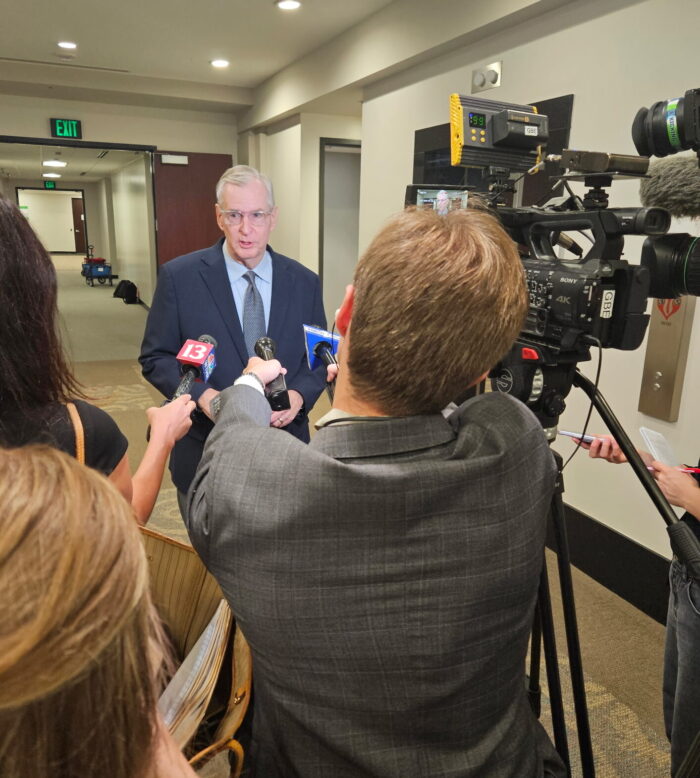
Erin Kelley is a member of the Indianapolis chapter board of directors and said it’s important that voters understand what matters to them. She encouraged voters to conduct research using a mix of non-partisan, non-ideological sources on their candidates of choice.
“Is the source that I’m going to, to find this information, a source that I can trust?” said Kelley, “And then looking at the candidate responses, and casting a critical eye on those too and trying to determine, did they really answer the question?”
She added that sometimes you have to parse apart the language to figure out if the candidate has addressed the issue brought up for discussion.
The League of Women Voters has created the non-partisan site lwv.org/elections/vote411. The viewer can read responses taken from a posted questionnaire and answered in the candidate’s own words.
Kelley said the “mechanics” of voting – like assistance with registration, finding credible places to learn about candidates, and locating polling sites – comprise most of the calls and emails the organization receives.
She added that voting is just one way to participate in democracy because it attracts attention, but other methods can be equally or more impactful.
“Attending public meetings, asking questions of candidates and of ourselves, is important,” said Kelley. “It’s important to stay informed, and it’s important to work together as a community to come up with solutions.”
Kelley said she believes people should not rely on others to fix things, but rather come together to propose their own solutions and do the work to make sure democracy thrives.
She said she also views democracy as “participatory” and is based on the premise that citizens actively need to engage in their own governance, and going to the polls on Election Day is a key part.
Public News Service is a national newswire with a local focus. Through a network of state-based newswires, PNS reports state-level, public interest news and seeks to help the average American answer the question, “how does this news impact me today?”