By Matthias Beier
April 26, 2026
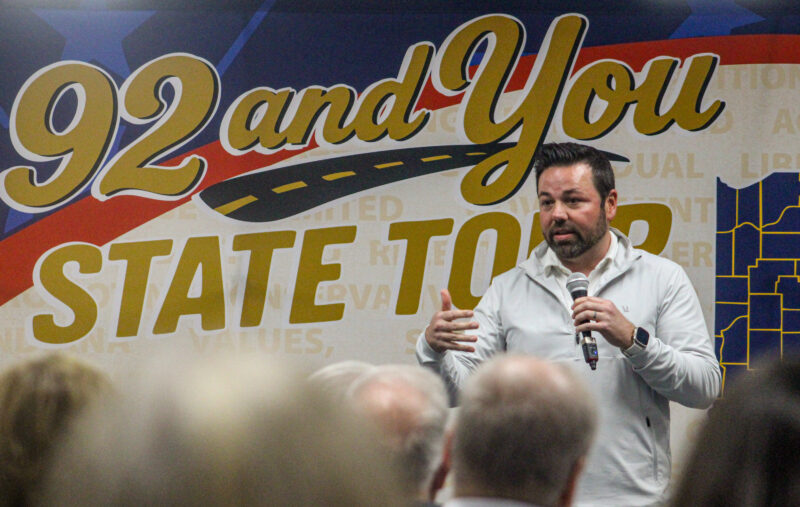
I have worked with many victims of spiritual abuse. Lt. Gov. Micah Beckwith is creating more of them.
I debated Beckwith last year on the subject of Christian Nationalism (see our IndyStar debate here). In attacking Westfield High School students and administrators as demonic, he has crossed the dangerous line into spiritual abuse.
The Salem witch trials are not as far behind us as we like to think. We are watching a new edition unfold. This time in Indiana.
Micah Beckwith sees demons everywhere. That should give us serious pause. History has shown us where this kind of thinking leads. In Salem, fear of “demonic influence” justified the persecution and execution of innocent women.
The pattern is always the same: a person becomes afraid of their own inner impulses, projects them outward, and then tries to destroy them in others.
Demonizing is not just rhetoric. It is a form of spiritual abuse.
Beckwith’s worldview is deeply medieval. He treats demons as if they were real and tangible, like an animal. “You can’t pet a demon,” he likes to say. “You have to kill it.” But what he fails to recognize is that what he calls “demons” are, psychologically speaking, projections: of fears, particularly around desire, cast onto the world around him.
When you put on glasses shaped by fear, you will see fear everywhere. When you put on glasses shaped by absolute fears, you will see demons everywhere.
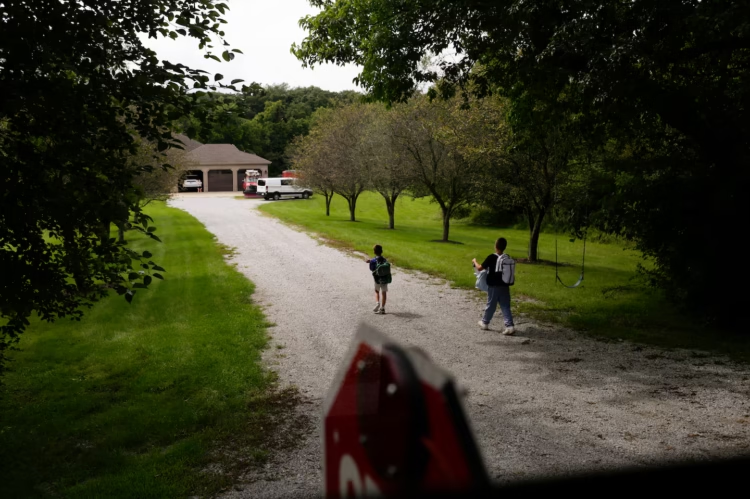
Beckwith’s recent targeting of children participating in a state percussion contest who were performing music from one of the world’s most exquisite operas, Carmen, should alarm all of us. His interpretation of artistic expression through the lens of demonic “seduction” and moral threat does not protect them. It is his anxiety masquerading as supposed moral clarity.
At its core, this mindset is about control. If I can label something as dangerous, as “demonic,” then I can justify restricting it. I can make others conform so that I feel safe. But the threat is not coming from the outside. It is coming from within.
Psychology has long understood this dynamic. What we see here is the mechanism of projection: unwanted desires or conflicts are disowned internally and then attributed to others. It can also take the form of obsessive attempts to control thought, behavior, and culture to manage inner tension.
In this light, putting the language of demons on others is an attempt at self-justification. It creates a framework in which fear can be externalized and power can be exercised over others.
Mainline churches have recognized long ago that this path is self-defeating. When religion becomes a tool of fear and control, it eventually collapses under its own weight. People begin to see through the projections. And when they do, they often walk away entirely. Evangelicals are increasingly leaving churches for that very reason as well.
There is real danger in this spiritual abuse, both for individuals and to the credibility of faith itself. Individuals’ psyches can get mutilated when they feel demonized by others. In fact, the very dynamic of demonization, of projecting absolute fears on others and then controlling them, is what creates ‘demons’ in the first place.
Public officials carry a huge responsibility. Using a position of authority to project personal struggles onto others, especially onto children and educators, is not leadership. It is intimidation.
Our children deserve better than to be cast as demons and subjected to spiritual abuse.
And our state deserves leadership grounded in reality, not fear.
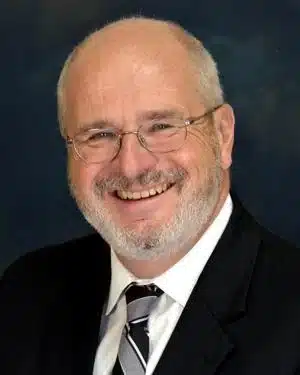
Matthias Beier, an associate professor of pastoral theology and mental health counseling at Christian Theological Seminary in Indianapolis, illuminates harm or health of current events in religion and society. A psychoanalyst, sociologist, professor, writer, and speaker, he has published three books and numerous articles on religion, mental health and cultural discourse. This commentary and his other writing can be found on his Substack site.
The views and opinions expressed are those of the author only and do not necessarily reflect the views of The Indiana Citizen or any other affiliated organization.