By Ronak Mohanty
The Exponent
May 1, 2026
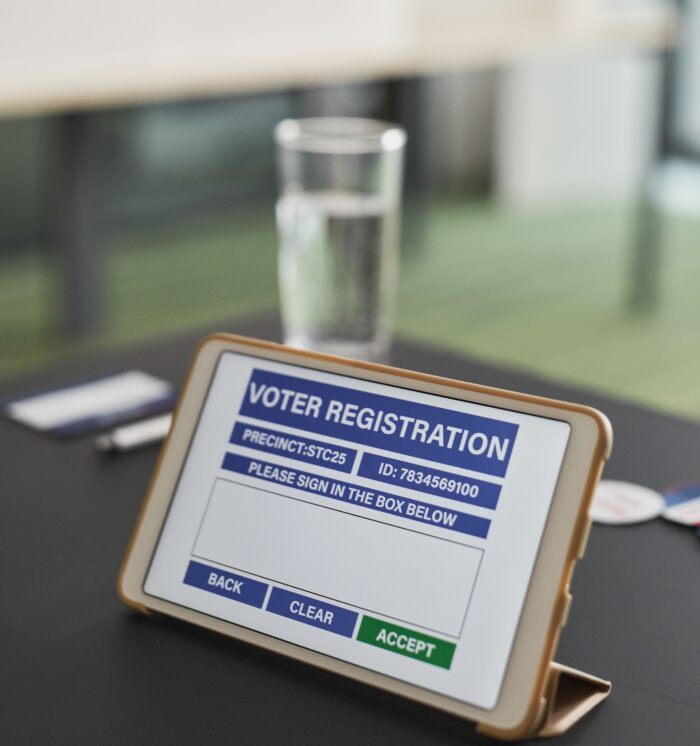
Despite Indiana’s May 5 primaries featuring a slew of contested races, many Purdue students may struggle to vote. Thanks to Senate Enrolled Act 10, passed last April, student IDs issued by Indiana public universities are no longer an acceptable form of voter identification in the Hoosier State.
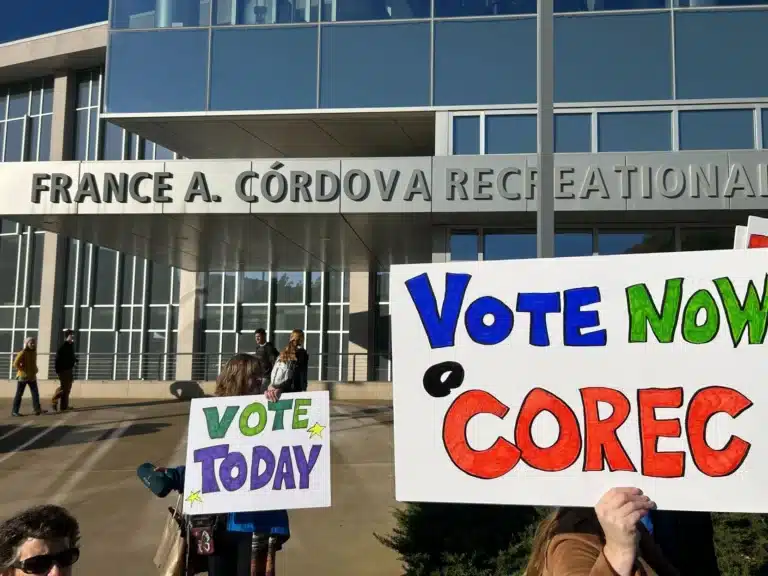
The law had been blocked by a district court judge which allowed students at Indiana’s public colleges to vote using their student IDs. The 7th U.S. Circuit Court of Appeals then reversed that decision on April 20, just one day before Purdue held early voting in the CoRec.
Republicans, such as current attorney general, Todd Rokita, celebrated the latest court ruling.
“This common sense protection is needed to close loopholes, prevent potential fraud by out-of-state or ineligible voters, ensure every ballot belongs to a verified Hoosier, and preserve public confidence in fair, honest, and transparent elections,” Rokita said in a X post.
While Rokita justified the necessity of the ban by citing voter fraud concerns, such concerns are not valid according to Purdue political science professor James McCann.
“It’s absolutely clear that voter fraud is all but nonexistent. So there is no problem to correct with voting fraud, and that’s based on years and years of assessment,” McCann said. “So if the stated rationale was to somehow correct problems with voter fraud, we can be confident in saying there are no such problems to begin with.”
McCann said that he did expect the law to depress turnout, and that generally more voter ID requirements come with the potential to reduce turnout
“In principle, the point of having an ID is just to demonstrate who you are,” McCann said, “It’s not to validate your standing as a resident in the area, or your citizenship status, or anything like that. That’s all done at the time of registration.”
In 2024 Purdue faced controversy when the university and Tippecanoe County Election Board got into a dispute that put the on-campus voting location in jeopardy. After an outcry from students, faculty, and community members, the voting site at the CoRec.
Tippecanoe County opened an early voting site on the Purdue campus on April 21 and adjacent to the university at the First United Methodist Church on Mitch Daniels Boulevard two days later.

Mike Smith, conservation agriculture specialist for Tippecanoe County and a member of the election board, said 130 people cast a ballot at the CoRec, of which 37 were under 25, and another 117 voted at the Methodist church, of which 21 were under 25. The election board believes that voters under 25 are more likely to be students.
During those two days, only one person attempted to vote with a student ID. Election officials said the student was counseled on how to get a free state ID at the Indiana Bureau of Motor Vehicles.
One of the law’s supporters, State Sen. Spencer Deery, a Republican, whose district includes West Lafayette, will be on the ballot, and is facing a stiff primary challenge from Trump-backed insurgent Paula Copenhaver.
Deery, who voted for SEA 10, defended his support of the law.
“Having seen first-hand in my career the university resources required to produce voter-eligible IDs, I have always thought that universities should focus on education and research and let the government handle IDs. All students should and can get free voter identifications from the BMV.”
While students can get identification from the BMV, Kye Benford, a PSG senator representing the honors college, still believes that this causes more hardship for student voters.
Benford, a sophomore, double majoring in political science and communication, pointed out that there aren’t any BMV locations near campus. The nearest branch is located in Lafayette on Elmwood Avenue just nine minutes from campus by car. By bus, which costs money, the route takes over half an hour or students can simply walk an hour to the BMV.
“You have to show your paperwork that proves not only you’re a citizen, but also that you’re a resident of Indiana,” Benford said. “It’s just a lot of these extra steps that were completely unnecessary when everything was working before.”
Emre Gulec, the current president of the Purdue Political Discourse Club, also expressed concerns. “(If) you put more barriers to entry, fewer people are going to vote, and that will shape outcomes.”
Gulec, a junior in economics and political science, said that while both parties do things to shape the vote, in this case “it’s about creating friction to boost Republican outcomes is what I think.”
Democrat candidate for the state Senate District 23 David Sanders, an associate professor of biology at Purdue and the current at-large city councilor of West Lafayette, said he had heard disappointment about the 7th Circuit decision from both student and non-student constituents. Sanders also contrasted the choice with Purdue’s civic literacy requirement.
“We now have a civic literacy requirement here as a graduation requirement at Purdue,” Sanders said. ”What’s the point of encouraging civic literacy, if when students are trying to exercise their civic rights, their civic responsibilities, they’re discouraged from doing so. (That) seems contradictory to me.”
Despite the added burdens on Purdue students voting, Benford was optimistic that the ban could motivate students to make their voices heard at the ballot box.
“I think it goes both ways in which one way it kind of defeats some motivation for students to vote here in Indiana … on the flip side of that it can also really be a motivating factor for students to get more involved, more engaged civically, with what’s going around here,” Benford said.
The Purdue Exponent is the independent student media organization serving the Purdue University community. It is published by the Purdue Student Publishing Foundation, a non-profit educational organization. For questions about the story, contact the editor-in-chief, Olivia Mapes, at editor@purdueexponent.org