By Marilyn Odendahl
The Indiana Citizen
May 1, 2026
With Wednesday’s ruling that is seen as weakening, if not outright killing, the prohibition against racial discrimination in the Voting Rights Act of 1965, the U.S. Supreme Court may have ushered in a new wave of midcycle redistricting not only across southern states but also, possibly, in Indiana.
The Supreme Court’s conservative majority overrode precedent and found a “proper interpretation” of Section 2 of the VRA requires proof of intent. Section 2 is violated only when the evidence supports the inference that a state “intentionally drew” its congressional and legislative districts on the basis of race in order to give minority voters “less opportunity” to elect the representatives of their choice, according to the Supreme Court majority.
Justice Samuel Alito wrote the majority opinion in Louisiana v. Callais, which was joined by Chief Justice John Roberts and Justices Clarence Thomas, Neil Gorsuch, Brett Kavanaugh and Amy Coney Barrett.
Justice Elena Kagan wrote a blistering dissent, joined by Justices Sonia Sotomayor and Ketanji Brown Jackson.
Kagan recounted VRA history when Congress, responding to a narrow reading of Section 2 by the Supreme Court, amended the law to ban racially discriminatory electoral maps regardless of the intent. Just three terms ago, she noted, the Supreme Court preserved that provision, declining to revise its “Section 2 jurisprudence for nearly forty years.”
However, Kagan asserted, with Callais, the Court is now revising its stance, even though nothing has changed.
“It avails itself again of the tools used before to dismantle the Act: untenable readings of statutory text, made-up and impossible-to-meet evidentiary requirements, disregard for precedent, and disdain for congressional judgment,” Kagan wrote in her dissent. “And in that way it greenlights redistricting plans that will disable minority communities – in Louisiana and across the Nation – from electing, as majority communities can, ‘representatives of their choice.’”
A day after Callais was issued, Louisiana became the first state in what is expected to become a rush of Republican-led states to redraw their congressional district maps before the 2030 decennial census.
Louisiana Gov. Jeff Landry, a Republican, suspended the state’s May 16 congressional primary, so a new district map could be crafted and passed by the legislature this year. In a press release issued Thursday, Landry said the Supreme Court’s decision effectively prohibits Louisiana from using the now invalidated map.
“Allowing elections to proceed under an unconstitutional map would undermine the integrity of our system and violate the rights of our voters,” Landry said in the release.
Some believe the redistricting fever could spread to states that have previously resisted redrawing their congressional district maps midcycle.
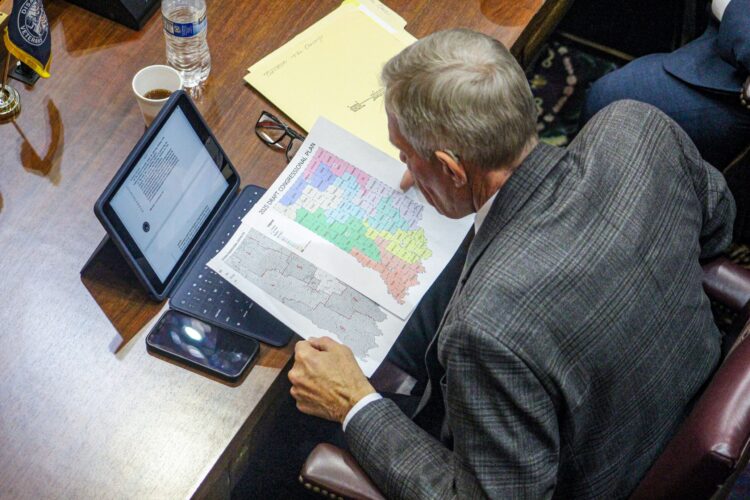
The Trump administration began pressuring red states to redraw their congressional district maps in 2025 to give an advantage to GOP candidates and help Republicans retain control of Congress in this year’s midterm election.
Indiana received a full-court press to redistrict from the White House. Vice President JD Vance visited the state twice and members of the legislature’s GOP caucus were invited to Washington, D.C., to meet with other Trump administration officials. Even so, the Indiana Senate rejected the new map with 21 Republicans joining the chamber’s 10 Democrats in voting no.
Seven of those Republican state senators are now locked in fierce primary battles with opponents endorsed by Trump and supported by well-funded political action committees.
Sabato’s Crystal Ball, a publication of the Center for Politics at the University of Virginia, also sees Callais as adding more fuel to the redistricting wars. Already eight states, including the three most populous – California, Texas and, most recently, Florida – have either drawn new congressional district maps in advance of the 2026 midterm election or are likely on the verge of doing so.
“The other thing this ruling guarantees – which seemed very likely to be the case anyway – is that the redistricting fight of 2025-2026 will spill into 2027-2028,” Sabato’s analysis said. “Beyond reckoning with Callais, states that opted not to redistricting in 2026, such as Indiana on the Republican side or Maryland on the Democratic side, could try again 2028.”
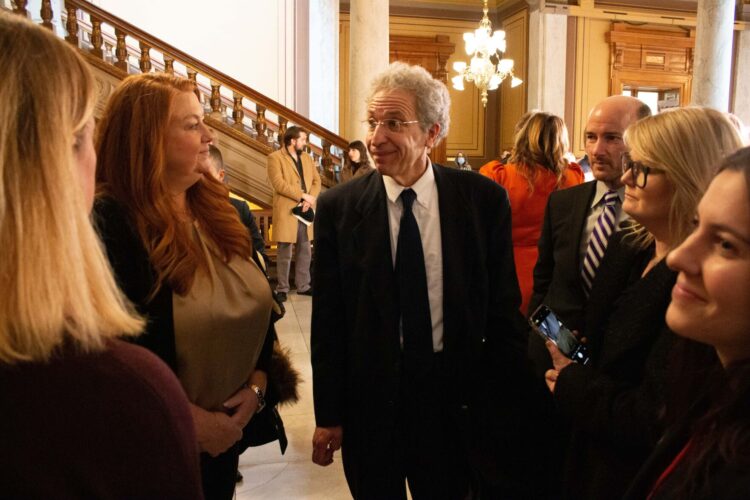
Indiana Senate Democratic Leader Shelli Yoder, of Bloomington, agreed the decision would spark redistricting in states across the country. In a statement, she said that after Callais, unfair maps will be easier to draw but more difficult to challenge.
“(Callais) opens the door for maps across the country that are less representative and less accountable to the people they serve,” Yoder said. “Here in Indiana, Hoosiers have already seen what happens when communities are carved up and stretched across districts for political advantage. They rejected it because they understand a simple truth: representation only works when it reflects real communities.”
However, some on the right celebrated the Supreme Court’s ruling.
Adam Kincaid, president and executive director of the National Republican Redistricting Trust, said Callais restores the promise of the Constitution that all men are “entitled to equal protection under the law regardless of their race.”
“For decades the left has spent hundreds of millions of dollars seeking to divide Americans along racial lines in a cynical pursuit of partisan power masquerading as civil rights enforcement,” Kincaid said in a statement posted on X. “Today’s decision rebukes that divisive and unconstitutional effort. Race based redistricting is an odious practice prohibited by our colorblind Constitution and now the Supreme Court has restored the Voting Rights Act to its proper context.”
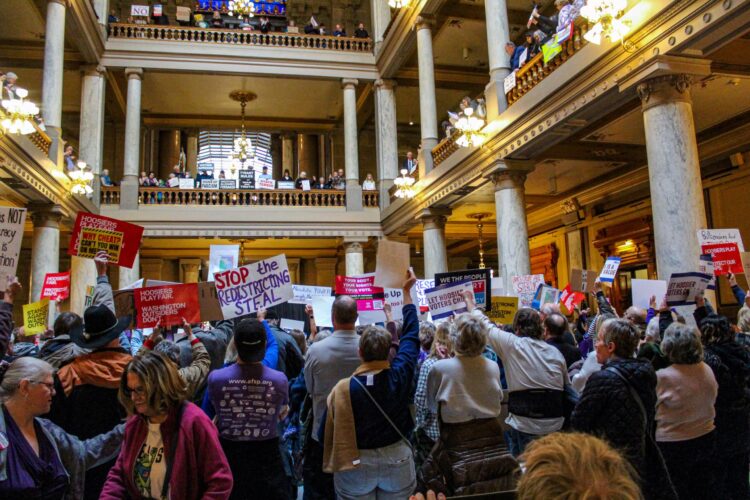
The Callais ruling affirmed the 5th U.S. Circuit Court of Appeals’ finding that Louisiana’s second attempt at drawing a congressional district map based on 2020 U.S. Census data was an “unconstitutional racial gerrymander.”
Louisiana reconfigured its congressional boundaries to accommodate the population shifts indicated by the decennial census numbers. All six districts were redrawn and the single majority-Black voter district was retained. However, the NAACP and a group of individual voters filed a lawsuit, claiming the map violated Section 2 of the VRA because Black voters were packed into one district. The appellate court agreed in a 2023 decision and Louisiana was required to draw a new map with two majority-minority congressional districts.
The second map was challenged by a group of “non-African-American voters,” with Phillip Callais as the lead plaintiff. They argued that having two majority-minority districts constituted racial gerrymandering that violated the 14th Amendment’s Equal Protection Clause.
In the majority opinion, Alito asserted the federal court which heard the first challenge to Louisiana’s district map cast aside the fact that the plaintiffs did not provide any evidence that Black voters has faced intentional discrimination in recent years.
“The focus of Section 2 must therefore be on ‘current conditions,’ not on ‘decades-old data relevant to decades-old problems,’” Alito wrote quoting from the Supreme Court’s 2013 ruling in Shelby County v. Holder, which struck down as unconstitutional Section 5 of the Voting Rights Act. “And none of the historical evidence presented by plaintiffs came close to showing an objective likelihood that the State’s challenged map was the result of intentional racial discrimination.”
Kagan assailed the majority’s reasoning in her dissent.
The liberal justice asserted minority voters will now likely lose any Section 2 claim, since proving the districts were drawn to intentionally discriminate against people of color, rather than to dilute the votes of a particular political party, will be practically impossible. As a result, she continued, the majority-minority districts created in the past 40 years by the VRA will be cracked and minority voters will no longer have an equal opportunity to elect the candidates of their choice.
The Callais requirements have thus laid the groundwork for the largest reduction in minority representation since the era following Reconstruction,” Kagan wrote. “Under cover of ‘updat(ing)’ and ‘realign(ing)’ this greatest of statutes, the majority makes a nullity of Section 2 and threatens a half-century’s worth of gains in voting equality.”
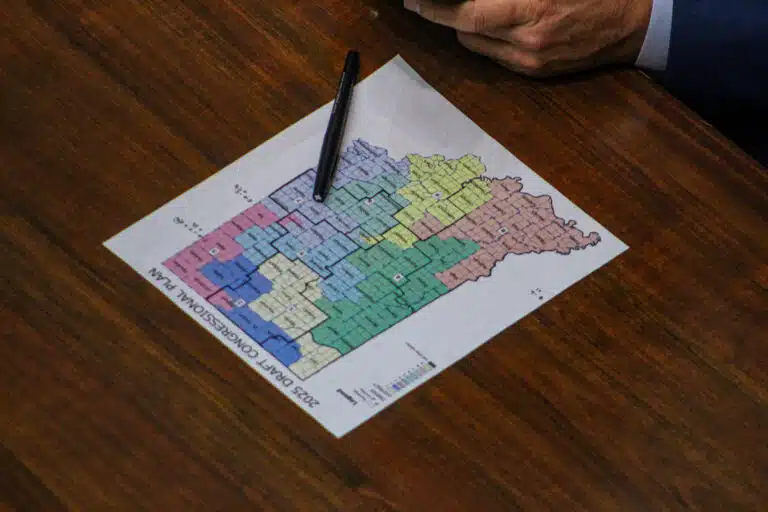
In a statement following the Callais decision, Indiana House Democratic Leader Phil GiaQuinta, of Fort Wayne, pointed out the map proposed as part of last year’s failed redistricting attempt broke apart the 7th Congressional District, which encompasses most of Indianapolis. The district, which is 31% Black and 16% Hispanic, is represented by Democrat Andre Carson, the only minority in Indiana’s congressional delegation.
GiaQuinta noted in that proposed map pieces of Indianapolis would have been sprinkled into four separated, largely rural districts that stretched into different areas of the state. Also, Lake County and other major cities across the state were carved up.
“(The) Supreme Court decision will drown out minority voices by allowing partisan maps that carve up majority-Black districts for pure political gain and rigging elections before they even happen,” GiaQuinta said in a statement. “This ruling violates the spirit of the Voting Rights Act.”
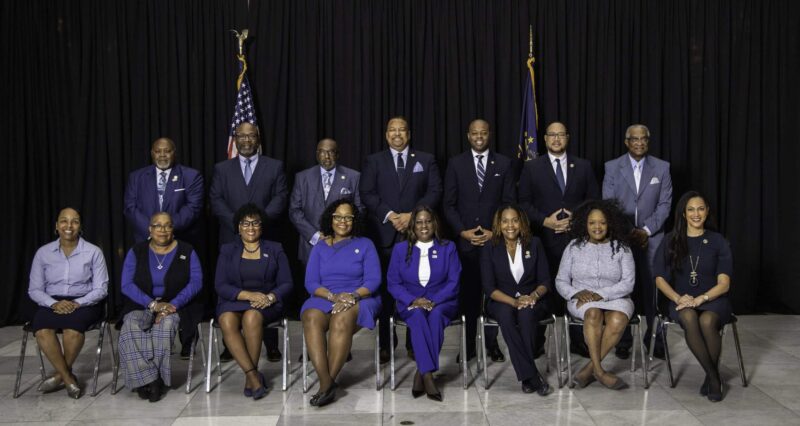
The Indiana Black Legislative Caucus condemned the Supreme Court’s ruling. In a statement, the caucus said the ruling “further guts” the Voting Rights Act.
“(The Callais) decision is yet another blow in a decades-long attack on the Voting Rights Act and on minority Americans’ ability to have a voice in their communities and national government,” state Rep. Earl Harris Jr., chair of the IBLC, said. “Louisiana v. Callais will be used to silence minority voices and uphold the violent white supremacy that has marred our nation from its inception.”
Dwight Adams, an editor and writer based in Indianapolis, edited this article. He is a former content editor, copy editor and digital producer at The Indianapolis Star and IndyStar.com, and worked as a planner for other newspapers, including the Louisville Courier Journal.
The Indiana Citizen is a nonpartisan, nonprofit platform dedicated to increasing the number of informed and engaged Hoosier citizens. We are operated by the Indiana Citizen Education Foundation, Inc., a 501(c)(3) public charity. For questions about the story, contact Marilyn Odendahl at marilyn.odendahl@indianacitizen.org