By Sydney Byerly
The Indiana Citizen
March 5, 2026
Gov. Mike Braun’s executive order creating a Faith-Based Institutions Initiative spearheaded by Lt. Gov. Micah Beckwith is being met with concern by some religious leaders and advocates for the separation of church and state.
While some faith leaders say houses of worship have long played a critical role in serving vulnerable Hoosiers, others say the initiative’s lack of structure — and Beckwith’s past statements about integrating Christianity into governance — raise constitutional and equity questions.
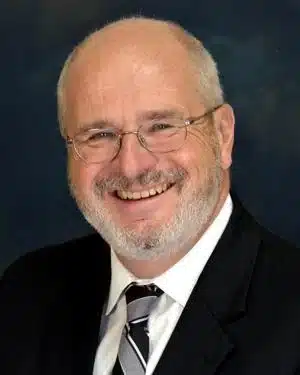
“Faith communities absolutely belong at the table,” said Pastor David Greene, who leads an Indianapolis congregation and is running for the state Senate as a Democrat. “However, we will be watching closely to ensure it honors both our Constitution and the full dignity of all people.”
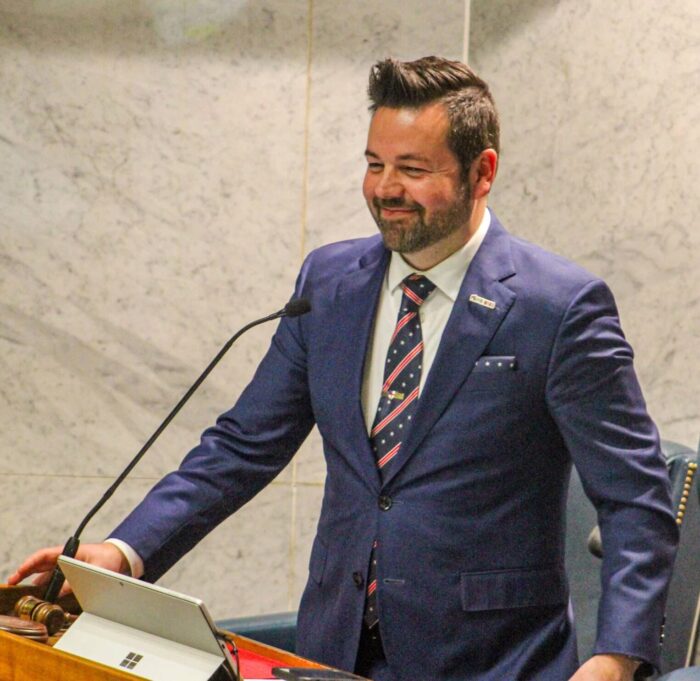
The executive order directs Beckwith to consult with faith leaders and recommend ways to “reduce barriers” to their participation in addressing issues such as addiction recovery, prisoner reentry, mentorship, foster care and adoption.
The order does not specify which faith traditions or organizations will participate, and it does not outline criteria for how they would be selected. It also remains unclear whether the initiative will involve any new state funding beyond the existing budget for the lieutenant governor’s office.
Neither Braun nor Beckwith responded to requests for comment about how participating organizations will be selected or whether the initiative will include non-Christian faith traditions.
Beckwith, however, promoted the initiative in a social media post announcing the executive order, saying it recognizes the long history of religious institutions providing community support.
“These organizations have served as cornerstones of community life since our state’s founding by offering mentorship, compassion, and hands-on support to neighbors in need,” Beckwith wrote.
He added that empowering faith-based organizations “strengthens families, enhances civic engagement and broadens pathways to opportunity across our state.”
Greene, who is running in the 29th District currently represented by state Sen. J.D. Ford, a Democrat who is running for Congress, said faith-based institutions have long stepped in when government systems have fallen short.
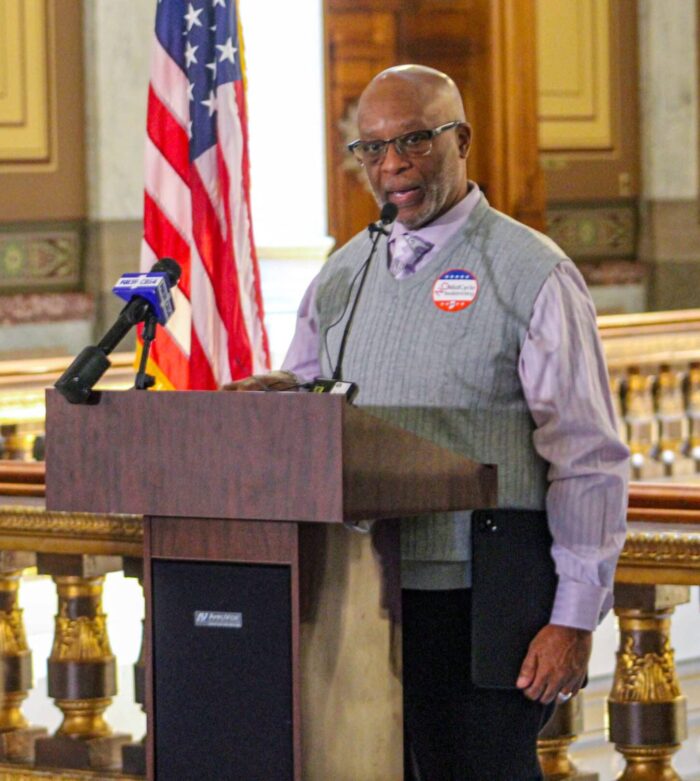
“We mentor young people, support returning citizens, train adults in mental health first aid, walk families through addiction recovery, and stand in the gap when systems fall short,” Greene said.
But Greene cautioned that leadership and structure matter.
He said concerns stem in part from Beckwith’s past remarks about Christian nationalism and his repeated calls to integrate Christian beliefs into public governance.
“When an initiative centered on ‘principled morals’ and ‘strengthening families’ is placed under the leadership of someone who has previously used language that many Hoosiers, particularly in the Black community, experienced as dehumanizing, it raises legitimate concerns about trust and inclusion,” Greene said referring to when Beckwith previously called the Three-Fifths compromise a “great move” that helped end slavery.
The Indianapolis pastor added that if the initiative is intended to expand opportunity, it must be inclusive of all faith traditions, transparent in how resources are distributed and protective of constitutional boundaries between church and state.
“Public policy must serve the common good, not advance a narrow ideology,” Greene said. “Good intentions are not enough. Hoosiers deserve measurable outcomes, transparent leadership and policies that serve everyone, not just some.”
Some advocates for church-state separation say the language in the executive order raises constitutional red flags.
Evan Davis, a member of Hoosiers United for the Separation of Church and State, a group based in Fort Wayne, pointed to the executive order’s directive to “reduce barriers to effective participation of faith-based institutions.”
“Beckwith does not demonstrate that faith-based institutions are discriminated against in providing social services,” Davis said. “Given his acknowledged identity as a Christian nationalist, it can be assumed that instead of reducing discrimination, Beckwith wants to create it by steering state funds toward faith-based groups that may not otherwise deserve them.”
Davis said both the U.S. and Indiana constitutions place limits on government involvement with religion.
“If faith groups are favored by the state, that will pressure other groups seeking state support to present themselves as faith groups,” he said. “That would either be a lie or a form of forced conversion — hardly free exercise of religion.”
Rabbi Aaron Spiegel, the executive director and president of the Greater Indianapolis Multifaith Alliance, also questioned both the logistics and intent of the initiative.
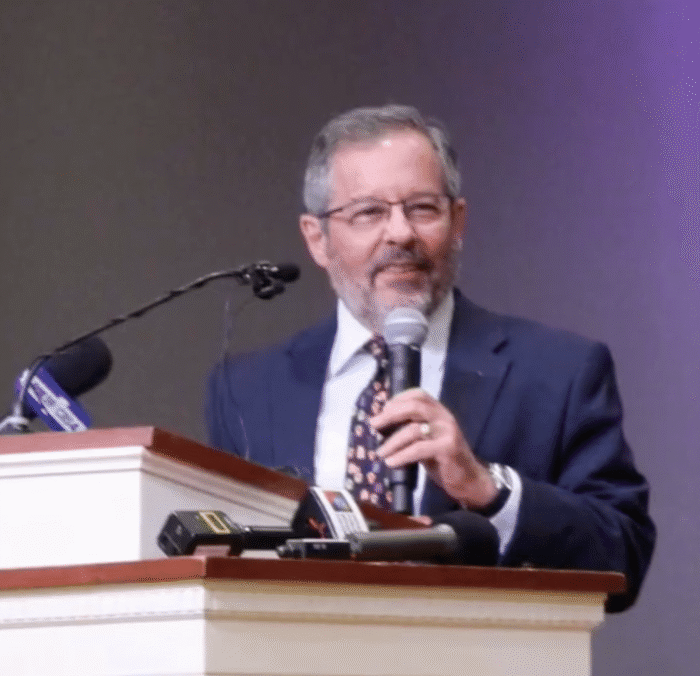
“It’s a horrible idea and all they need to do is go back to Bush Jr.’s attempt to do the same,” Spiegel said, referring to the faith-based initiative launched under former President George W. Bush, who in 2001 created the White House Office of Faith-Based and Community Initiatives to expand partnerships between government and religious organizations delivering social services.
That effort, Spiegel said, showed how difficult it can be for congregations to operate large government-funded programs.
“The assumption that faith-based organizations, including and especially congregations, have the capacity to handle social services is ridiculous,” he said. “Many couldn’t even handle the requirements of the grant tracking, let alone the actual work.”
He also expressed concern that religious conditions could become attached to services funded by public dollars.
“If it’s private assistance, that’s legal,” Spiegel said. “If and when it crosses over to providing the aid that should come from the state — then I think that crosses the line.”
The executive order also follows Beckwith’s earlier push for state funding to support faith-based initiatives.
During the 2025 legislative session, Beckwith requested $3 million in state funding to expand faith-based programming tied to addiction recovery and other social services. Lawmakers ultimately left that request out of the final state budget amid broader spending constraints.
In announcing the new initiative on social media, Beckwith thanked Braun for signing the order and said the effort would strengthen the role of faith-based organizations in serving Hoosiers.
The initiative also aligns with Beckwith’s broader push to integrate faith into his approach to governance. In past remarks, Beckwith has urged believers not to separate faith from public life and has said aligning governance with a “Judeo-Christian ethic” is essential for the country to flourish.
He has also said he sees little distinction between his roles as pastor and politician, describing both as forms of “shepherding” people.
At the same time, Beckwith has rejected claims that he supports a theocracy, telling attendees at a Muncie town hall that he does not want to “shove Christianity down anybody’s throat.”
Sydney Byerly is a political reporter who grew up in New Albany, Indiana. Before joining The Citizen, Sydney reported news for TheStatehouseFile.com and most recently managed and edited The Corydon Democrat & Clarion News in southern Indiana. She earned her bachelor’s in journalism at Franklin College’s Pulliam School of Journalism (‘Sco Griz!).
The Indiana Citizen is a nonpartisan, nonprofit platform dedicated to increasing the number of informed and engaged Hoosier citizens. We are operated by the Indiana Citizen Education Foundation, Inc., a 501(c)(3) public charity. For questions about the story, contact Marilyn Odendahl at marilyn.odendahl@indianacitizen.org.