By Sydney Byerly
The Indiana Citizen
December 17, 2025
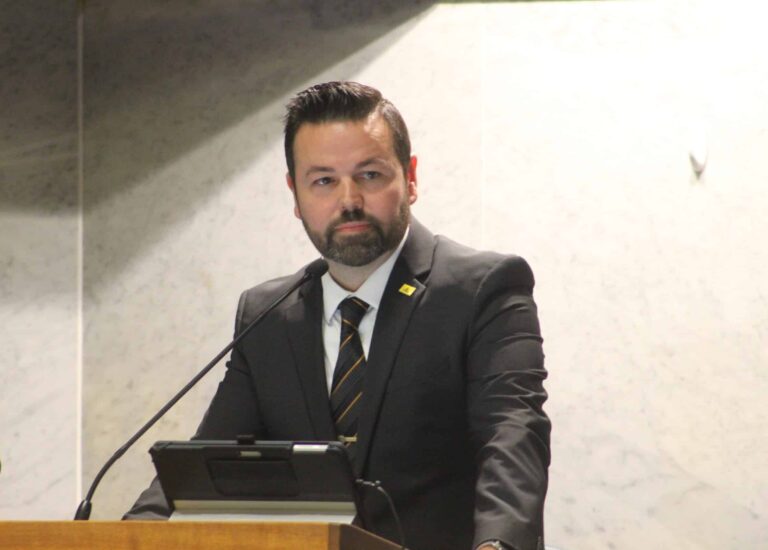
Lt. Gov. Micah Beckwith says a bill aimed at changing how Indiana’s candidates for lieutenant governor are selected – eliminating the role of party conventions, where he defeated Gov. Mike Braun’s hand-picked candidate to win the Republican nomination last year – is really about “taking away grassroots power.”
Beckwith’s comments, in a brief interview with The Indiana Citizen, come as Republican lawmakers seek to advance a measure that appears to target Beckwith and would prevent insurgent candidates like him from similarly claiming spots on future gubernatorial tickets.
Under House Bill 1022, the parties’ nominees for governor would instead choose their own running mates. The proposal would end the Republican and Democratic parties’ long-standing practice of selecting their lieutenant governor nominees at state conventions.
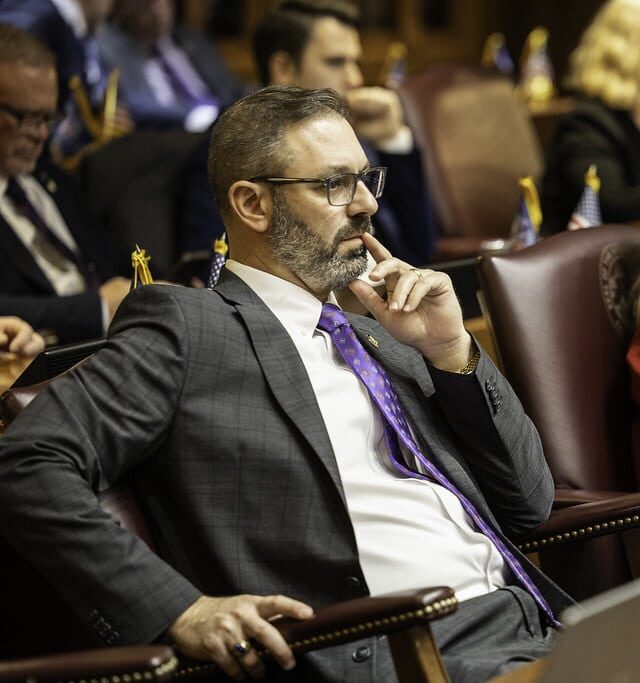
The bill is authored by Rep. Danny Lopez, R-Carmel, and co-authored by Rep. Ben Smaltz, R-Auburn. If enacted, it would require nominees for governor to select a running mate by July 15 before the general election. They would appear jointly on the general election ballot, as they currently do.
Beckwith, who won the Republican nomination for lieutenant governor in a surprise 2024 convention upset over the Braun-endorsed state Rep. Julie McGuire, R-Indianapolis, said the bill undermines the very process that elevated him and empowers rank-and-file party members.
“It is just taking away the grassroots power — that really is what it is,” Beckwith said. “I want to protect the grassroots. I think the convention is an amazing mechanism for normal people to get involved. And why would we want to start chipping away at the delegates’ authority or power to be able to elect who they want?”
Beckwith described his opposition as less about preserving his own political future and more about protecting the convention system.
“It’s really not about me,” he said. “I mean, I’ll be gone — Lord willing, maybe I’ll do two terms lieutenant governor, right? Then I’m gone. This is about protecting the future of the voice of the people.”
The debate spilled onto social media, where Beckwith accused Lopez of using the legislation for political purposes.
Responding to coverage of the bill on X, Beckwith wrote, “The Micah Beckwith bill has been re-introduced. Not surprising from the Republican who refuses to stand with President Trump and will try to take down those who do.”
HB 1022 is not the first attempt to revisit Indiana’s lieutenant governor selection process. During the 2025 legislative session, Sen. Lonnie Randolph, D-Hammond, introduced legislation that similarly sought to eliminate convention selection of lieutenant governors. Randolph’s proposal would have gone farther, repealing statutory duties assigned to the lieutenant governor and shifting those responsibilities to the governor, while requiring candidates for governor and lieutenant governor to run together as one ticket in primary elections.
Nationally, the way nominees for lieutenant governor are selected varies widely. While most states elect a lieutenant governor, only 17 states elect the office independently. In 26 states, the governor and lieutenant governor run together on a joint ticket, similar to the presidential and vice presidential model. Tennessee and West Virginia do not elect a lieutenant governor, instead assigning the role to the president of the state senate.
Speaking with The Indiana Citizen, Beckwith took direct aim at Lopez, questioning his Republican credentials and tying the dispute to broader intraparty tensions that have surfaced during Indiana’s recent redistricting debate. Beckwith backed President Donald Trump’s push for a new congressional map that would have given the GOP a chance to claim two more U.S. House seats in Indiana, while Lopez voted against that map.
“He’s just not a Republican. That’s what it is,” Beckwith said. “He’s an Indianapolis establishment guy. There’s nothing about him that is Republican. And I just — we’re calling it out. I think you saw that today,” referencing remarks made at a Turning Point USA rally, where divisions within the party were on display.
The redistricting bill, also authored by Smaltz, passed through the House with a 57-41 vote before the Senate defeated it last week with a 31-19 vote.
Lopez’s press secretary, Matt Stachler, said in a statement that “Rep. Lopez is not interested in speaking on this at this time, but I will keep you updated as the session progresses in January.” The Indiana Citizen also reached out to Smaltz and Randolph for comment—neither responded by the time of publication.
HB 1022 has been introduced for the 2026 legislative session and has not been scheduled yet for a hearing in the House Elections and Apportionment Committee.
Sydney Byerly is a political reporter who grew up in New Albany, Indiana. Before joining The Citizen, Sydney reported news for TheStatehouseFile.com and most recently managed and edited The Corydon Democrat & Clarion News in southern Indiana. She earned her bachelor’s in journalism at Franklin College’s Pulliam School of Journalism (‘Sco Griz!).
The Indiana Citizen is a nonpartisan, nonprofit platform dedicated to increasing the number of informed and engaged Hoosier citizens. We are operated by the Indiana Citizen Education Foundation, Inc., a 501(c)(3) public charity. For questions about the story, contact Marilyn Odendahl at marilyn.odendahl@indianacitizen.org.